
Last updated on March 5, 2026
Modern software teams are very fast today. Code is pushed daily. Pipelines deploy automatically. Features reach users quickly. This is the success of DevOps. But security often does not move at the same speed.
In many organizations, security reviews are still scheduled monthly or quarterly. Penetration tests require coordination. Findings come late. When issues are discovered, teams must pause releases and fix problems under pressure.
This gap between fast development and slow security creates risk. To solve this, companies are moving toward DevSecOps where security becomes part of the development process itself. This is where AWS Security Agent becomes important.
Why DevOps Alone Is Not Enough
DevOps focuses on automation and faster delivery. It improves collaboration between developers and operations teams. CI/CD pipelines make releases smooth and predictable.
However, security is often treated as a separate step.
- Developers write code.
- Pipelines deploy the application.
- Security teams review later.
Traditional tools like static analysis or dynamic testing look at only one part of the system. Static tools look at source code but do not understand how the application runs in the cloud. Dynamic tools test running endpoints but do not see the internal design.
Because of this limited view, results can be noisy or incomplete. Security teams must manually review findings. This slows everything down. DevSecOps requires security to understand not just code, but the full application context.q

What DevSecOps Really Means
DevSecOps is not just “adding security tools” to a pipeline.
It means:
- Security is involved during design.
- Security checks happen continuously.
- Testing aligns with release cycles.
- Developers and security teams share visibility.
The goal is simple. Security should move at the same speed as development. AWS Security Agent supports this by looking at applications with awareness of how they are designed and deployed inside AWS.
How AWS Security Agent Changes the Workflow
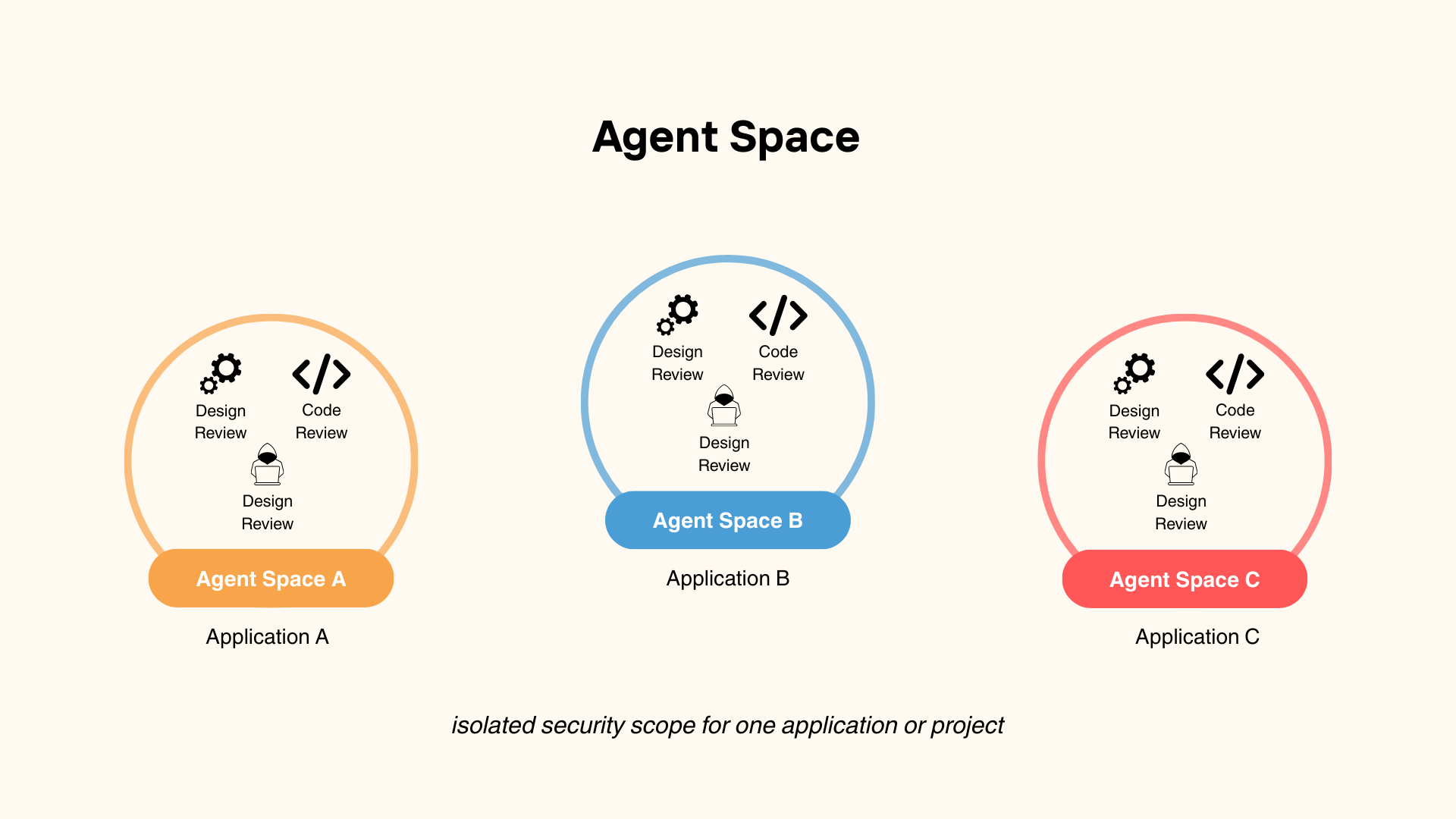
Instead of performing isolated scans, AWS Security Agent evaluates applications based on their defined scope and deployment boundaries. Each application is organized into something called an agent space. An agent space represents one application or project. This keeps security assessments separate and organized.
Within that space, teams can run design reviews, code security reviews, and on-demand penetration testing. Because everything is scoped clearly, testing stays focused on the correct environment. This structure allows security to become part of normal development work instead of a separate activity.
Security at the Design Stage
Many vulnerabilities begin during design, not coding.
For example:
- An API may be exposed publicly without proper controls.
- A service may have too many permissions.
- Data flows may cross trust boundaries without protection.
If these issues are discovered only after deployment, fixing them can be expensive and disruptive. With AWS Security Agent, design reviews can be performed early. This helps teams identify architectural weaknesses before they become production problems. This is an important part of DevSecOps. It shifts security earlier in the lifecycle.
Continuous Security During Development
Development happens in cycles. New features are added regularly. Small changes can introduce unexpected risks. Instead of waiting for a scheduled review, teams can use AWS Security Agent to assess changes as needed. Security testing can align with sprint cycles or release candidates. This reduces long feedback loops. Developers receive findings closer to the time they write the code. Fixes become faster and simpler. Security becomes part of daily engineering practice.
On-Demand Testing Without Long Delays
Traditional penetration testing often requires scheduling external resources. It can only happen a few times per year. This creates a problem for fast-moving teams. By the time testing happens, the application may already look very different.
With AWS Security Agent, testing can be performed within defined application boundaries when needed. Teams gain more flexibility. Security validation can happen before important releases instead of after. This supports continuous confidence instead of periodic reassurance.
Better Signal, Less Noise
One common frustration with security tools is too many alerts. When tools do not understand the application context, they may flag issues that are not truly critical. Developers begin to ignore findings, which weakens security over time.
Because AWS Security Agent evaluates applications within AWS-defined boundaries, findings are more contextual. This helps teams focus on meaningful risks instead of spending time on low-impact issues. For DevSecOps to succeed, developers must trust the results they receive.
Improving Collaboration Between Teams
DevSecOps is also about culture. In traditional models, security teams act as gatekeepers. Releases depend on their approval. This can create tension.
With AWS Security Agent, each application has a defined security space. Developers and security teams can see findings clearly within that scope. Responsibilities become clearer. Instead of blocking releases at the last minute, security becomes a shared responsibility throughout development. This improves communication and reduces friction.
Scaling Security Across Multiple Projects
Large organizations manage many applications. Without structure, security reviews can become chaotic. Agent spaces help organize assessments per application. Each project can maintain its own boundaries and reviews. This makes it easier to scale security across teams. Security becomes structured and repeatable instead of reactive and scattered.
Summary
DevOps helped teams deliver faster. DevSecOps ensures they deliver safely. AWS Security Agent supports this shift by making security:
- Continuous
- Context-aware
- Integrated into workflows

It does not replace development speed. It strengthens it. When security moves at the same pace as engineering, teams can release features with confidence. Risks are identified earlier. Bottlenecks are reduced. Collaboration improves.
DevSecOps is not about slowing down innovation. It is about making sure innovation is secure from the start. For organizations building applications on AWS, embedding security into everyday workflows is no longer optional. It is part of building reliable and trustworthy systems.
References
🤖 $3.74 ONLY for Claude eBooks and Get 25% OFF All Claude Reviewers

Turn Your Team Into Cloud-Ready Professionals Today

Learn AWS with our PlayCloud Hands-On Labs

$2.99 AWS and Azure Exam Study Guide eBooks

Learn GCP By Doing! Try Our GCP PlayCloud

Learn Azure with our Azure PlayCloud
FREE AI and AWS Digital Courses

FREE AWS, Azure, GCP Practice Test Samplers


Subscribe to our YouTube Channel

Follow Us On Linkedin


Written by: April Joy Deang