
Last updated on March 14, 2026
Stage 1 of the AWS Data and AI Journey: Modernizing Your Data Foundation
Artificial intelligence systems are only as powerful as the data infrastructure supporting them. Many organizations want to adopt advanced AI capabilities, but they quickly discover that their data architecture is not ready. Data may be fragmented across systems, stored in legacy databases, or difficult to scale.
Before machine learning, generative AI, or autonomous agents can deliver meaningful outcomes, organizations must first establish a modern data foundation.
This first stage of the AWS data and AI maturity journey focuses on building a cloud-ready, scalable, and unified data platform that supports analytics and future AI workloads. By modernizing your data architecture early, you ensure that the systems powering AI can operate efficiently, securely, and at scale.
This article explores what a modern data foundation looks like, why it matters, and how solutions in AWS Marketplace can accelerate the process.
Why the Data Foundation Matters
Data is the core asset behind every AI capability. If the foundation is poorly structured, downstream systems often experience unreliable outputs, slow queries, and inconsistent insights.
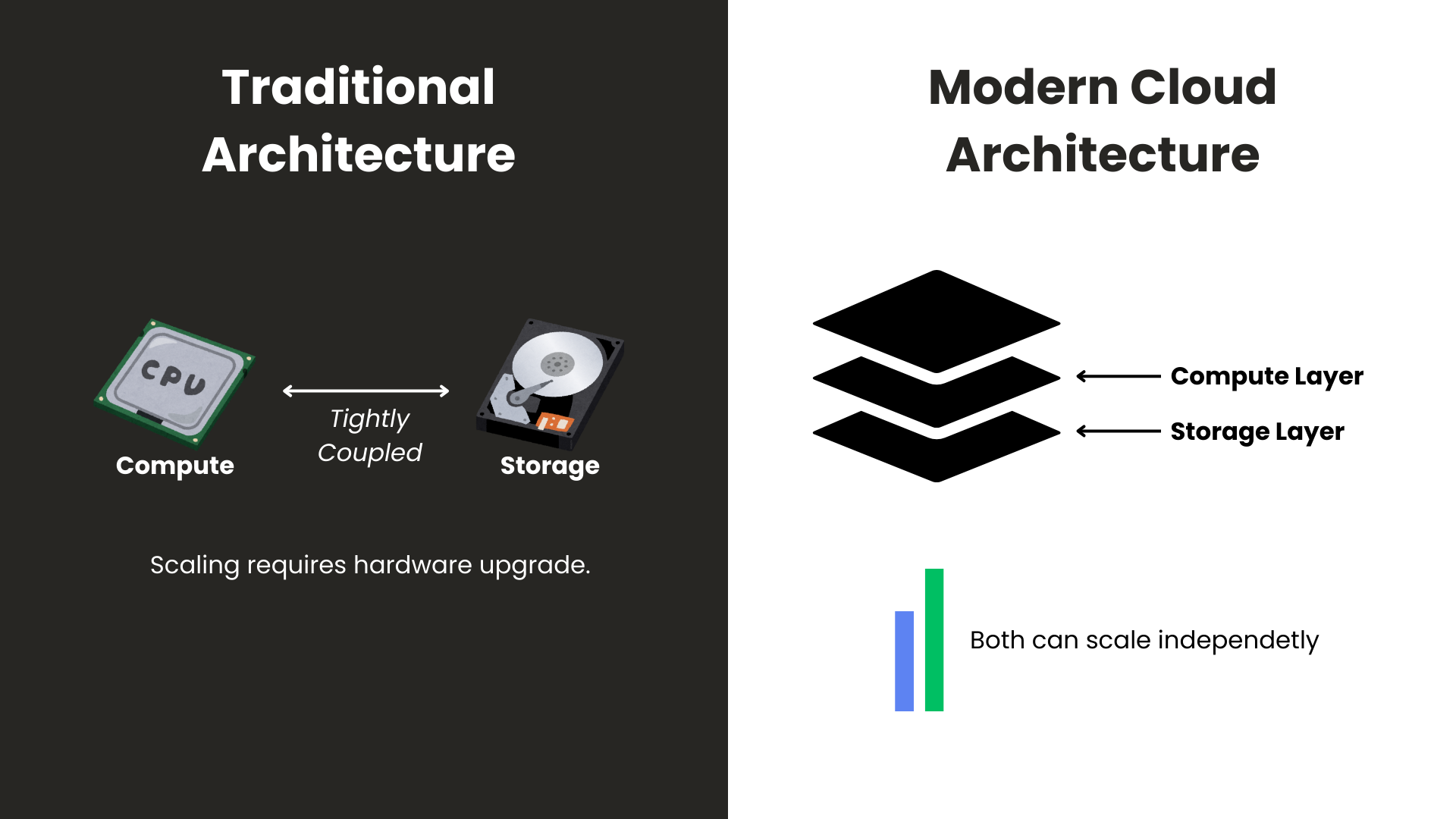
Many organizations still rely on traditional architectures where storage and compute are tightly coupled. Scaling these environments often requires expensive infrastructure upgrades and complex migrations.
Modern cloud architectures take a different approach by decoupling compute and storage, allowing each component to scale independently. This enables organizations to process larger volumes of data while maintaining both performance and cost efficiency.
A strong data foundation should support:
- Scalable cloud-native architecture
- AI-ready storage systems
- Real-time and batch data processing
- Unified analytics across multiple data sources

Without these capabilities, organizations struggle to move beyond experimentation and into production-scale AI systems.
Building a Cloud-Ready Data Architecture
The first step in modernizing a data foundation is transitioning from on-premises infrastructure to cloud-focused architectures.
In cloud environments such as AWS, organizations can build elastic systems that automatically adjust resources based on workload demand. Instead of provisioning infrastructure for peak capacity, teams can scale resources dynamically.
Modern architectures often separate:
- Compute layers, which process and analyze data
- Storage layers, which store structured and unstructured data
This separation improves scalability, increases flexibility, and allows organizations to optimize each layer independently.
Solutions available through AWS Marketplace can accelerate this transition by providing ready-to-deploy platforms that integrate directly with AWS infrastructure.
Preparing Data Platforms for AI Workloads
As organizations move toward AI adoption, their data infrastructure must support both traditional analytics workloads and AI-driven applications.
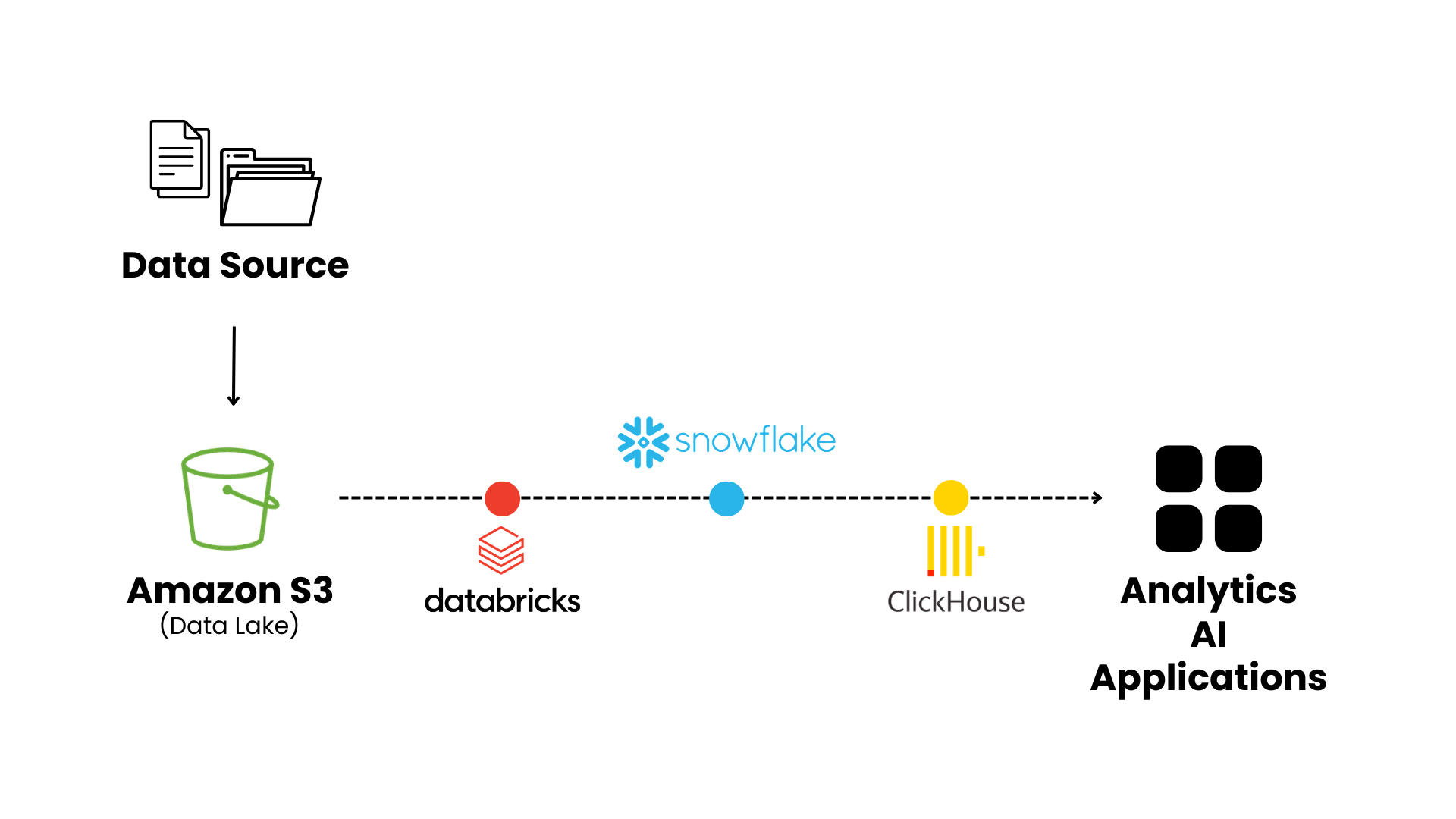
Modern data platforms typically combine several types of systems:
- Operational databases that power applications
- Analytical platforms used for large-scale data processing
- Vector databases designed for AI retrieval and semantic search
Vector databases are particularly important for generative AI systems, which rely on embeddings to represent and retrieve knowledge efficiently.
By preparing infrastructure to support these workloads early, organizations create an environment where analytics, machine learning, and generative AI can operate together effectively.
AWS Marketplace Solutions for Stage 1
At this stage of the journey, organizations focus on adopting technologies that support modern, scalable data platforms. AWS Marketplace provides a catalog of partner solutions that integrate with AWS services and accelerate this transformation.
These solutions help organizations modernize their databases, analytics platforms, and data infrastructure without building every component from scratch.
Analytics and High-Performance Databases
Platforms such as ClickHouse, Databricks, and Snowflake enable organizations to process large datasets and run analytical workloads efficiently. These solutions help teams move beyond traditional data warehouses and adopt scalable cloud analytics platforms capable of handling growing volumes of data.
Search and Data Retrieval Platforms
Technologies like Elastic improve how organizations search, analyze, and visualize large datasets. These tools are commonly used for log analytics, operational monitoring, and large-scale search applications.
Operational and Scalable Databases
Modern applications require flexible and scalable databases. Platforms such as MongoDB provide document-oriented storage designed for high scalability and developer productivity.
Graph and Relationship-Based Data Systems
Solutions such as Neo4j enable organizations to store and analyze relationships between data entities. Graph databases are especially valuable for applications involving recommendations, fraud detection, and knowledge graphs.
High-Speed Data Caching and Processing
Technologies like Redis improve application performance by caching frequently accessed data and enabling low-latency data access across distributed systems.
Vector Databases for AI Workloads
As organizations prepare for generative AI systems, vector databases become an important component of the architecture. Solutions such as Zilliz support semantic search and embedding-based retrieval, which are essential for modern AI applications like retrieval-augmented generation.
How These Solutions Support a Modern Data Foundation
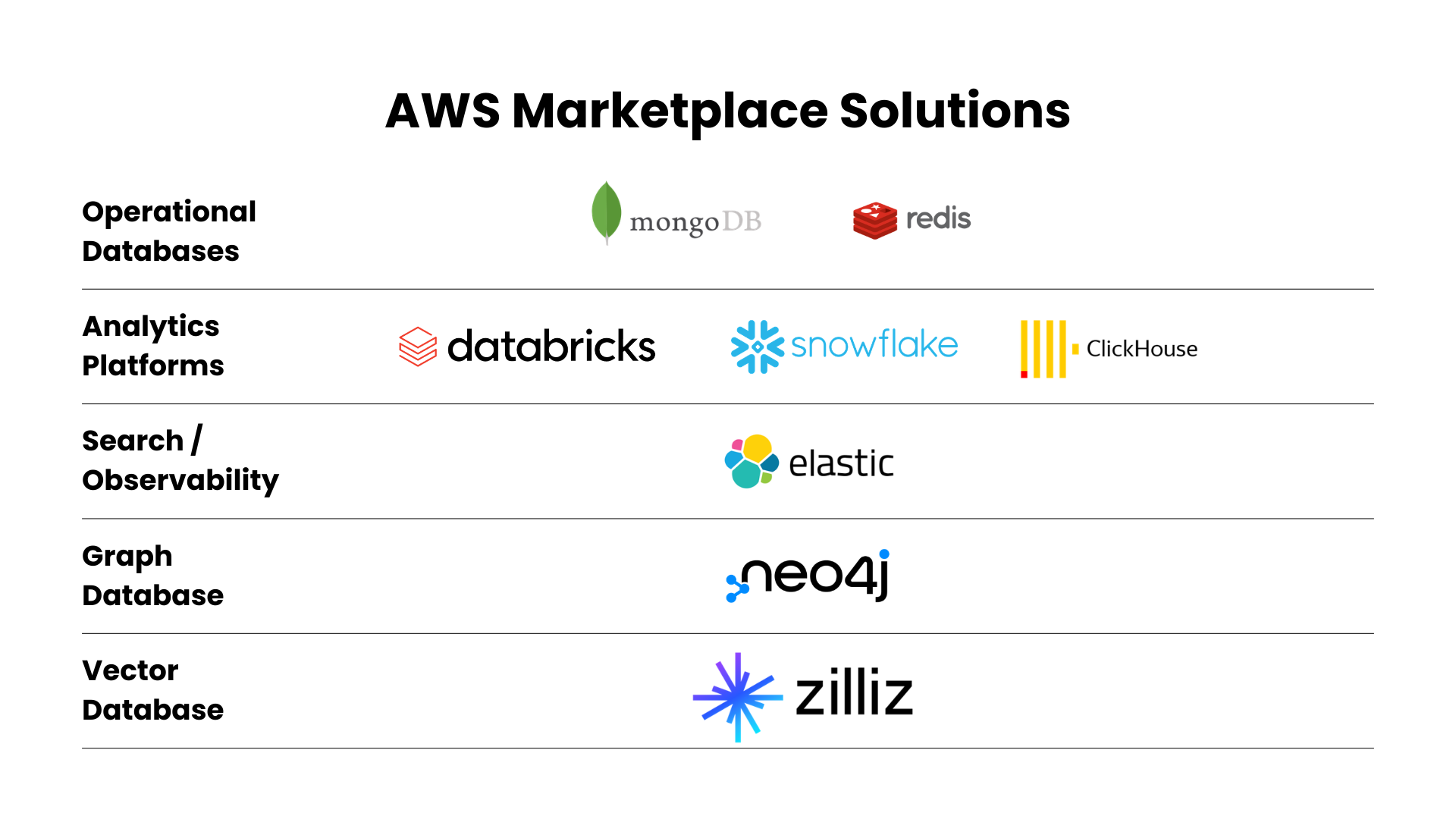
The solutions highlighted in this stage help organizations build several critical layers of a modern data architecture:
Operational data layer
- MongoDB
- Redis
Analytics and processing layer
- ClickHouse
- Databricks
- Snowflake
Search and observability layer
- Elastic
Graph data layer
- Neo4j
AI-ready vector data layer
- Zilliz
By combining these technologies with AWS services, organizations can build flexible, scalable, and AI-ready data platforms.
AWS Marketplace simplifies this process by offering preconfigured deployments, simplified procurement, and direct integration with AWS infrastructure.
What Comes Next
Modernizing the data foundation is the starting point of the data and AI journey. Once organizations establish scalable data infrastructure, the next challenge is ensuring that data flows seamlessly across systems.
In the next stage of this series, we explore how organizations can integrate and move data across their environments, enabling real-time pipelines, event-driven architectures, and collaborative DataOps practices.
The next article will cover:
Stage 2 of the AWS Data and AI Journey: Integrating and Moving Data Across Systems
References
- https://docs.aws.amazon.com/wellarchitected/latest/analytics-lens/modern-data-architecture.html
- https://docs.aws.amazon.com/architecture-diagrams/latest/modern-data-analytics-on-aws/modern-data-analytics-on-aws.html
- https://docs.aws.amazon.com/prescriptive-guidance/latest/strategy-aws-data/aws-architecture.html
- https://aws.amazon.com/marketplace
⚡$4.99 NEW AWS Certified AI Business Strategist AIB-C01 Practice Exams

Turn Your Team Into Cloud-Ready Professionals Today

Learn AWS with our PlayCloud Hands-On Labs

$2.99 AWS and Azure Exam Study Guide eBooks

Learn GCP By Doing! Try Our GCP PlayCloud

Learn Azure with our Azure PlayCloud

FREE AI and AWS Digital Courses

FREE AWS, Azure, GCP Practice Test Samplers


Subscribe to our YouTube Channel

Follow Us On Linkedin


Written by: April Joy Deang