
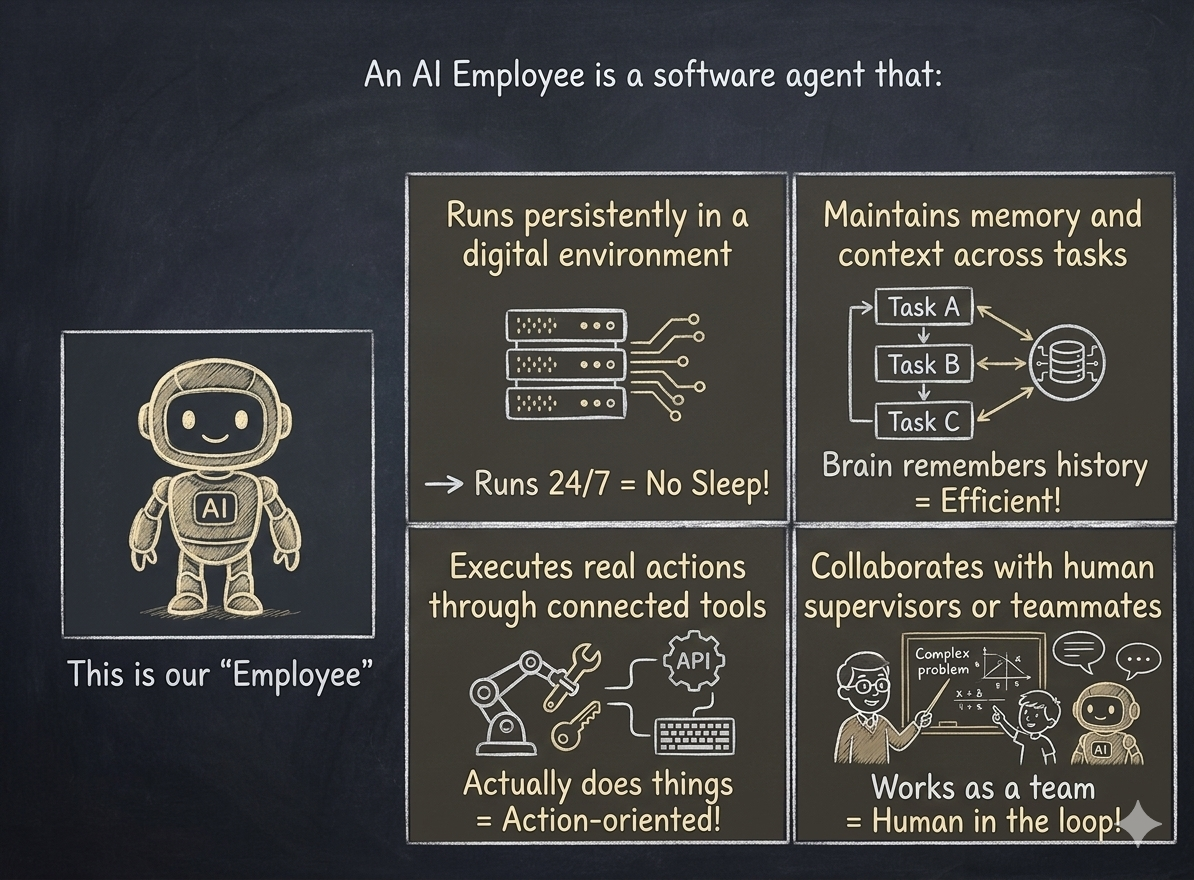
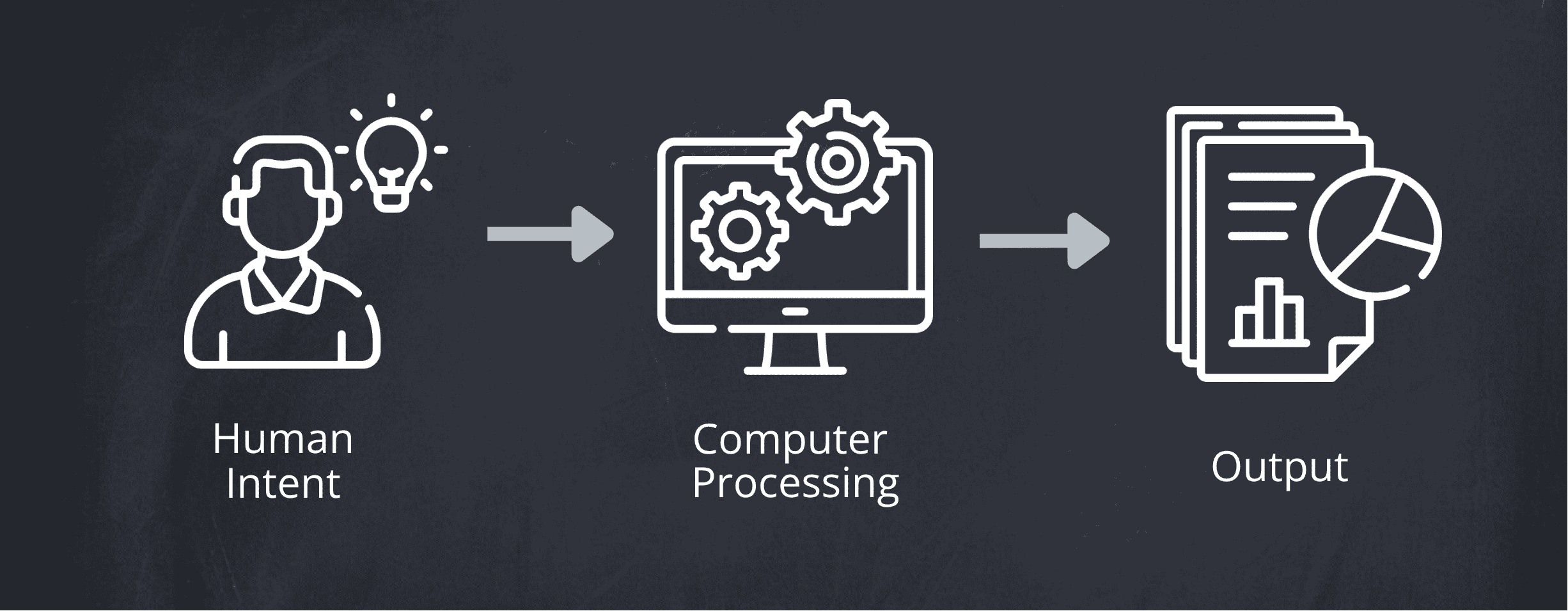
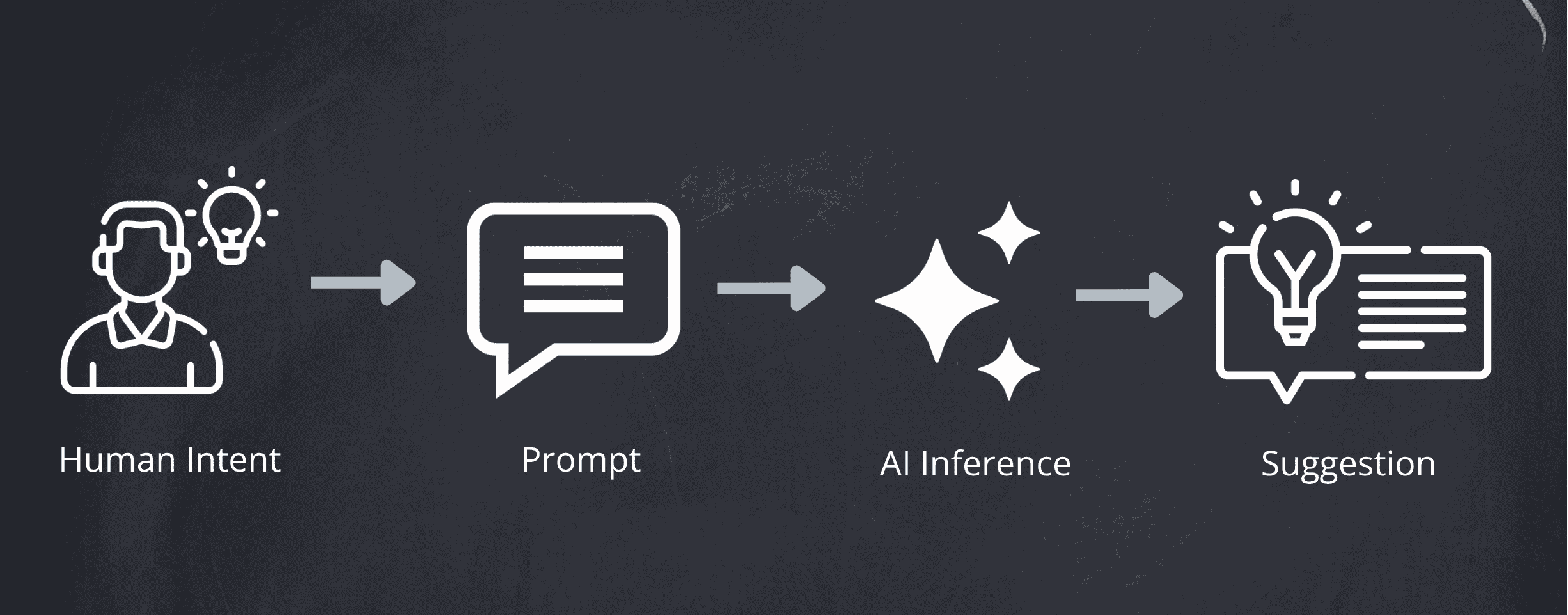
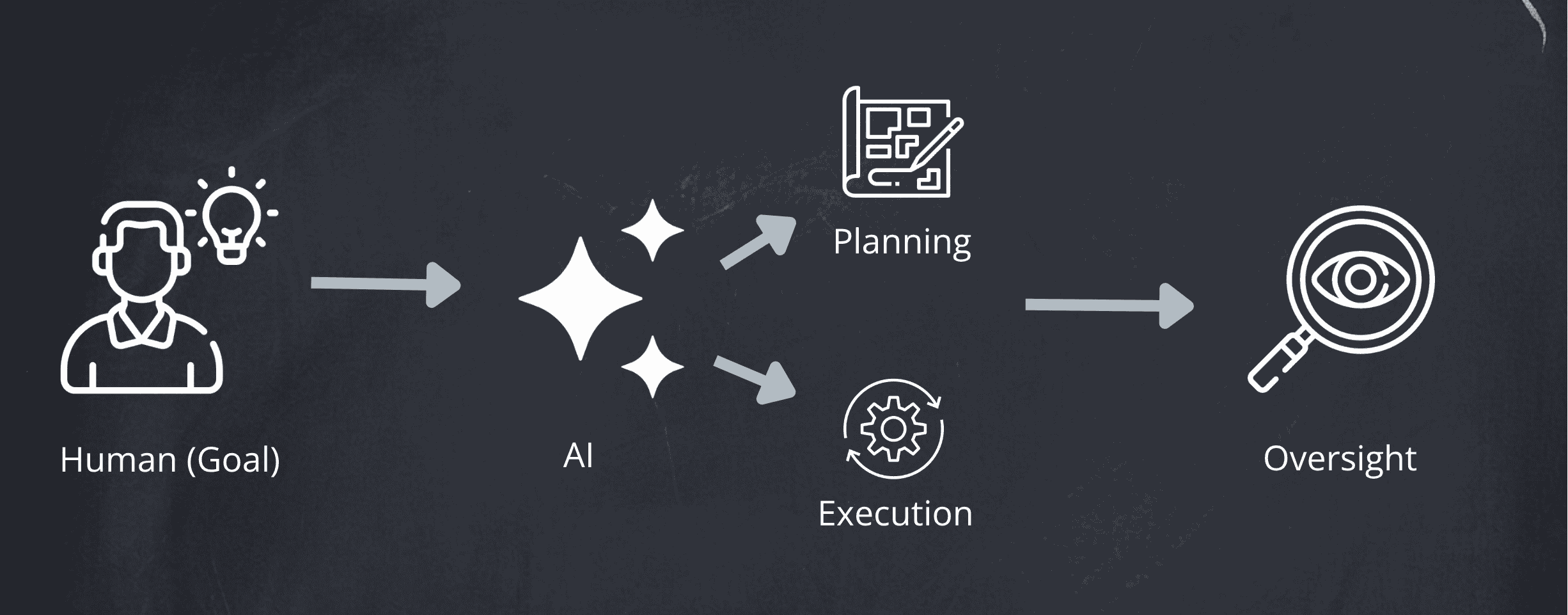
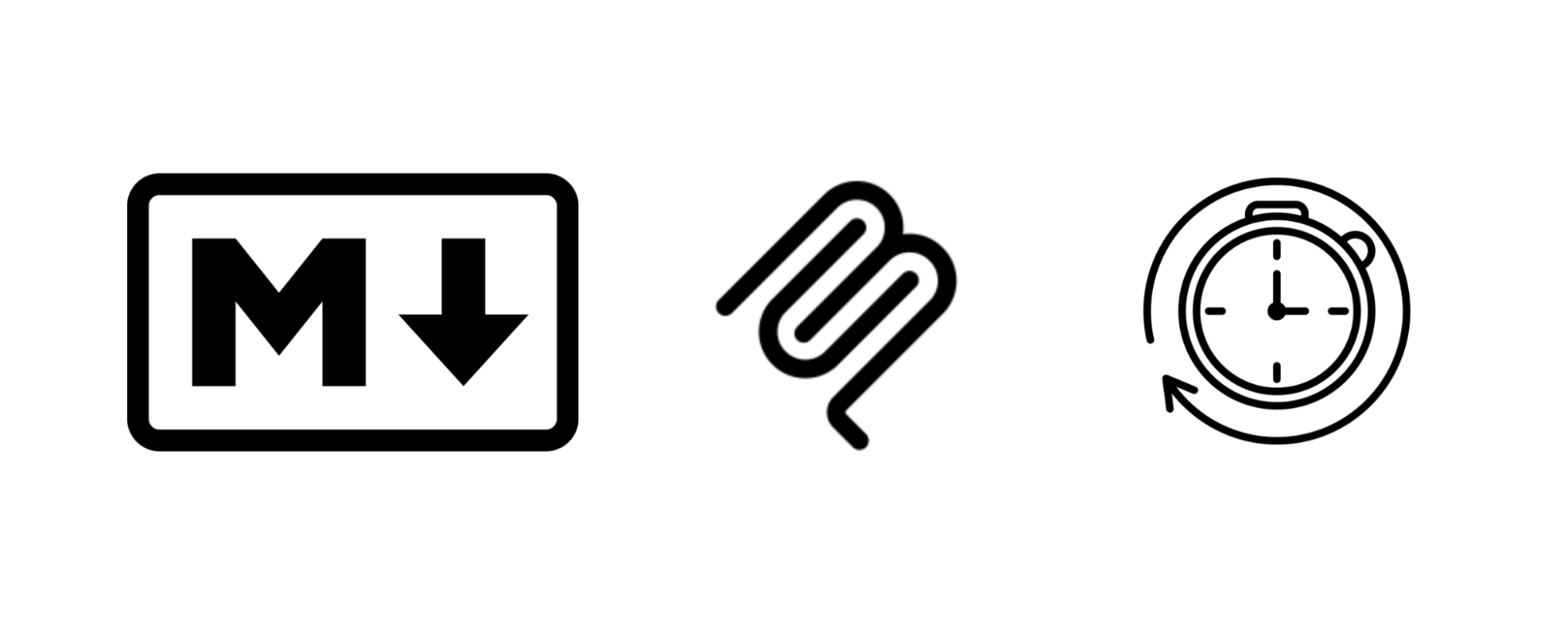
For decades, computers behaved like obedient machines. You gave commands, they executed them. Nothing more. If the command was wrong, the computer still executed it. Then came intelligent assistants powered by modern Artificial Intelligence (primarily LLMs) capable of answering questions, generating code, and summarizing information. But something new is emerging. Software is no longer just assisting humans. In many workflows, it is starting to work alongside them. This is the beginning of what we call AI Employees. Before going further, it’s useful to define the concept. An AI Employee is a software agent that: Unlike traditional chatbots, these systems do more than respond to prompts. They own tasks, execute workflows, and report progress. Instead of acting like a calculator, they behave more like a junior colleague in your team who constantly improves from your unstructured input. The relationship between humans and computers has evolved in three distinct stages within Human Computer Interaction. Stage 1: Tools Traditional software required explicit commands. Applications such as spreadsheets, IDEs, and design tools operated in a straightforward manner, with the computer performing actions precisely as instructed. Nothing more. Stage 2: Assistants The rise of AI tools such as ChatGPT, Gemini, Claude, etc. have changed the interaction model. Now computers can: But these systems still depended on prompts. This smooths out the workflow, but it does not assume responsibility for completing tasks. If a task fails, it is the user’s responsibility to troubleshoot it. Additionally, the assistant lacks internal context Stage 3: Collaborators Agentic systems represent the next step; instead of waiting for instructions, they can: Now the input is not just a prompt but something more abstract and important; this is where AI begins to resemble an employee rather than a tool. The transition toward agentic systems accelerated when Anthropic introduced the Model Context Protocol (MCP), an open standard that allows AI models to securely connect with external tools, applications, and data sources. This framework makes it much easier for AI models to connect with external tools, APIs, and databases. Think of it as an API but for AI agents 😉 This gives AI systems the ability to interact with real software systems without haggling over a plethora of protocols. Now they can perform real production work, such as: Not just blindly generating nor suggesting but actively doing tasks and finally getting the feedback to improve. There is also a simple economic reason behind the rapid adoption of AI employees, which is that businesses constantly seek ways to scale operations while reducing costs. AI systems offer a solution for tasks that are repetitive, scalable, and rule-based. A core example is the field of Customer service, in which an AI support agent can handle thousands of inquiries simultaneously. Even if the system isn’t perfect, its ability to deliver consistent performance at scale makes it extremely attractive to businesses. To see how these ideas are already being explored in practice, we will examine a platform called OpenClaw. One example of an emerging platform built around this idea is OpenClaw. Currently, the platform’s user base is dominated by early adopters, especially developers interested in experimentation. Although these users spend considerable amounts of time configuring systems and integrating tools, their effort provides an early glimpse into how AI employees could function within practical business environments. Virtual Assistant One of the most common uses of OpenClaw is acting as a virtual assistant. Because the system integrates seamlessly with communication tools and productivity software, it can handle tasks such as: Inbox triaging Summarizing conversations Routing messages Tracking action items and many more… In many cases, the AI functions as an assistant positioned between two human participants which is commonly a salesperson and a customer. Rather than replacing either party, the system performs the routine coordination work that typically slows interactions down. This includes pursuing leads, sending follow-up emails, tracking outstanding tasks, and ensuring that conversations progress toward a clear outcome. Much of this workflow operates end to end with minimal intervention. The AI can autonomously handle mundane operational tasks while optionally allowing a human to review or step in when necessary. Throughout the process, it continuously documents its actions and the surrounding context, maintaining a structured record in a dedicated Markdown file. This documentation effectively becomes a running log of decisions, communications, and task progress. Agentic Developer The platform’s user base currently consists mostly of early-adopting developers assuming the role of collaborator. Some developers even experiment with what they call AFK “away-from-keyboard development.” Instead of sitting in front of an IDE, they interact with their AI through messaging platforms like Telegram or Discord while the system handles development tasks in the background. Updating status, learning from feedback and importantly bringing concepts to reality. OpenClaw is all the rage these days, but without these technologies, it would not exist. OpenClaw stores operational context using structured markdown files. This lightweight format allows the system to retain information across tasks and retrieve it when needed. Combined with tool integration, it can connect with external tools and data sources. Instead of hallucinating answers it can fetch fresh and verified information to reason about. Perhaps the most sought of capability is proactive behavior. Instead of waiting for prompts, it periodically wakes up, evaluates pending tasks and executes them. This enforces the idea of a digital coworker reaching out for alignment. As AI employees become more capable, we are seeing the emergence of human–AI team structures. Use cases include: In these environments, the AI becomes a collaborative worker rather than a passive tool. Will you get fired? It is one of the most resonating questions around the industry as the rise of AI employees will likely reshape how digital work is organized. Instead of individuals performing every step manually, workflows may increasingly look like this: Human defines goals AI executes operational tasks Human supervises and refines Workers will spend less time performing repetitive tasks and more time on: Strategy Design Decision making These results lead to workers who are augmented by AI employees, providing another set of “claws”🦞(pun intended👀). AI employees are not science fiction anymore. As agentic systems mature, platforms such as OpenClaw are becoming the infrastructure layer that enables persistent Large Language Models to operate across applications and organizations. Just as operating systems standardized computing and cloud platforms standardized infrastructure, agentic systems may eventually standardize how digital labor is performed. The next generation of teams may not just consist of people. They may include AI colleagues as well. What is the Model Context Protocol (MCP)? – Model Context Protocol. (n.d.). Model Context Protocol. https://modelcontextprotocol.io/docs/getting-started/intro OpenClaw — Personal AI Assistant. (n.d.). https://openclaw.ai/ OpenClaw Is for AI Employees what WordPress was Blogging — And That Changes Everything. (2026). Ruzga. https://wonderwhy-er.medium.com/openclaw-is-wordpress-for-ai-employees-and-that-changes-everything-bced5bcd5a86
What Is an AI Employee?
From Tools to Collaborators

The Rise of Agentic Systems
The Economics Behind AI Employees
The case for OpenClaw
Use Cases
Architecture That Makes AI Employees Possible
Human + AI Workflows

What does this mean for the Future of Work?
Final Thoughts
References:
🤖 $3.74 ONLY for Claude eBooks and Get 25% OFF All Claude Reviewers
Turn Your Team Into Cloud-Ready Professionals Today
Learn AWS with our PlayCloud Hands-On Labs
$2.99 AWS and Azure Exam Study Guide eBooks

Learn GCP By Doing! Try Our GCP PlayCloud
Learn Azure with our Azure PlayCloud
FREE AI and AWS Digital Courses

FREE AWS, Azure, GCP Practice Test Samplers

Subscribe to our YouTube Channel

Follow Us On Linkedin

Written by: Vince Austria