
Last updated on June 4, 2026
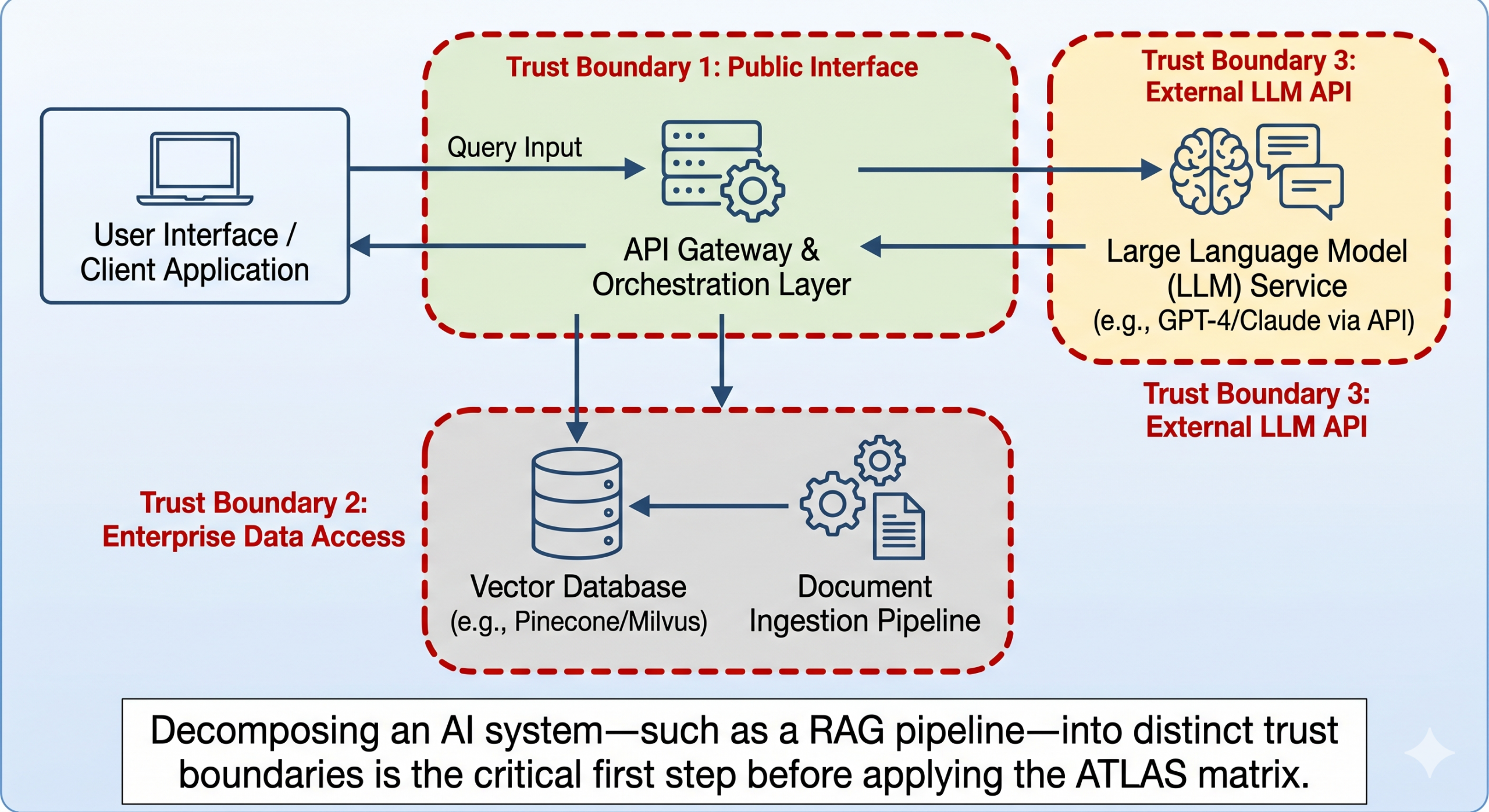
Let’s be completely real: deploying generative AI and complex machine learning pipelines is incredible for innovation, but securing them is a massive headache. Strip away the industry hype, and we are left staring at a genuinely hard, probabilistic problem. It’s exactly the kind of problem that legacy security perimeters and traditional firewalls were never built to handle. You can’t just “patch” a neural network or drop a traditional signature into an IPS (Intrusion Prevention System) to stop an AI exploit. Securing these systems requires careful, sustained attention across a messy landscape of unstandardized threat vectors. It means spotting subtle, quiet data manipulations designed to change how a model behaves without tipping off human operators. That kind of security intelligence methodical, contextual, and deeply integrated into your workflows is what separates a resilient AI defense from pure security theater. We all know the drill with traditional security frameworks: read a compliance checklist, patch the vulnerability, and move on. That is useful for legacy infrastructure, but it falls completely flat the moment you need to figure out how a poisoned training sample is subtly altering your model’s outputs, or how an attacker is bypassing guardrails in a Retrieval-Augmented Generation (RAG) pipeline. That is where MITRE ATLAS (Adversarial Threat Landscape for AI Systems) comes in. Maintained by MITRE, it isn’t just a list of software bugs. It is a globally accessible, community-driven knowledge base of adversary tactics, techniques, and real-world case studies built explicitly for the artificial intelligence ecosystem. Crucially, ATLAS enables true threat landscape visualization. Instead of forcing security operations center (SOC) analysts to stare at flat, disconnected log files, ATLAS allows teams to map out complex, multi-stage AI attacks onto a visual matrix. You aren’t just reading security alerts; you’re tracing the exact story of the attack. It maps an adversary’s path from their initial access all the way to machine learning attack staging, giving security teams, developers, and executive leadership a common language to understand what went wrong. MITRE ATLAS makes it much easier to categorize and track the diverse vectors targeting machine learning environments. Whether an attack occurs during the initial development phase or targets a model already live in production, the risks generally boil down to a few critical categories: Data Poisoning: Adversaries sneak malicious samples into your training datasets. The goal isn’t to crash the system, but to subtly manipulate the model’s behavior, create hidden backdoors, or slowly degrade its accuracy over time. Supply Chain Compromise: It’s often easier to attack the source than the perimeter. This involves downloading compromised pre-trained foundation models from public repositories or running malicious dependencies directly inside your development pipelines. Prompt Injection: If you are running Large Language Models (LLMs), user inputs act as an executable control channel. Attackers can override your system instructions through direct adversarial prompts, or indirectly by hiding malicious commands inside the web pages or documents your model retrieves. Evasion Attacks: Attackers tweak their inputs often adding tiny perturbations that humans can’t even perceive causing a computer vision or classification model to confidently misclassify data during inference. Model Inversion: Attackers relentlessly query your deployed API endpoints, reverse-engineering the model’s outputs to reconstruct sensitive training data or extract your proprietary intellectual property. Bringing MITRE ATLAS into your security operations center fundamentally changes how you defend intelligent applications. Without a structured framework, security teams are left guessing. With ATLAS, operations become streamlined and predictable: Accelerated Incident Response: Without ATLAS, AI alerts lack structure, burning days of manual investigation by specialized data scientists who must decode vague anomalies. By integrating ATLAS, alerts map directly to standardized tactics, allowing traditional SOC analysts to triage AI incidents quickly and effectively. Unified Telemetry and Logging: Rather than collecting massive piles of flat logs with no clear correlation to machine learning risks, security pipelines can use the ATLAS matrix to connect raw telemetry directly to known adversary techniques. Seamless Cross-Team Collaboration: Historically, security analysts and AI engineers have spoken entirely different technical languages. ATLAS bridges this gap, giving both teams a unified, tactical vocabulary to identify, isolate, and remediate vulnerabilities together. Simplified Compliance and Auditing: Risk assessments often rely on abstract jargon that makes validating security controls difficult for auditors. ATLAS grounds your threat modeling in a recognized framework, aligning perfectly with standard audits like ISO/IEC 27001 & 42001 and the NIST AI Risk Management Framework (RMF). Implementing a matrix-driven AI defense doesn’t happen overnight. You can get your team up to speed by focusing on a clear, step-by-step progression: Map Your AI Architecture: Decompose your AI applications into clear trust boundaries. Document exactly where your training data comes from, where the model weights are stored, how the RAG pipeline pulls information, and which API endpoints handle user prompts. You cannot protect an asset if you don’t know it’s exposed. Overlay AI Threat Models: Don’t throw away traditional security methodologies; adapt them. Take a framework like STRIDE and apply it to your machine learning components. For example, “Tampering” in an AI context translates directly to the statistical contamination of training distributions or input manipulation. Classify Vulnerabilities with the ATLAS Matrix: Once you identify a weakness or a theoretical risk point, align it directly with the ATLAS framework. Determine the specific tactic (such as ML Attack Staging) and the corresponding technique (such as Poison Training Data). This turns an abstract worry into a concrete, recognized threat scenario. Operationalize Detection Engineering: Translate your visual mappings into active detection rules. Integrate ATLAS identifiers into your automated security monitoring systems and SIEM platforms. This ensures that when a prompt injection or evasion attempt occurs, your security analysts see the alert with the exact context needed to isolate the threat immediately. MITRE ATLAS and proactive threat modeling make a powerful combination for modernizing security teams in the age of widespread AI adoption. By normalizing complex, probabilistic machine learning vulnerabilities into a single, consistent, and highly visual framework, organizations can catch adversarial behaviors faster, run more accurate security audits, and eliminate gaps in their defenses. Whether you are building custom enterprise RAG applications or integrating third-party LLMs into your existing software stack, using ATLAS brings much-needed clarity and structure to your defense strategy. It is the most effective way to transition from reactive guesswork to a unified, highly responsive security posture. The following sources were used in reporting and writing this article. All links were verified as of May 2026. Official MITRE ATLAS Documentation NIST & Government Guidelines Industry Perspectives & Guides
What is MITRE ATLAS?
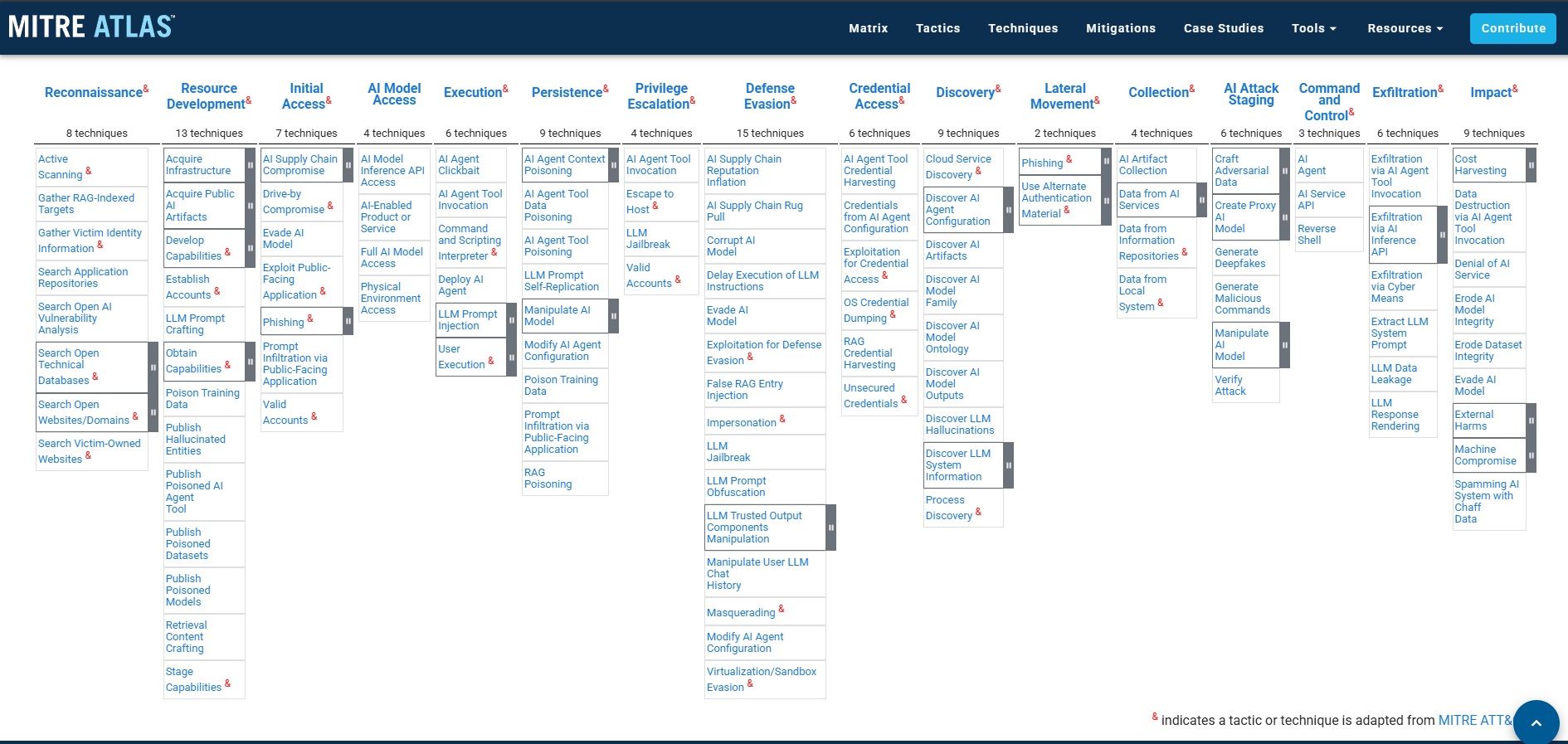
Common AI Security Threats

Benefits of ATLAS in Security Operations
Step-by-Step: Getting Started with MITRE ATLAS
Conclusion
References
https://atlas.mitre.org/
https://atlas.mitre.org/resources/info
https://csrc.nist.gov/presentations/2025/mitre-atlas
https://csrc.nist.gov/presentations/2025/threat-landscape-visualization-with-atlas
https://www.vectra.ai/topics/mitre-atlas
https://www.practical-devsecops.com/mitre-atlas-framework-guide-securing-ai-systems/⚡10% OFF Practice Exam and eBook Bundles

Turn Your Team Into Cloud-Ready Professionals Today
Learn AWS with our PlayCloud Hands-On Labs

$2.99 AWS and Azure Exam Study Guide eBooks

Learn GCP By Doing! Try Our GCP PlayCloud
Learn Azure with our Azure PlayCloud
FREE AI and AWS Digital Courses

FREE AWS, Azure, GCP Practice Test Samplers


Subscribe to our YouTube Channel

Follow Us On Linkedin

Written by: johnrichie.campo