
The AB‑731: Microsoft Certified AI Transformation Leader certification exam is designed for business leaders responsible for driving AI adoption and transformation within their organizations. Candidates are expected to understand how AI-powered tools, such as Microsoft 365 Copilot, can be leveraged to enhance productivity, streamline workflows, and support strategic decision-making across business processes.
Candidates should be familiar with Microsoft AI solutions and their role in business innovation. The exam focuses on how to align AI technologies with organizational goals, manage the implementation of AI solutions, and ensure responsible AI practices, such as data privacy and security, while fostering a culture of AI-driven transformation
For more information about the AB-731 exam, you can check out this exam skills outline. This study guide will provide comprehensive review materials to help you pass the exam successfully.
AB-731 Exam Domains
Below are the exam domains, or “Skills Measured,” for the AB‑731 Microsoft Certified AI Transformation Leader certification exam. These domains represent the core competencies that candidates are expected to demonstrate in leading AI adoption and transformation across their organizations, driving innovation, and leveraging AI tools within the Microsoft ecosystem to support strategic business outcomes and decision-making.
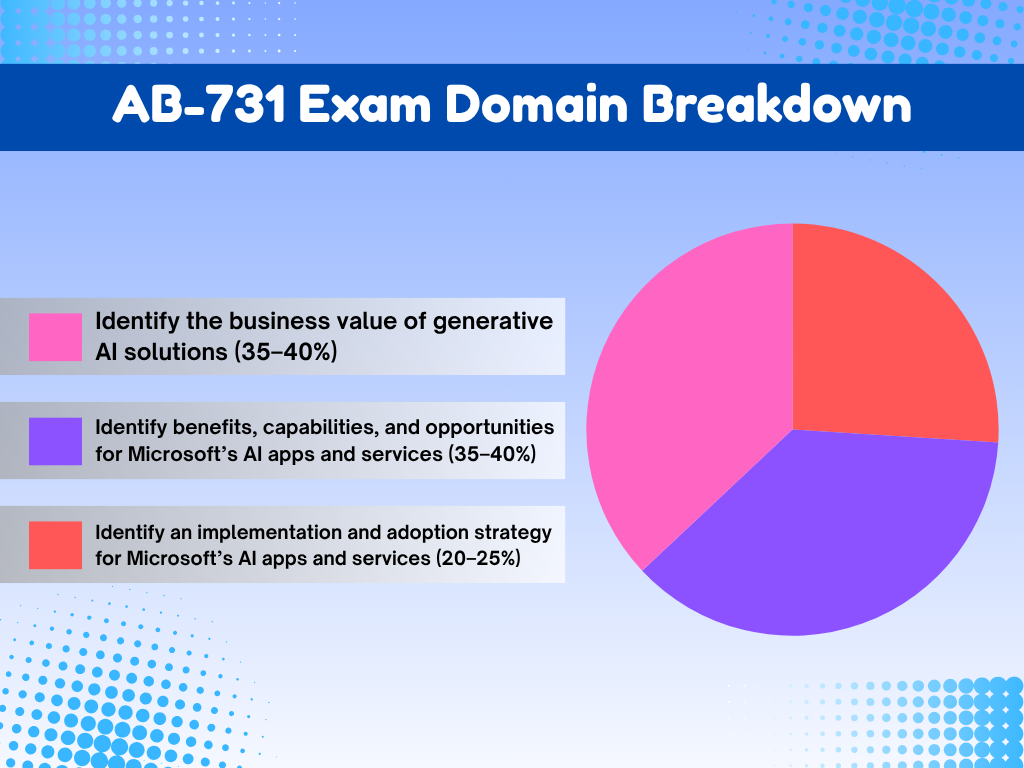
- Identify the business value of generative AI solutions (35–40%)
- Identify benefits, capabilities, and opportunities for Microsoft’s AI apps and services (35–40%)
- Identify an implementation and adoption strategy for Microsoft’s AI apps and services (20–25%)
AB-731 Study Materials
Before attempting the AB‑731 Microsoft Certified AI Transformation Leader certification exam, it is highly recommended to review the following study materials. These resources are designed to help candidates understand the key concepts, tools, and strategies for leading AI transformation within their organizations. By studying these materials in advance, candidates can strengthen their knowledge of AI solution deployment, AI governance, and responsible AI practices within the Microsoft ecosystem, ensuring they are prepared to drive innovation and manage AI adoption effectively.
- Tutorials Dojo’s Azure Cheat Sheets — Quick reference guides that summarize key Azure services and concepts commonly covered in certification exams.
- Azure PlayCloud Hands-On Labs — Guided labs that allow you to practice deploying and managing Azure resources in a real environment.
- Azure Practice Exams — Our very own set of practice exams that are designed to help evaluate your readiness for the certification and identify topics that require further study.
- Microsoft Official Documentation and Learning Resources:
- Artificial Intelligence overview
- Microsoft 365 Copilot documentation
- Microsoft Copilot Studio documentation
- Azure AI Foundry documentation
- Microsoft Q&A | Microsoft Docs
- Microsoft 365 Copilot community hub
- Azure AI Foundry community hub
- Microsoft Learn – Microsoft Tech Community
- Exam Readiness Zone
- Microsoft Learn Show
- Azure Free Account — Enables you to explore Azure services and gain hands-on experience while preparing for the exam.
Azure Services to Focus on for the AB-731 Exam
Here is the list of Azure services to focus on for the AB-731 Microsoft Certified AI Transformation Leader certification exam:

Microsoft 365 Copilot
- Understand Copilot integration across Microsoft 365 apps such as Word, Excel, PowerPoint, Outlook, and Teams.
- Align Copilot-driven AI solutions with organizational strategies to enhance productivity and decision-making.
- Manage and configure Copilot settings while ensuring compliance with data privacy and security policies.
Copilot Studio
- Design and customize AI models and agents tailored to business needs.
- Configure and fine-tune AI agents to align with organizational workflows and goals.
- Orchestrate workflows to enhance productivity using AI-powered tools.
Microsoft Graph
- Integrate organizational data into AI workflows to enhance Copilot capabilities.
- Understand how Graph enables contextual AI-driven responses based on business data.
Copilot Agents
- Create, configure, and share AI agents within the Microsoft 365 ecosystem.
- Manage agent settings, prompts, and capabilities to optimize workflows.
Microsoft Foundry & Tools
- Understand how Microsoft Foundry integrates AI and machine learning into business processes.
- Use Foundry tools to streamline data integration and workflow orchestration.
- Leverage AI insights to improve decision-making and operational efficiency.
AB-731 Key Exam Topics by Domain
Identify the business value of generative AI solutions
- Foundational concepts of generative AI: Understand the core principles of generative AI and how it differs from other AI types like machine learning and predictive models.
- Cost and ROI considerations: Explore the cost drivers of generative AI, including token usage and the evaluation of return-on-investment (ROI).
- Challenges of generative AI: Identify common challenges such as fabrications, reliability, and bias in generative AI solutions.
- Impact of data on AI solutions: Understand how the type, quality, and representativeness of data affect the performance and outcomes of AI models.
- Security considerations for AI systems: Recognize the importance of securing AI systems, including ensuring data privacy, authentication, and application security.
Identify benefits, capabilities, and opportunities for Microsoft’s AI apps and services
- Benefits of Microsoft 365 Copilot and Copilot Studio: Understand how Copilot and Copilot Studio automate tasks and improve business workflows across Microsoft 365 apps.
- Mapping business processes to Microsoft AI: Learn how to align business processes and use cases with Microsoft AI apps like Copilot and Foundry Tools.
- Capabilities of Microsoft Graph and Copilot: Understand how Microsoft Graph and Copilot enable AI-driven responses based on organizational data.
- AI model selection and integration: Learn to match AI models to business needs and integrate them to enhance decision-making.
- Benefits of Foundry Tools and scalability: Identify the scalability and security benefits of Microsoft Foundry in improving business operations.
Identify an implementation and adoption strategy for Microsoft’s AI apps and services
- Align AI strategy with responsible AI policies: Ensure AI solutions comply with Microsoft’s Responsible AI standards, including fairness, security, and transparency.
- Establish governance for AI use: Set up AI governance principles and an AI council to oversee strategy and ensure cross-functional alignment.
- Plan for AI adoption: Create an adoption team, address common barriers, and implement an AI champions program to drive organizational adoption.
- Manage data, security, and cost impacts: Understand the effects of AI on data privacy, security, and costs, and manage them effectively.
- Understand AI licensing and subscription models: Learn about Copilot license types and Azure AI subscription models, including pay-as-you-go and prepaid options.
AB-731 Important Skills to Focus on
Generative AI Infrastructure Setup
- Understand Microsoft 365 Copilot capabilities and its integration across apps like Word, Excel, PowerPoint, Outlook, and Teams.
- Manage Copilot settings and secure access to organizational data using tools like Microsoft Entra ID.
- Implement role-based access control (RBAC) and data protection measures for secure AI usage.
Business Content Generation and Management
- Create and manage prompts for Copilot to streamline content creation, summarization, and automation.
- Organize Copilot conversations to improve productivity and align with business goals.
- Generate business documents, communications, and summaries across Microsoft 365 apps.
Leveraging Foundry Tools for AI-driven Transformation
- Explore Microsoft Foundry capabilities to integrate AI into workflows and automate processes.
- Map business processes and use cases to Foundry tools for scalability and optimization.
- Orchestrate complex AI workflows to improve operational efficiency.
Generative AI Optimization and Quality Evaluation
- Apply responsible AI practices to evaluate content quality (relevance, coherence, groundedness).
- Ensure data privacy and security when using Copilot and Foundry tools.
- Use Copilot Pages for collaboration while maintaining control over sensitive information.
AI Solution Implementation and Adoption
- Align AI strategies with Microsoft Responsible AI principles (fairness, reliability, safety, privacy, security, inclusiveness, transparency).
- Establish governance with AI councils and champion programs.
- Assess impacts on data, security, privacy, and cost, including licensing for Copilot and Azure AI services.
Validate Your AB-731 Exam Readiness
If you feel confident after going through the suggested materials above, it’s time to put your knowledge of different Azure concepts and services to the test. For top-notch practice exams, consider using the Tutorials Dojo’s AB-731 Microsoft Certified AI Transformation Leader Practice Exams.
These practice tests cover the relevant topics that you can expect from the real exam. It also contains different types of questions, such as single-choice, multiple-response, dropdown, yes/no, and drag-and-drop. Every question on these practice exams has a detailed explanation and adequate reference links that help you understand why the correct answer is the most suitable solution. After you’ve taken the exams, it will highlight the areas you need to improve. Together with our cheat sheets, we’re confident that you’ll be able to pass the exam and have a deeper understanding of how Azure works.
AB-731 Sample Practice Test Questions:
Question 1
You are developing a conversational AI feature using Azure OpenAI as part of a pilot program.
The usage is expected to fluctuate, and costs must align with actual consumption while allowing seamless scaling.
Which pricing approach is most suitable for this setup?
- Standard
- Batch API
- Elastic
- Provisioned

Correct Answer: 1
Azure OpenAI Service is a fully managed cloud service that provides access to advanced generative AI models, including large language models, through REST APIs and SDKs. It enables organizations to build applications such as chatbots, content generation tools, and intelligent assistants while integrating with Azure’s security, compliance, and networking capabilities. Azure OpenAI allows developers to deploy models and interact with them using prompts, with usage measured based on tokens processed during inference.
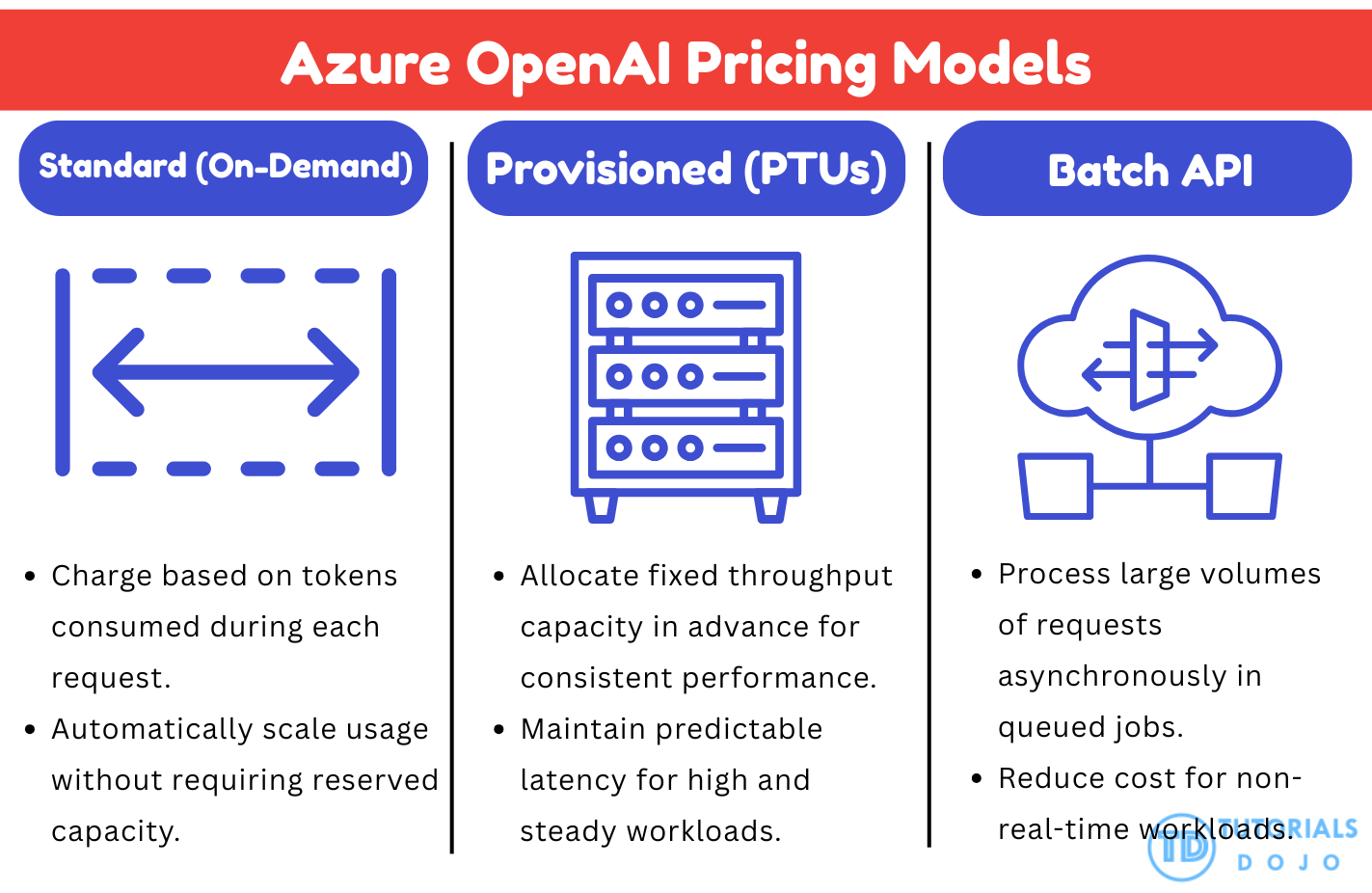
To support different workload patterns, Azure OpenAI offers flexible pricing models that align with how applications consume AI capabilities. Pricing is primarily based on token usage, but organizations can choose between different approaches depending on whether their workloads are unpredictable or consistent. This flexibility allows teams to balance cost efficiency, performance, and scalability, whether they are experimenting with new solutions or operating large-scale deployments.
The available pricing options include:
– Standard (On-Demand) – A consumption-based model where usage is billed per token with no upfront commitment. It automatically scales based on demand and is well-suited for variable or unpredictable workloads.
– Provisioned Throughput Units (PTUs) – A capacity-based model where a fixed level of throughput is reserved in advance. This is ideal for predictable, high-volume workloads that require consistent performance.
– Batch API – A model designed for asynchronous processing of large workloads at a lower cost, typically used for non-real-time scenarios.
In general, Standard (On-Demand) is the most appropriate choice when workloads are uncertain or expected to change over time. It allows organizations to start small, pay only for actual usage, and scale seamlessly without needing to provision capacity in advance. This makes it particularly effective for early-stage development, testing, and pilot scenarios where flexibility and cost control are key considerations.
Hence, the correct answer is: Standard.
Batch API is incorrect because it is primarily designed for asynchronous, large-scale processing tasks and not for real-time or interactive workloads. It typically handles bulk requests that can be queued and processed over time, which does not align with scenarios that require immediate responses and dynamic scaling based on user demand.
Elastic is incorrect because it is not an official Azure OpenAI pricing model. It is simply a descriptive term used to imply scalability, but it cannot be selected or configured as a pricing option within the service.
Provisioned is incorrect because it requires pre-allocated capacity, making it suitable for predictable and consistently high workloads. It simply does not provide the same level of cost flexibility as consumption-based models since resources are reserved in advance regardless of actual usage.
References:
https://azure.microsoft.com/en-us/pricing/details/azure-openai/
https://azure.microsoft.com/en-us/products/ai-foundry/models/openai
Check out this Azure OpenAI Cheat Sheet:
Question 2
You are managing a finance workflow that processes a high volume of scanned invoices and PDFs from multiple suppliers.
You notice that manually extracting details such as invoice identifiers, supplier details, and payable amounts is time-consuming and error-prone.
What AI solution should you recommend to automate this process?
- Azure Language
- Azure Vision
- Azure Document Intelligence
- Azure Translator
Correct Answer: 3
Azure Document Intelligence is a cloud-based AI service and one of the tools available in Microsoft Foundry that enables organizations to extract structured data from documents such as invoices, receipts, forms, and contracts. It uses advanced machine learning models, including prebuilt and customizable models, to analyze document layouts, recognize text, and identify key-value pairs. The service supports both scanned images and digital documents, allowing it to handle a wide range of formats while preserving the structure and meaning of the content.
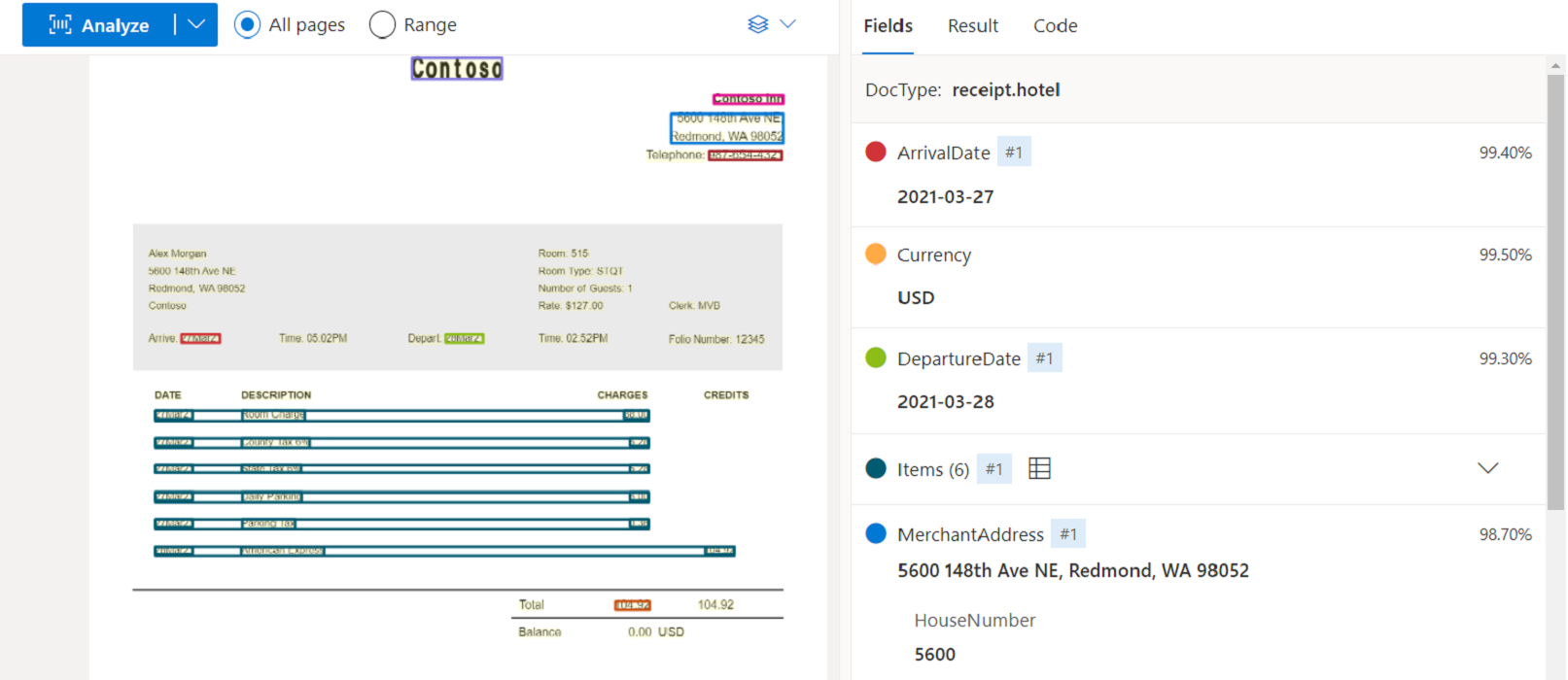
This service addresses common document processing challenges by automating the extraction of relevant information without requiring manual data entry or complex rule-based systems. By leveraging prebuilt models such as the invoice model, organizations can quickly extract important fields like document identifiers, supplier details, and financial amounts with high accuracy. This reduces processing time, minimizes human error, and enables scalable handling of large volumes of documents. Additionally, the service integrates with other Azure services, making it suitable for building end-to-end intelligent document processing solutions.
Azure Document Intelligence is particularly effective in scenarios that involve repetitive document handling and structured data extraction. It allows businesses to streamline workflows, improve operational efficiency, and gain faster access to critical information. Because it is fully managed, there is no need to build or train custom machine learning models unless required, which simplifies adoption while still providing flexibility for advanced use cases.
Hence, the correct answer is: Azure Document Intelligence.
Azure Language is incorrect because it is primarily designed for natural language processing tasks such as sentiment analysis, entity recognition, and text classification, rather than extracting structured key-value data from scanned documents like invoices.
Azure Vision is incorrect because it typically provides capabilities for analyzing images, including object detection, image tagging, and optical character recognition, but it does not specialize in extracting structured fields such as invoice-specific data from documents.
Azure Translator is incorrect because it only translates text and documents between languages while preserving meaning and structure; it does not perform field extraction or document intelligence tasks.
References:
Check out this Azure Document Intelligence Cheat Sheet:
For more Azure practice exam questions with detailed explanations, check out the Tutorials Dojo Portal:


Final Remarks
Success in the AB-731 exam requires a strong understanding of AI transformation strategies and practical experience with Microsoft AI tools like Microsoft 365 Copilot, Foundry Tools, and Microsoft Graph. Focus your preparation on the official Microsoft Learn materials to grasp foundational AI concepts and their application in business workflows. Strengthen your knowledge of AI governance, responsible AI practices, and solution implementation. Gain hands-on experience with tools like Copilot Studio and Foundry for workflow automation and decision-making, while ensuring data privacy and security. Use practice exams to assess your readiness and pinpoint areas for improvement, ensuring you are well-prepared to earn the Microsoft Certified AI Transformation Leader certification.
🎭 GET 22% OFF our AWS Security Specialty and AZ-500 Azure Security Engineer Associate Practice Exams – Master Cloud Security Now!

Learn AWS with our PlayCloud Hands-On Labs
$2.99 AWS and Azure Exam Study Guide eBooks

New AWS Generative AI Developer Professional Course AIP-C01

Learn GCP By Doing! Try Our GCP PlayCloud
Learn Azure with our Azure PlayCloud
FREE AI and AWS Digital Courses

FREE AWS, Azure, GCP Practice Test Samplers


Subscribe to our YouTube Channel

Follow Us On Linkedin


Written by: Lois Angelo Dar Juan