
Have you ever used ChatGPT to help explain a difficult topic? Maybe you’ve asked Gemini to summarize a lengthy article, generate ideas for a school project, write an email, or even use Claude for brainstorming concepts.
If you’re a student, you’ve probably wondered:
“Is it okay to use AI for assignments?”
If you’re a content creator, perhaps you’ve asked yourself at least once:
“Who actually owns AI-generated content?”
Or maybe you’ve come across AI-generated images and videos on social media posts and thought:
“How can I tell if this is real or AI?”
These questions have become increasingly common because artificial intelligence is no longer something reserved for researchers, software engineers, or major technology companies. Today, AI-powered tools are available to almost anyone with an internet connection. So, whether you are someone who is studying, working, running a business, or simply browsing social media, there’s a good chance that you have already interacted with AI multiple times today, even if you don’t realize it yet.
AI is now becoming a regular part of how we communicate, learn, create, and make decisions. It helps us find information faster, automate repetitive tasks, generate creative ideas, translate languages, recommend products, and even assist in medical research.
But as AI becomes more capable and more deeply integrated into our everyday life, another important question naturally follows:
Just because AI can do something, does that mean it should?
This is where AI ethics comes in.
Contrary to what many people assume, AI ethics isn’t about slowing technological progress or preventing innovation. It isn’t about telling people that they shouldn’t use AI. Instead, it’s about making sure that AI is designed, developed, and used in ways that are responsible and beneficial for everyone..
Rather than encouraging fear of AI, ethics encourages thoughtful decision-making. It reminds us that while technology evolves rapidly, it is our responsibility to use it wisely.
Why Are We Talking About AI Ethics Now?
Think about how quickly AI has become part of our everyday life. Only just a few years ago, most people interacted with AI without even noticing.
For example, we have recommendation systems that suggest movies and music based on our viewing habits. There are also navigation apps that calculate the fastest routes by analyzing the traffic conditions in real time. Another one would be how online shopping platforms recommended products based on our previous purchases, while social media platforms determine which posts appeared at the top of our feeds. And yes, all of this uses AI.
And now, AI has moved far beyond these background tasks. Modern AI now can write essays, generate realistic artwork, compose music, write software codes, analyze complex datasets, summarize lengthy documents, answer questions in natural language, and even engage in conversations that feel remarkably human.
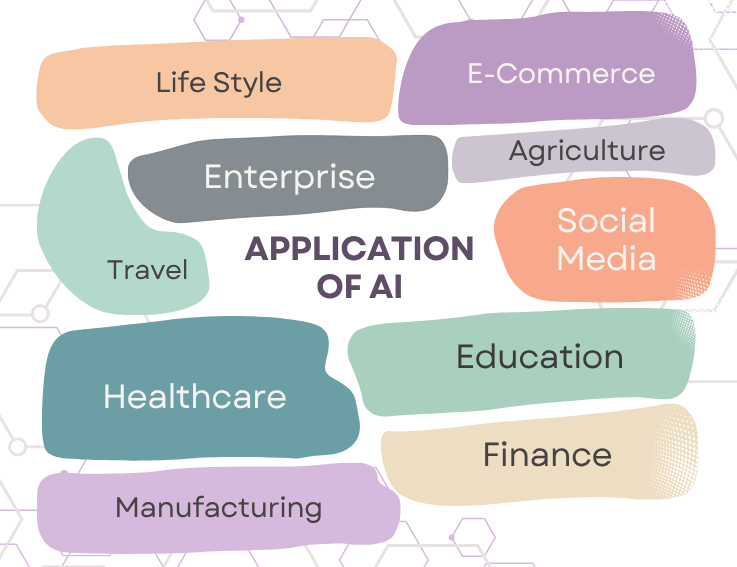
Artificial intelligence is transforming industries by enhancing everyday experiences across different sectors.
The speed at which these capabilities have developed is unprecedented and this rapid advancement has created incredible opportunities across nearly every industry.
For students like me, it helped with personalized explanations for difficult concepts. For teachers, it helps generate learning materials more efficiently. Businesses can automate repetitive administrative work. In healthcare, professionals can analyze medical images more quickly, while researchers can process enormous amounts of scientific data that would otherwise take months or years to examine manually.
Even right now, governments are exploring AI to improve public services. Financial institutions use AI to detect fraud. Farmers apply AI-powered tools to monitor crop health. And even environmental scientists use machine learning models to predict climate patterns and monitor wildlife populations.
The possibilities seem almost endless, isn’t? However, with greater capabilities come greater responsibilities.
As AI becomes more involved in creating content, influencing recommendations, and assisting with decision-making, important questions naturally arise.

- Is the information generated by AI accurate?
- Was the AI trained using fair and representative data?
- Are people’s personal details being collected responsibly?
- Can users understand how important AI-driven decisions are made?
- Who is accountable if an AI system makes a mistake?
- How much should society rely on AI when human lives are affected?
Of course, these questions are not designed to discourage innovation. Instead, they help ensure that AI continues to benefit humanity rather than unintentionally creating new risks or reinforcing existing problems.
AI Isn’t Good or Bad, It’s a Tool
One of the biggest misconceptions surrounding AI ethics is the belief that artificial intelligence itself is either inherently good or inherently dangerous.
In reality, AI is neither. It is simply a tool.
Like any technology, its impact depends on how people choose to use it.
You might have read or heard about these scenarios before, but let’s consider the calculator. A calculator can help students solve complicated equations more efficiently. But if someone relies on it without understanding the underlying math, it can also become a shortcut that limits learning.
For me, the same concept applies to the internet. It gives people access to an enormous amount of valuable knowledge, yet it can also spread misinformation quickly.
Artificial intelligence works in much the same way. We know that it can improve productivity, enhance creativity, assist people with disabilities, accelerate scientific discoveries, and make many everyday tasks easier. But at the same time, it can also generate convincing misinformation, reinforce bias, invade privacy, or produce inaccurate results when used irresponsibly.
But as we can see, the technology itself is not making these moral decisions; we are. People are.
That’s why AI ethics focuses less on whether AI is “good” or “bad” and more on how humans design, use, and interact with these systems.
What Responsible AI Looks Like
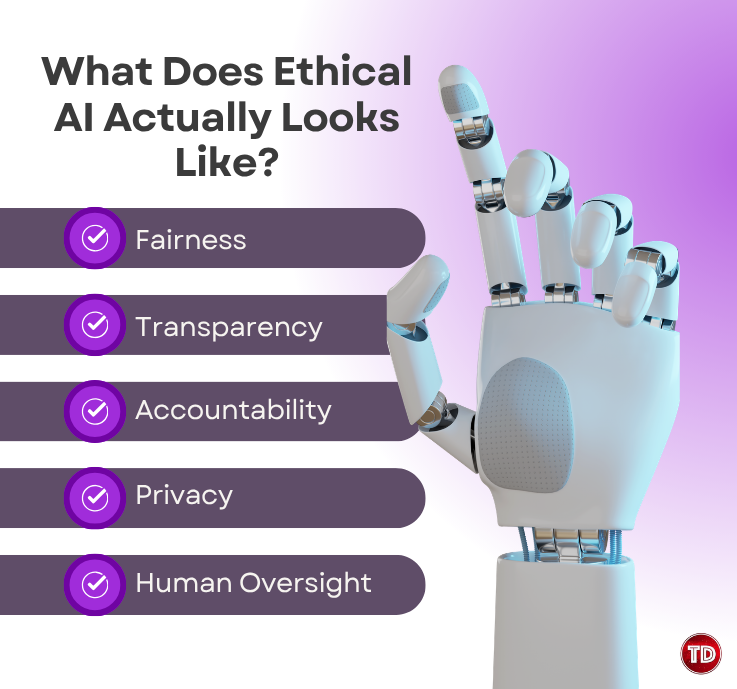
When people hear terms such as AI ethics, responsible AI, or trustworthy AI, they often imagine complicated government regulations or highly technical policies.
In reality, ethical AI is built around several practical principles that help ensure AI benefits society.
Fairness
Imagine applying for your dream job. Before a hiring manager even sees your résumé, an AI system automatically decides whether your application moves forward.
Wouldn’t you want that system to evaluate every applicant fairly? AI systems learn from data.
If the data reflects historical discrimination or lacks diversity, AI may unintentionally reproduce those same patterns. Certain groups of people could be disadvantaged even when the system was never intentionally designed to discriminate.
Ethical AI encourages developers to continuously evaluate their systems, identify hidden biases, and improve datasets so that AI decisions become more equitable and inclusive.
Fairness isn’t about making AI perfect. It’s about actively working to reduce unfair outcomes whenever possible.
Transparency
Have you ever received an online recommendation and wondered:
“Why was this shown to me?”
Transparency helps answer questions like that. We deserve to know when we’re interacting with AI, how AI influences decisions, and what kinds of information the system uses.
Transparency doesn’t require every user to understand neural networks or machine learning algorithms. Instead, it means organizations should communicate openly about how AI affects users and provide understandable explanations whenever there are important decisions involved.
Accountability
Suppose an AI-powered healthcare system makes an incorrect recommendation that affects a patient’s treatment.
Then, who should be responsible? The answer should never be: “The AI made the mistake.”
Artificial intelligence does not possess legal responsibility or moral judgment. People do, that is why developers, organizations, institutions, and decision-makers must remain accountable for the systems they build and deploy.
Accountability ensures that humans remain responsible for monitoring AI performance, correcting mistakes, responding to unintended consequences, and continuously improving the technology.
Because without accountability, trust quickly disappears.
Privacy
Modern AI systems often rely on enormous amounts of data. Some of that data may include personal information such as names, locations, browsing behavior, purchasing habits, health records, or communication history.
This raises important questions:
- How much data should organizations collect?
- How long should they keep it?
- Who can access it?
- How securely is it stored?
Ethical AI encourages organizations to collect only the information they genuinely need, protect sensitive data through strong security practices, and give users greater control over how their personal information is used.
Privacy isn’t simply about protecting our data. It’s about respecting people’s rights and maintaining their trust.
Human Oversight
Can AI help people make better decisions? Absolutely.
Should AI replace human judgment entirely? Probably not.
AI excels at identifying patterns, processing vast amounts of information, and performing repetitive tasks at incredible speed. However, AI lacks empathy, emotional intelligence, personal experiences, cultural understanding, and moral reasoning.
These uniquely human qualities are very crucial in situations involving healthcare, education, employment, law, finance, and public policy. Ethical AI recognizes that humans should remain involved whenever decisions significantly affect people’s lives.
Our goal isn’t to replace human intelligence. The goal is to enhance it.
What Does Ethical AI Look Like for Everyday Users?

It’s easy to think AI ethics only applies to governments, researchers, or large technology companies. Yet, in reality, every AI user plays a role, even you!
Let’s think about these questions:
- Do you verify AI-generated information before sharing it online?
- Do you disclose when AI helped create your content?
- Do you use AI as a learning assistant rather than allowing it to do all the thinking for you?
- Do you avoid entering sensitive personal or confidential information into AI systems?
- Do you critically evaluate AI responses instead of automatically assuming they’re correct?
These small decisions matter. And every responsible interaction helps create a healthier AI ecosystem.
- Students: Ethical AI may mean using AI to better understand difficult lessons instead of submitting AI-generated assignments as entirely their own work.
- Educators: It might involve teaching students how to responsibly evaluate AI-generated information rather than banning AI altogether.
- Professionals: Ethical AI means reviewing AI-generated reports before making business decisions and recognizing that human expertise remains essential.
- Content Creators: It includes being transparent about AI-assisted work while ensuring originality, accuracy, and respect for intellectual property.
Responsible AI isn’t just about how developers build technology. It’s also about how millions of ordinary people choose to use it every day. AI ethics focuses on using artificial intelligence responsibly, but ethical AI also depends on securing the systems behind it. If you’re interested in learning why protecting AI is just as important as using it responsibly, check out this article, Perfect AI Security Doesn’t Exist.
Can Innovation and Ethics Coexist?
Some people might believe that ethical guidelines slow technological progress, but actually it is the opposite. Imagine, if you are downloading a new AI application. Would you trust it if it secretly collected your personal information? Would you rely on an AI-powered financial advisor that couldn’t explain its recommendations? Or, would hospitals confidently adopt AI systems that consistently produced biased medical results?
Probably not.
Innovation without trust rarely succeeds over the long term. And the use of ethical practices help create confidence. A trust that the person or organization prioritizes the people by emphasizing fairness, transparency, privacy, accountability, and human oversight. That trust encourages wider adaption, attracts investments and supports, and creates a stronger foundation for future technological progress.
Ethics strengthens innovation. The most successful AI systems of the future will likely be those that people not only find useful but also those they can trust.
Conclusion
Artificial intelligence will continue to evolve.
Future AI systems will almost certainly become faster, more capable, and more deeply integrated into our daily routines. They may assist with scientific discoveries, improve healthcare, personalize education, support businesses, and help solve challenges that seem impossible today.
The question is no longer whether AI will shape the future. It already is.
The more important question is:
What kind of future do we want AI to help create?
If we focus only on what AI can do, we risk overlooking the responsibilities that come with its growing influence. But if innovation is guided by fairness, transparency, accountability, privacy, and meaningful human oversight, AI can become a technology that not only solves problems but also earns the public trust.
AI ethics is not about fearing technological advancement but ensuring that progress remains centered on people. Because at the end of the day, the future of artificial intelligence will not be determined solely by algorithms, computing power, or data. It will ultimately be shaped by the choices we make, and by our commitment to using technology responsibly, thoughtfully, and for the benefit of people.
References
- Ethics in AI: Why It Matters
- AI Ethics: Principles, Issues, and Future Impacts
- What are AI ethics?
- UNESCO Recommendation on the Ethics of Artificial Intelligence
🤖 $3.74 ONLY for Claude eBooks and Get 25% OFF All Claude Reviewers

Turn Your Team Into Cloud-Ready Professionals Today

Learn AWS with our PlayCloud Hands-On Labs

$2.99 AWS and Azure Exam Study Guide eBooks

Learn GCP By Doing! Try Our GCP PlayCloud

Learn Azure with our Azure PlayCloud

FREE AI and AWS Digital Courses

FREE AWS, Azure, GCP Practice Test Samplers


Subscribe to our YouTube Channel

Follow Us On Linkedin


Written by: Bryce Anrie Bombales