
Can’t Use the Terminal, Can’t Defend the Network: The Importance of Cybersecurity Degrees in the Philippines
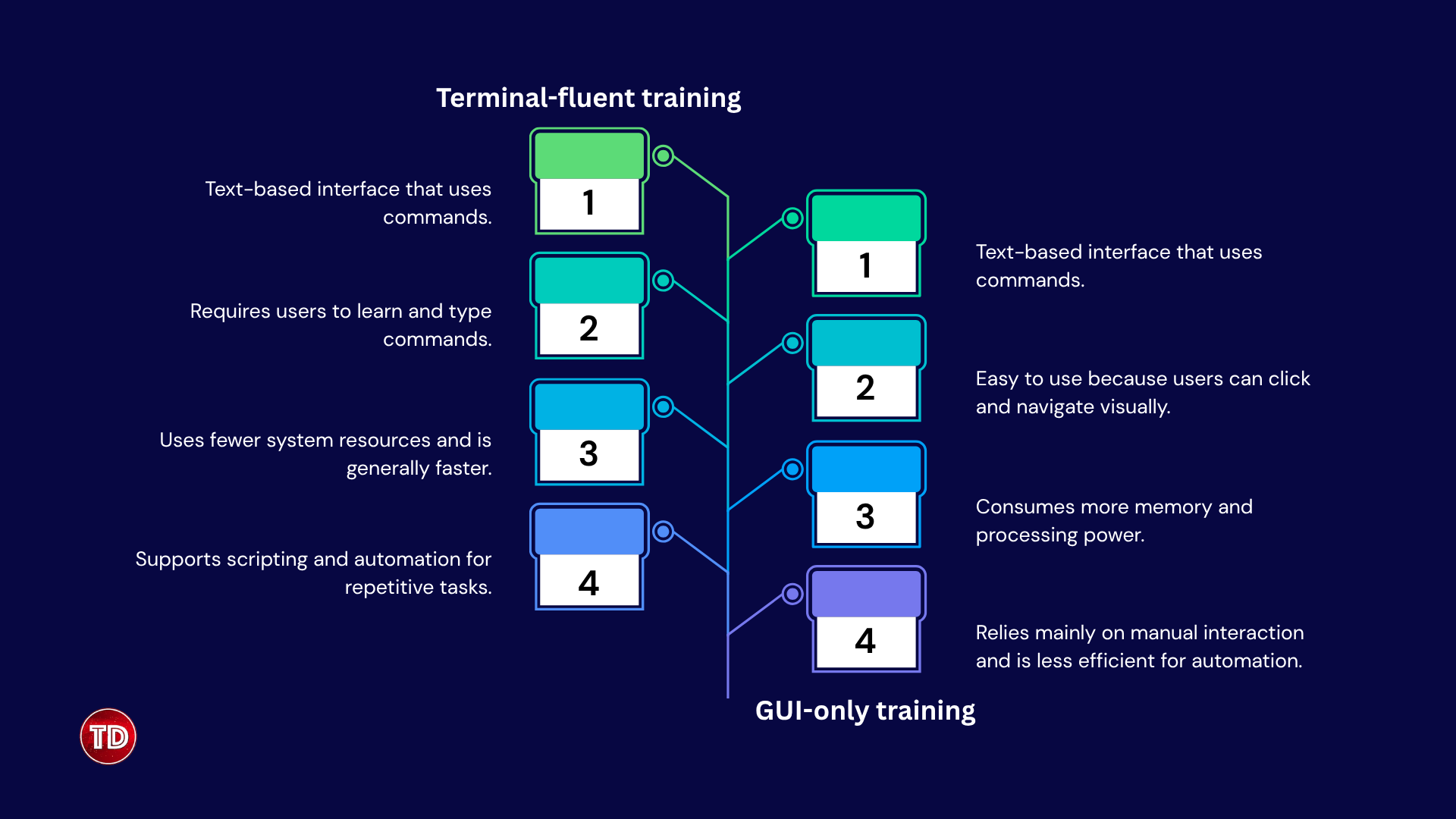
Open a job posting for a Security Operations Center (SOC) analyst, a penetration tester, or a systems administrator anywhere in the world, and one requirement shows up again and again: comfort with the Linux command line. Most of the servers, cloud instances, and network appliances that cybersecurity professionals are hired to defend run on Linux, not Windows. Yet for a long time, formal cybersecurity education in the Philippines has lagged behind this reality, treating security as a side topic bolted onto general IT or Computer Science degrees rather than a discipline with its own dedicated, hands-on curriculum.
The Current State of Cybersecurity Education in PH
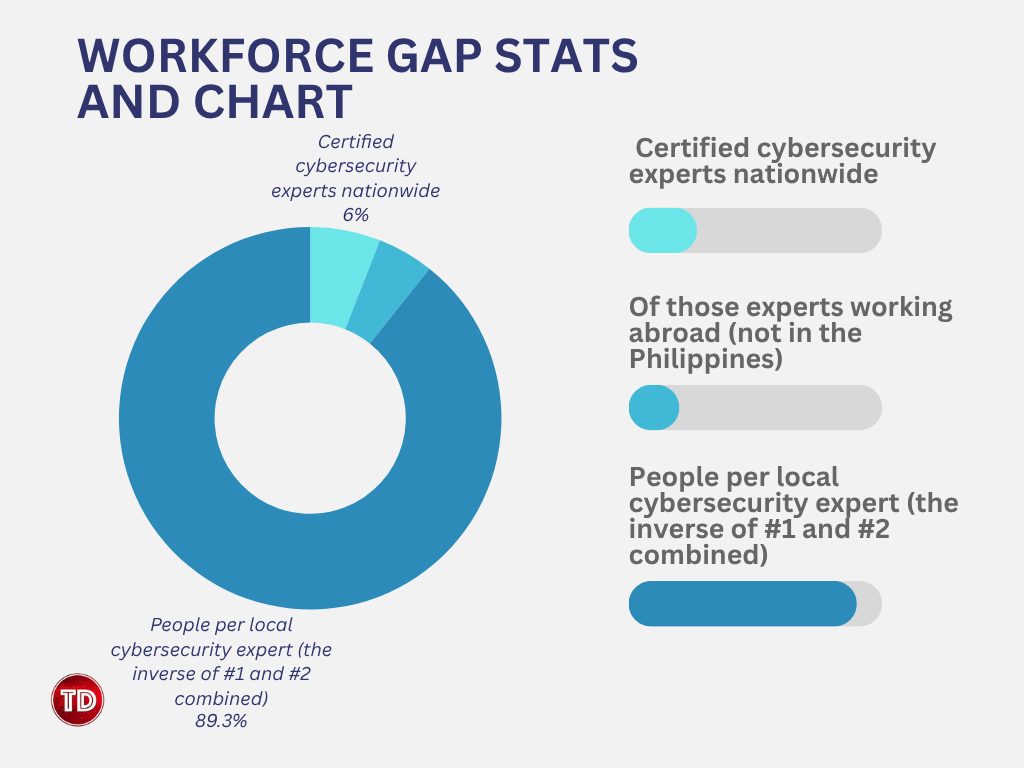
The numbers explain why this topic deserves attention. The Department of Information and Communications Technology (DICT) has noted that the Philippines has roughly one cybersecurity professional for every 2,000 to 3,000 people, and that the country has only around 200 certified cybersecurity experts, with the majority of them working abroad. That scarcity is not just a recruiting headache for local companies; it is a structural risk to banks, government agencies, and the businesses that run the country’s digital economy.
Despite that pressure, dedicated cybersecurity degree programs remain rare. AMA University was the first and, for years, the only school in the Philippines to offer a standalone Bachelor of Science in Cybersecurity, launching the program in December 2016. Most other universities still teach cybersecurity as a specialization track or a handful of units folded into a Bachelor of Science in Information Technology or Computer Science program, rather than as a full degree built around it.
This matters because cybersecurity is not simply “IT with extra caution.” It requires its own depth in areas mainly operating system internals, network protocols, scripting, and digital forensics, skills that are difficult to teach properly as a side note inside a broader IT curriculum.
Why the Terminal Matters: Linux as the Foundation
Here is the practical reason the Linux command line keeps showing up as a non-negotiable skill in cybersecurity work:
- Servers and cloud infrastructure run on Linux. The majority of web servers, cloud virtual machines, and containerized environments that security teams are hired to protect run on some Linux distribution. A graduate who has only used a graphical interface will struggle to investigate, configure, or harden these systems.
- Security tooling is built for the terminal. Tools used for penetration testing, log analysis, network monitoring, and incident response (such as Nmap, Wireshark’s, and various scripting-based forensics tools) are designed to be operated from the shell, often inside Linux-based platforms built specifically for security work.
- Automation depends on scripting, not clicking. Real incident response does not happen one mouse click at a time. Analysts write scripts to parse logs, automate repetitive checks, and respond quickly when something goes wrong. That requires comfort with a shell environment, not just familiarity with a desktop interface.
- Certification exams test it directly. Cybersecurity programs in the Philippines increasingly recognize certifications such as CompTIA Security+, include practical components that assume baseline command-line competency.
A degree program that skips deep Linux and command-line training is, in effect, preparing graduates for a job that does not exist in most real security teams.
What a Stronger Curriculum Looks Like
Recent moves in the Philippine institution point toward what proper implementation should include. AMA University’s cybersecurity track, for example, helps and teaches students to come up with countermeasures and designs across both Linux and Windows environments, alongside cloud platforms and networks. Some schools have already started integrating internationally recognized certifications in their coursework. This ensures that what is taught in the classroom maps onto what employers and exam boards expect.

A foundational cybersecurity degree is built with good terminal skills, and should initially help students progress like this:
- Foundational computing and networking. Before touching security tools, students need a solid grasp of how operating systems, file systems, and networks actually work. This is where Linux fundamentals belong, not as an elective, but as a core, early requirement.
- Command-line proficiency as a graduation requirement. Just as writing competency is assumed of a journalism graduate, terminal competency, navigating the file system, managing permissions, processing text with standard utilities, and writing basic shell scripts, should be assumed of a cybersecurity graduate.
- Hands-on labs over passive lectures. Reading about a SQL injection attack is not the same as setting one up in a sandboxed lab and walking through detection and mitigation. Programs that pair theory with structured lab work produce graduates who are job-ready faster.
- Security domains taught as a connected whole. Network security, digital forensics, ethical hacking, and security governance should not feel like disconnected units; they should build on the same technical foundation, with Linux as the common thread running through most of them.
- Alignment with industry certifications. Mapping coursework to recognized certifications gives students a credential that signals competency to employers beyond the diploma itself, and it forces curricula to stay current with what the industry actually expects.
- Exposure to current threat patterns. With reported cyberattacks against Philippine targets increasing sharply in recent years, partly tied to geopolitical tensions in the region, curricula need to be updated regularly rather than left static for years at a time
The Philippines is facing a cybersecurity workforce shortage serious enough to be described by its own government as a national risk, not just an industry inconvenience. Closing that gap will take more than awareness campaigns or short certificate courses; it requires treating cybersecurity as a full academic discipline with its own dedicated degree programs, built around the practical skills the job actually demands.
Chief among those skills is comfort with the Linux command line. It is not a niche technical detail, it is the operating environment that most of the internet’s infrastructure runs on, and the environment where most real security work happens. A graduate who has only practiced clicking through a graphical interface is not yet equipped to defend a network. A graduate who has spent real hours in the terminal, scripting, navigating, and troubleshooting, is in a far stronger position to step into the roles the country urgently needs filled.
Key takeaways:
- Dedicated cybersecurity degree programs are still rare in the Philippines, with most universities offering it only as a specialization within IT or Computer Science.
- The country faces severe lack of certified cybersecurity professionals, with a bunch of multiple talents works in abroad
- Linux and command-line fluency are foundational, not optional, for real-world security work.
- Good programs pair fundamentals with hands-on labs and align school works with well known certifications
- Closing the skills gap requires institutions to treat cybersecurity education as its own discipline, not an add-on to existing IT curricula.
References
AMA University. (n.d.). Computing. Retrieved June 25, 2026, from
Back End News. (2026, February 11). Bridging the cybersecurity skills gap in the Philippines.
https://backendnews.net/bridging-the-cybersecurity-skills-gap-in-the-philippines/amp/
Context (Thomson Reuters Foundation). (n.d.). Tech brain drain fuels Philippines’ cybersecurity skills gap. Retrieved June 25, 2026, from
https://www.context.news/digital-rights/tech-brain-drain-fuels-philippines-cybersecurity-skills-gap
Inquirer Technology. (n.d.). AMA University pioneers BS Cybersecurity Program in the PH. Retrieved June 25, 2026, from

https://technology.inquirer.net/80181/ama-university-pioneers-bs-cybersecurity-program-ph
Marzan, J. A. (n.d.). Top colleges and universities offering cybersecurity courses in the Philippines. Retrieved June 25, 2026, from
The Freeman/Philstar. (2026, January 20). Cybersecurity talent shortage puts Philippine digital economy at risk.
ASEAN Innovation Business Platform (AIBP). (n.d.). Cybersecurity talent shortages in the Philippines. Retrieved June 25, 2026, from
https://www.aibp.sg/articles/strengthening-cybersecurity-in-the-philippines
🤖 $3.74 ONLY for Claude eBooks and Get 25% OFF All Claude Reviewers

Turn Your Team Into Cloud-Ready Professionals Today

Learn AWS with our PlayCloud Hands-On Labs

$2.99 AWS and Azure Exam Study Guide eBooks

Learn GCP By Doing! Try Our GCP PlayCloud

Learn Azure with our Azure PlayCloud

FREE AI and AWS Digital Courses

FREE AWS, Azure, GCP Practice Test Samplers


Subscribe to our YouTube Channel

Follow Us On Linkedin


Written by: Christine Francoise Gurango