
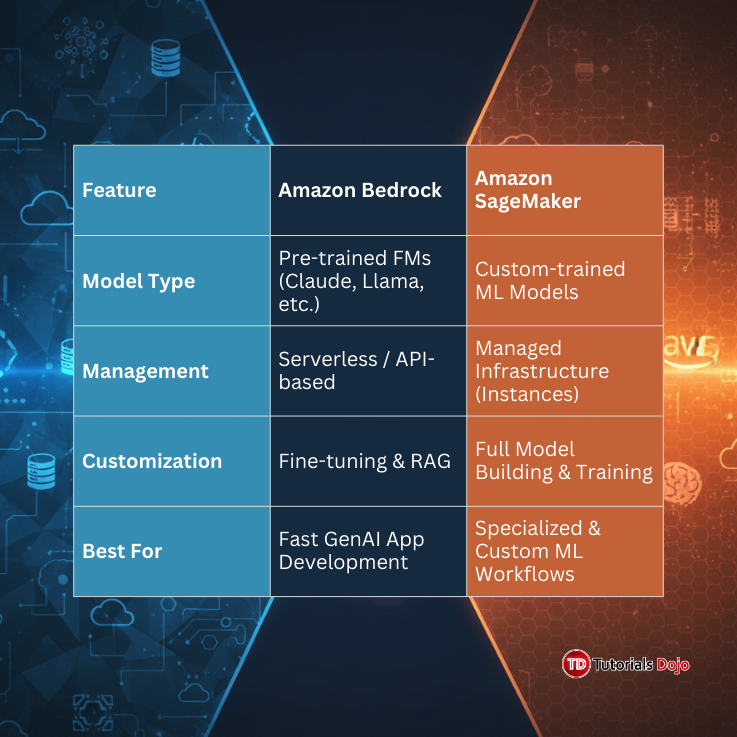
For decades, audio post-production followed a rigid, linear path: record, edit, mix, and master. It was often the “final hurdle” in a project—a phase where creators spent hours hunting through generic libraries for a door slam that didn’t sound like a cartoon or a music track that didn’t feel like corporate elevator background. But as we move through 2026, the silence between the frames is being filled by something far more intelligent. For many of us in the cloud community, Tutorials Dojo has been the ultimate companion on our journey to certification. We’ve spent countless hours diving into Jon Bonso’s practice exams and memorizing those indispensable cheat sheets. But as we grow from students into practitioners, a new question often arises: How can I contribute to this ecosystem? In this post, we’ll explore the process of becoming a contributor and share the roadmap for getting your own technical insights published on the Tutorials Dojo site. Before you hit “send” on your draft, it’s important to understand the benchmark. Tutorials Dojo isn’t just a tech blog; it is a learning portal. This means every post must serve the reader’s journey toward mastery or certification. At the Dojo, “almost right” is wrong. Whether you’re writing about the latest AWS AI Practitioner (AIF-C01) exam or a complex Kubernetes workflow, every technical claim must be verified against official documentation. Fact-check your limits: (e.g., Is that S3 put request limit still accurate for 2026?) Verify your screenshots: Ensure the UI in your images matches the current Cloud Console. Jon’s audience often consists of busy professionals cramming for an exam. They don’t want a “wall of text.” To pass the editorial review, your post must include: Clear Hierarchies: Use H2 and H3 tags to break up the flow. The Signature Comparison Table: If you can compare two services (e.g., Amazon Bedrock vs. SageMaker), do it. It’s a Dojo staple. Bullet Points: Use these for features, pros/cons, and “Exam Tips.” The best Dojo posts feel like a mentor talking to a student. Don’t just explain what a service is; explain why it matters for the exam and how to avoid “distractor” answers in a real-world scenario. Getting your name on a Tutorials Dojo post isn’t a “one-size-fits-all” process. Depending on your experience level and your goals, there are three primary ways to get involved. This path is reserved for the “Heavy Hitters”—the subject matter experts (SMEs) who live and breathe cloud architecture. If you find yourself correcting documentation or explaining the nuances of “Strict Priority” vs. “Weighted Fair Queuing” to your colleagues, this is your calling. The Role: As a Cloud Instructor, you aren’t just a writer; you are a curriculum architect. You’ll work hand-in-hand with the internal content team to develop high-fidelity practice questions, detailed “Cheat Sheet” updates, and comprehensive study guides. Your goal is to mirror the actual exam environment so closely that the real test feels like a breeze for the student. The Process: This is a formal engagement. Tutorials Dojo values transparency and authority, so keep your LinkedIn profile updated and stay active on the official TD LinkedIn page. The “Dojo” Requirement: Expect to provide a Credly transcript as proof of your certifications. The most critical part of the application is the Technical Sample: you must demonstrate that you can break down a “wrong” answer as effectively as a “right” one. In the Dojo, the explanation is where the real learning happens. Cloud technology moves faster than textbooks can keep up with. If you are working on the cutting edge—perhaps implementing Amazon Q for enterprise automation or deploying Bedrock models—your real-world experience is a goldmine for other practitioners. The Key Strategy: High-level experts are busy, and so is the TD editorial team. Don’t write the full article first. Instead, lead with a “Micro-Pitch.” Reach out to the support team or engage with Jon and the team via the community forums with a clear value proposition. The “Dojo” Formula: A successful pitch identifies a gap. It looks like this: Why it Works: This approach shows you respect the platform’s standards and are focused on solving a specific student pain point. Technical documentation tells you how a service works, but the Career Hub tells you how a career works. This path is for those who want to give back to the community by sharing the human side of the cloud journey. The Focus: These aren’t just “I passed” posts (though those are great). They are strategic roadmaps. We look for stories like: “From Zero to Solutions Architect: My 6-month Roadmap.” “Overcoming Exam Anxiety: How I Tackled the Professional Level Exams.” “The AWS New Graduate Program: What to Expect in Your First 90 Days.” Why it Works: These stories provide the “emotional fuel” students need to keep going. They are highly shareable, relatable, and build a sense of camaraderie within the Dojo community. If your story can inspire just one person to book their exam, it’s a story worth telling. Before you send that email to the Tutorials Dojo team, run your draft through this “Dojo Filter.” If you can check all five boxes, your chances of approval skyrocket. Every paragraph should serve a purpose. Ask yourself: Does this help a student pass an exam, or does it help a professional solve a real-world cloud problem? If it’s just “fluff” or marketing jargon, cut it. Jon’s readers value their time above all else. Cloud consoles and service limits change monthly. The Check: Did you use the latest naming conventions? (e.g., ensuring you aren’t using deprecated service names). The Fix: Cross-reference your technical stats with the official AWS, Azure, or Google Cloud documentation from the current month. Open your draft and scroll through it quickly. Can you understand the main points just by reading the bold text and headings? Is there a Comparison Table? (If not, find a way to add one—it’s the hallmark of a TD post). Are your code snippets formatted in a clean, readable block? In the Dojo, we don’t just teach the right way; we warn against the wrong way. The Check: Have you mentioned common pitfalls or “gotchas”? The Fix: Add a “Pro-Tip” or “Note” box that says: “Warning: Many students confuse [Service A] with [Service B] because of [X]. Remember that [Service A] is specifically for [Y].” Your tone should be that of a Senior Architect mentoring a Junior. You should be confident and authoritative, but never condescending. Use active voice (“Do this,” “Configure that”) rather than passive voice (“It should be configured…”). Publishing on Tutorials Dojo is more than just getting a byline on a website; it’s a badge of honor in the cloud community. It signifies that you have mastered a complex technical topic well enough to teach it to thousands of other learners worldwide. Whether you are aiming for the Cloud Instructor Program, pitching a cutting-edge Guest Deep-Dive, or sharing your personal growth story in the Career Hub, the path to becoming a contributor starts with a commitment to quality and a desire to give back. The Dojo doors are open for those who prioritize technical excellence and community success. We can’t wait to see the insights you bring to the table. Now, were you able to publish your posts in tutorialsdojo.com site? AWS Certified AI Practitioner (AIF-C01) Study Guide – The newest foundational exam for GenAI. AWS Certified Solutions Architect Associate (SAA-C03) Study Guide – The most popular certification on the platform. AWS Certified Machine Learning Engineer Associate (MLA-C01) Study Guide – For those focusing on ML Ops and model deployment. AWS Certified Cloud Practitioner (CLF-C02) Study Guide – The starting point for all cloud journeys. AWS Certified Generative AI Developer – Professional (AIP-C01) – The latest high-level professional certification. Azure Fundamentals (AZ-900) Study Guide – Key foundational resource for Azure. Azure Developer Associate (AZ-204) Study Guide – Deep dive for cloud developers. Azure Exam Study Guides (All Path Index) – The directory for AZ-104, AZ-305, and more. GCP Associate Cloud Engineer (ACE) Study Guide – The core entry-level GCP cert. GCP Professional Cloud Architect Study Guide – Advanced architectural guide for Google Cloud. The Full AWS Study Path Index: A one-stop-shop for every AWS exam path. Tutorials Dojo Portal (Practice Exams): Where the actual mock exams and “Review Mode” tests are hosted. The Tutorials Dojo Cheat Sheets: The legendary summarized notes for all cloud services.

The “Dojo” Standard: What It Takes to Get Approved
1. Technical Accuracy is Non-Negotiable
2. The Power of “Scannability”
3. Empathy for the Learner

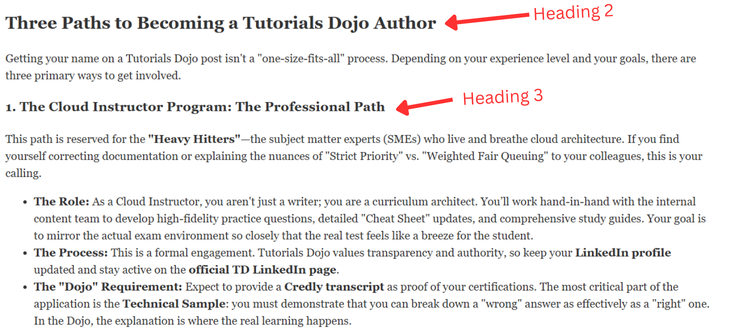
Three Paths to Becoming a Tutorials Dojo Author
1. The Cloud Instructor Program: The Professional Path
2. The Guest Pitch: The Expert Path
“I’ve noticed that while many students understand the basics of [Service X], they consistently struggle with the [Specific Integration] required for the [Exam Name]. I’ve developed a 10-step troubleshooting guide that simplifies this using [Specific Methodology]. Would this be a good fit for the TD technical blog?”3. The Career Hub & Student Stories: The Community Path
The “Pre-Flight” Checklist: 5 Steps to an Approved Draft
1. The “So What?” Test
2. Verify Against the “2026 Baseline”
3. Visual Hierarchy & “The Scannability Factor”
4. The “Distractor” Analysis
5. Tone Check: Authoritative yet Accessible

Join the Ranks of the Dojo
References:

Learn AWS with our PlayCloud Hands-On Labs
$2.99 AWS and Azure Exam Study Guide eBooks

New AWS Generative AI Developer Professional Course AIP-C01

Learn GCP By Doing! Try Our GCP PlayCloud
Learn Azure with our Azure PlayCloud
FREE AI and AWS Digital Courses

FREE AWS, Azure, GCP Practice Test Samplers

Subscribe to our YouTube Channel

Follow Us On Linkedin


Written by: Daniel Gerodias