
Last updated on September 11, 2026
The Microsoft Certified: Cloud and AI Security Engineer Associate (SC-500) certification is designed for security engineers who implement and manage end-to-end security controls across Azure, hybrid, and AI-enabled environments. It validates the ability to protect organizational identities, data, applications, infrastructure, and AI workloads by securing access to resources, enforcing security and regulatory compliance, protecting storage, databases, networks, and compute resources, and managing and monitoring an organization’s overall security posture.
The exam assesses whether candidates can implement security controls across four primary domains: identity, access, and governance; storage, databases, and networking; compute; and security posture management and monitoring. Candidates should be prepared to work with technologies such as Microsoft Entra ID, Azure Key Vault, Azure Policy, Microsoft Defender for Cloud, Azure networking services, Microsoft Sentinel, Microsoft Security Copilot, and security controls for AI workloads. The exam also covers areas such as Privileged Identity Management, Conditional Access, managed identities, Azure SQL and Storage security, network protection, virtual machine and application platform security, Microsoft Defender services, AI and agent security, event collection, and security automation.
Candidates seeking more information about the SC-500 certification should review the official study guide. The document describes the candidate profile, exam expectations, weighted content domains, detailed skills measured, recommended experience, and official preparation resources.
SC-500 Exam Domains
The exam domains for the Microsoft Certified: Cloud and AI Security Engineer Associate (SC-500) certification represent the skills required to implement and manage end-to-end security controls across Azure, hybrid, and AI-enabled environments. Candidates should be able to manage identity, access, and governance; secure storage, databases, and networking; protect compute resources and AI solutions; and manage and monitor security posture by using technologies such as Microsoft Entra ID, Azure Key Vault, Microsoft Defender for Cloud, Microsoft Sentinel, and Microsoft Security Copilot.
- Manage identity, access, and governance (20–25%)
- Secure storage, databases, and networking (25–30%)
- Secure compute (20–25%)
- Manage and monitor security posture (20–25%)
SC-500 Study Materials
Before taking the Cloud and AI Security Engineer Associate (SC-500) certification exam, candidates should review the resources listed below. These materials can help strengthen the practical security skills required to protect Azure, hybrid, and AI-enabled environments, including managing identity and access with Microsoft Entra ID, protecting secrets with Azure Key Vault, enforcing security governance and compliance, securing storage and databases, implementing network security controls, protecting compute and AI solutions, managing security posture with Microsoft Defender for Cloud, collecting security events with Microsoft Sentinel, and using Microsoft Security Copilot.
- Tutorials Dojo’s SC-500 Cloud and AI Security Engineer Associate Practice Exams
- SC-500 Cloud an AI Security Engineer Associate Official Study Guide
- Microsoft Entra ID documentation
- Azure Firewall documentation
- Secure and use policies on virtual machines in Azure
- Security – Azure App Service
- Azure Policy documentation
- Microsoft Defender for Cloud documentation
- Microsoft Threat Modeling Tool overview
- Microsoft Sentinel documentation
- Azure Storage documentation
- Azure Files documentation
- Azure SQL documentation

Azure Services to Focus on for the SC-500 Exam
Here is the list of Azure services that you have to focus on for your upcoming SC-500 Microsoft Certified Cloud and AI Security Engineer Associate exam:
Identity and Access Security
- Microsoft Entra ID — secure authentication and authorization, identity protection, conditional access policies, and Privileged Identity Management (PIM).
- Role‑Based Access Control (RBAC) — implement granular access controls across Azure resources and AI workloads, ensuring least‑privilege access for users and services.
Network and Perimeter Protection
- Secure Networking Controls — network security groups (NSGs), Azure Firewall, DDoS Protection, and secure hybrid/connectivity patterns for cloud and AI services.
- Application Firewall & Endpoint Security — leverage WAF (Web Application Firewall) and secure endpoint configurations for cloud applications and AI endpoints.
Data, Compute & AI Model Protection
- Data Protection Services — secure storage, encryption at rest and in transit, Azure Key Vault for secrets and encryption keys, and secure compute configuration.
- AI Model & Pipeline Security — implement controls to protect generative AI models and pipelines (e.g., secure model deployment, secure inference endpoints, and access restrictions for model artifacts). (Expected for SC‑500 based on AI security expansion)
Security Operations, Monitoring & Threat Detection
- Microsoft Defender for Cloud — strengthen cloud security posture through recommendations, threat detection, and compliance insights.
- Microsoft Sentinel / SIEM — implement security incident monitoring, log analytics, and automated response to threats across cloud and AI solutions.
SC-500 Key Exam Topics by Domain
Domain 1: Manage identity, access, and governance
- Microsoft Entra ID security: Configure Conditional Access, MFA, passwordless authentication, PIM, app registrations, enterprise applications, consent, and managed identities.
- Azure Key Vault security: Protect keys, secrets, and certificates by configuring Key Vault access controls, firewall settings, and threat protection.
- Security governance and compliance: Use Azure Policy, Defender for Cloud, resource locks, role-based access control, and compliance controls to enforce secure configurations..
Domain 2: Secure storage, databases, and networking
- Azure Storage security: Secure storage accounts with access controls, firewall rules, data protection settings, and Microsoft Defender for Storage.
- Database security: Protect Azure databases by configuring authentication, auditing, access controls, and Microsoft Defender for Databases.
- Azure network security: Secure network traffic with NSGs, ASGs, Private Endpoints, Azure Firewall, VPN controls, and network monitoring tools.
Domain 3: Secure compute
- AI security: Protect AI applications, agents, identities, and data by using Microsoft security, governance, and AI protection capabilities.
- Server and virtual machine security: Secure Azure, hybrid, and multicloud servers with encryption, JIT access, Azure Bastion, Defender for Servers, and vulnerability management.
- Application platform security: Protect containers, AKS, App Service, Functions, Logic Apps, APIs, and web applications with appropriate platform security controls.
Domain 4: Manage and monitor security posture
- Microsoft Defender for Cloud: Assess security posture, identify vulnerabilities, monitor compliance, and protect Azure, hybrid, and multicloud workloads.
- Microsoft Sentinel: Collect and analyze security data, configure connectors and analytics, and automate incident response with rules and playbooks.
- Microsoft Security Copilot: Configure Security Copilot workspaces, permissions, plugins, and agents to support security investigations and operations.
SC-500 Important Skills to Focus on
- Cloud Security Architecture — design secure Azure environments with tools like Azure Firewall, DDoS Protection, and Azure Security Center to protect resources and ensure compliance.
- Identity & Access Management (IAM) — manage authentication and authorization with Microsoft Entra ID (Azure AD) and implement RBAC to control access to Azure and AI resources.
- Data & AI Model Security — secure data using encryption, Azure Key Vault, and protect AI models by applying access controls and secure deployment practices.
- Security Monitoring & Incident Response — use Microsoft Sentinel and Microsoft Defender for Cloud to detect, respond to, and automate security incident management across cloud and AI services.
Validate Your SC-500 Exam Readiness
If you feel confident after going through the suggested materials above, it’s time to put your knowledge of different Azure concepts and services to the test. For top-notch practice exams, consider using the Tutorials Dojo’s SC-500 Microsoft Certified Cloud and AI Security Engineer Associate Practice Exams.
These practice tests cover the relevant topics that you can expect from the real exam. It also contains different types of questions, such as single-choice, multiple-response, hotspot, yes/no, and drag-and-drop. Every question on these practice exams has a detailed explanation and adequate reference links that help you understand why the correct answer is the most suitable solution. After you’ve taken the exams, it will highlight the areas you need to improve. Together with our cheat sheets, we’re confident that you’ll be able to pass the exam and have a deeper understanding of how Azure works.
SC-500 Sample Practice Test Questions:
Question 1
You are reviewing access control for an Azure environment that uses multiple management groups and several Azure subscriptions within a single Microsoft Entra tenant.
A department manager recently provisioned a subscription for a new workload. After creation, the manager is the only account with the Owner role on that subscription.
A global administrator named CloudAdmin1 must gain the ability to update Azure RBAC role assignments for the subscription and revoke the manager’s Owner access.
What is the first action CloudAdmin1 should take?
- Transfer the subscription to a different management group.
- Request that the department manager grant CloudAdmin1 the Owner role for the subscription.
- Ask the department manager to transfer ownership of the subscription.
- Activate the Access management for Azure resources setting.
Correct Answer: 4
As a Global Administrator in Microsoft Entra ID, you may not have access to all subscriptions and management groups within your tenant. It is important to note that Microsoft Entra ID and Azure resources are secured independently of one another. This means that role assignments in Microsoft Entra do not grant access to Azure resources, and vice versa.
However, if you hold the Global Administrator role in Microsoft Entra ID, you have the ability to assign yourself access to all Azure subscriptions and management groups in your tenant. This feature can be used if you do not have access to Azure subscription resources, such as virtual machines or storage accounts, and wish to leverage your Global Administrator privileges to gain access to those resources.
When you elevate your access, you will be assigned the User Access Administrator role in Azure at the root scope (/). This role allows you to view all resources and manage access in any subscription or management group within the tenant. It’s important to note that User Access Administrator role assignments can be removed using Azure PowerShell, Azure CLI, or the REST API.
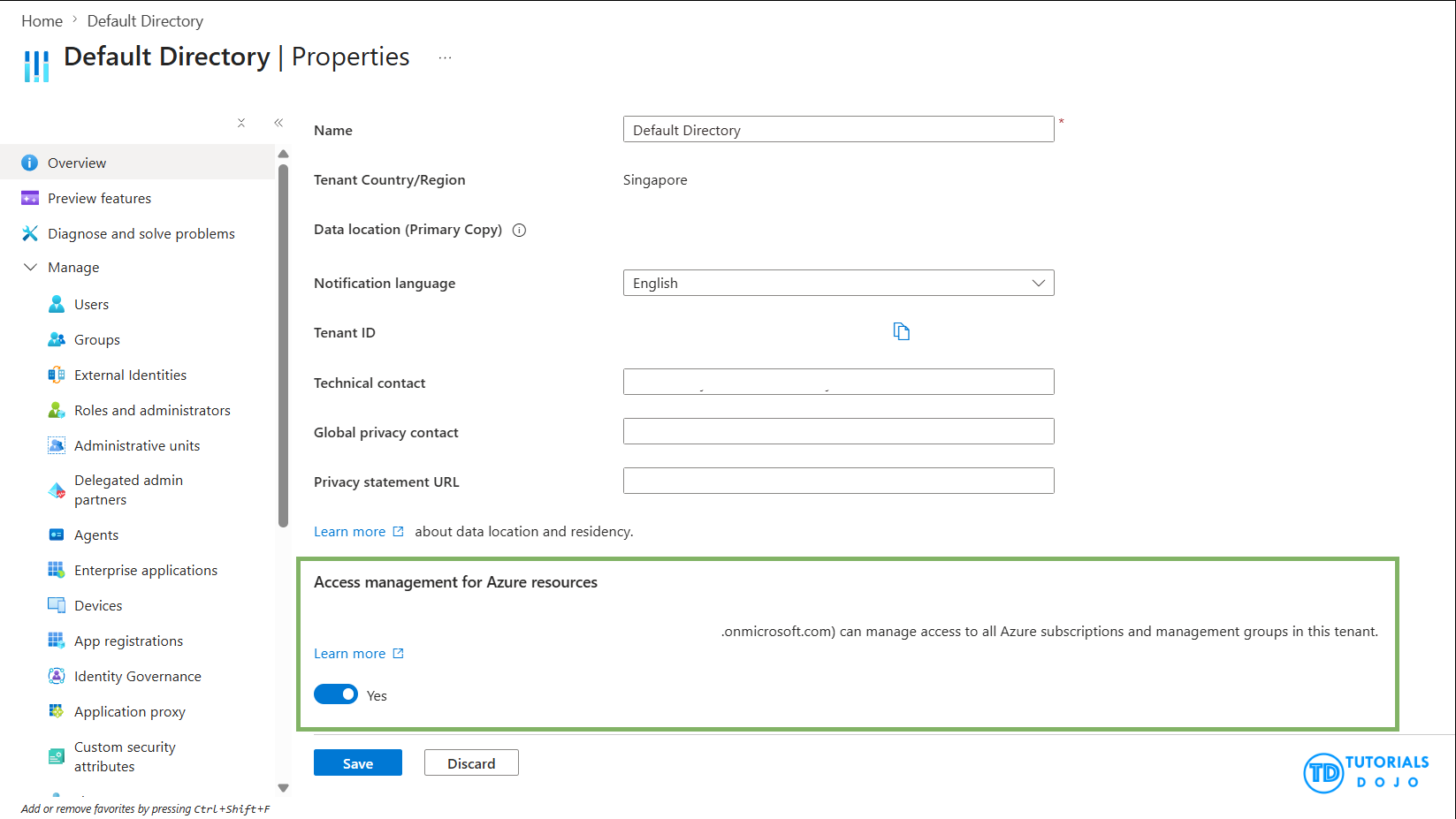
If you enable Access management for Azure resources, you will also be assigned the User Access Administrator role in Azure RBAC at the root scope (/). This grants you permission to assign roles across all Azure subscriptions and management groups associated with your Microsoft Entra tenant. This option is only available to users who are assigned the Global Administrator role in Microsoft Entra ID.

Hence, the correct answer is: Activate the Access management for Azure resources setting. This setting allows a global administrator to elevate their access in Azure. Once activated, CloudAdmin1 can assign themselves the Owner role on the subscription and then revoke the manager’s Owner access. This is the first step to gaining control without relying on the manager.
The option that says: Transfer the subscription to a different management group is incorrect because transferring a subscription between management groups does not alter the RBAC role assignments. The department manager would still remain the only Owner, and CloudAdmin1 would not gain the necessary access.
The option that says: Request that the department manager grant CloudAdmin1 the Owner role for the subscription is incorrect because it primarily relies on the manager’s cooperation. The scenario requires CloudAdmin1 to independently gain access without depending on the manager’s action.
The option that says: Ask the department manager to transfer ownership of the subscription is incorrect because ownership transfer also requires the manager’s voluntary action. This does not provide CloudAdmin1 with a direct method to enforce access control.
References:
Check out this Microsoft Entra ID Cheat Sheet:
Question 2
Your organization runs multiple virtual machines within an Azure virtual network.
The virtual machines are configured to send all external traffic through Azure Firewall.
You must configure the firewall so that the virtual machines can connect to downloads.tutorialsdojo.com over HTTPS while preventing access to other internet destinations.
Which type of Azure Firewall rule should you configure?
- DNAT (Destination Network Address Translation) rule
- Application rule
- SNAT (Source Network Address Translation) rule
- Network rule
Correct Answer: 2
In Azure Firewall and its associated Firewall policies, Fully Qualified Domain Names (FQDNs) can be used to filter traffic in DNAT (Destination Network Address Translation), network, and application rules, depending on the type and direction of the traffic being inspected.
Azure Firewall implements FQDN-based filtering according to the type of rule in effect:
– Application rules use FQDNs to filter HTTP/S and MSSQL traffic. They rely on an application-level transparent proxy and the Server Name Indication (SNI) header to differentiate between FQDNs that resolve to the same IP address. In other words, FQDNs are matched and filtered against the original domain requested by the client, not based on the resolved IP address.
– Network and DNAT rules filter traffic based on the resolved IP addresses of the FQDNs, using Azure DNS or a custom DNS server. Azure Firewall dynamically maintains and updates the list of associated IP addresses for the FQDNs, ensuring that traffic is routed correctly even if the underlying IP addresses change.
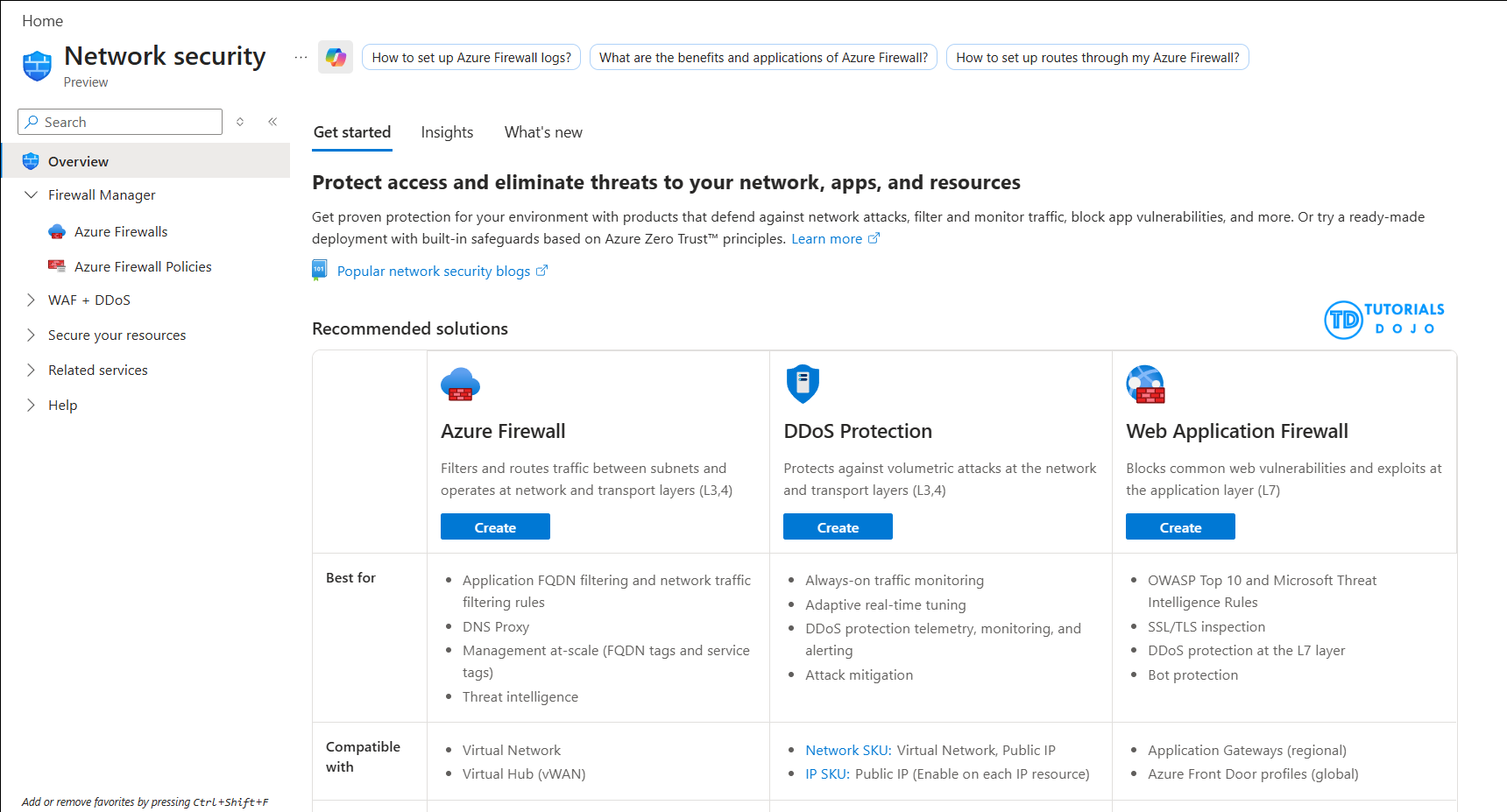
Application rules in Azure Firewall allow you to filter outbound traffic based on FQDNs (fully qualified domain names) over HTTP/HTTPS. This matches the requirement to permit access only to downloads.tutorialsdojo.com over HTTPS while blocking other internet destinations.
Hence, the correct answer is: Application rule.
DNAT (Destination Network Address Translation) rule is incorrect because DNAT rules are typically used to translate and filter inbound traffic from external sources to internal resources. Your requirement is about controlling outbound traffic from VMs to a specific domain, so DNAT does not apply.
SNAT (Source Network Address Translation) rule is incorrect because SNAT rules are primarily used to translate the source IP of outbound traffic so that it appears to come from the firewall’s public IP. While SNAT ensures connectivity to the internet, it does not provide domain-based filtering or restriction.
Network rule is incorrect because network rules filter traffic based on IP addresses, ports, and protocols. They cannot restrict outbound traffic by domain name, which is essential in this scenario since the requirement is to allow only downloads.tutorialsdojo.com.
References:
https://learn.microsoft.com/en-us/azure/firewall/domain-filtering-overview
https://learn.microsoft.com/en-us/azure/firewall/fqdn-filtering-network-rules
Check out this Azure Firewall Cheat Sheet:
For more Azure practice exam questions with detailed explanations, check out the Tutorials Dojo Portal:


Final Remarks
Success in the SC-500 exam requires both conceptual knowledge and practical experience in securing Azure environments, including cloud infrastructure, AI models, and data. Focus your preparation on the official Microsoft Learn materials and strengthen your understanding through hands-on practice with tools like Azure Security Center, Microsoft Entra ID, Microsoft Sentinel, and Microsoft Defender for Cloud. Practice exams are also useful for assessing your readiness and identifying areas for further improvement. By following this focused study approach, you will be well-prepared to earn the Microsoft Certified: Cloud and AI Security Engineer Associate certification. Good luck with your preparation!
🤖 $3.74 ONLY for Claude eBooks and Get 25% OFF All Claude Reviewers

Turn Your Team Into Cloud-Ready Professionals Today
Learn AWS with our PlayCloud Hands-On Labs

$2.99 AWS and Azure Exam Study Guide eBooks

Learn GCP By Doing! Try Our GCP PlayCloud

Learn Azure with our Azure PlayCloud
FREE AI and AWS Digital Courses

FREE AWS, Azure, GCP Practice Test Samplers

Subscribe to our YouTube Channel

Follow Us On Linkedin


Written by: Lois Angelo Dar Juan