
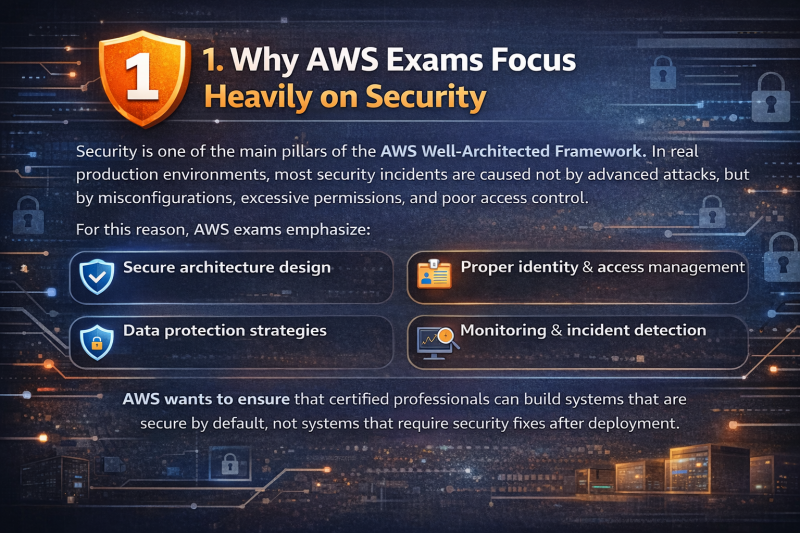
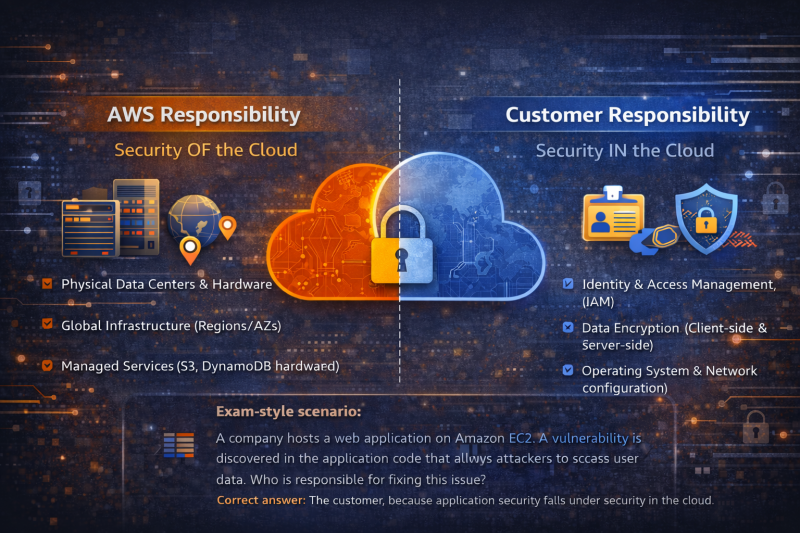
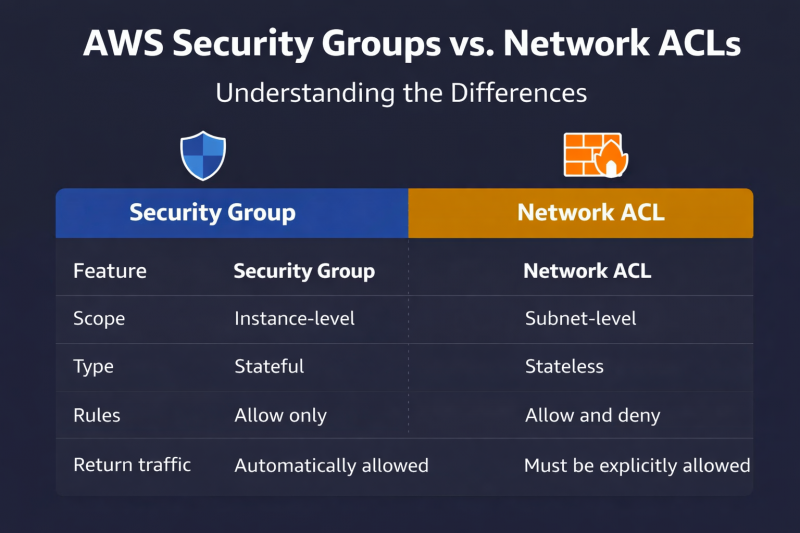
Cloud Security is not just a specialized topic in AWS; AWS certification exams actively test it as a core competency. In practice, whether you are preparing for the AWS Cloud Practitioner, Solutions Architect Associate, SysOps Administrator, or even the Security Specialty, security concepts appear in almost every section of the exam. For this reason, these exams are designed to assess how well you can design, operate, and secure cloud systems in real-world scenarios. Here are the top AWS security fundamentals you must familiarize yourself with to succeed in any AWS certification exam. First, security is one of the main pillars of the AWS Well-Architected Framework. In real production environments, most security incidents are caused not by advanced attacks, but by misconfigurations, excessive permissions, and poor access control. For this reason, AWS exams emphasize: In AWS, additionally, the AWS Shared Responsibility Model is one of the most important concepts to understand, and AWS includes it in almost every exam. It defines the divide of security responsibilities between AWS and the customer: Exam-style scenario: A company hosts a web application on Amazon EC2. A vulnerability is discovered in the application code that allows attackers to access user data. Who is responsible for fixing this issue? Correct answer: The customer, because application security falls under security in the cloud. From an exam perspective, therefore, IAM (Identity and Access Management) is arguably the most critical service to master for AWS exams. You must understand: Always grant only the permissions required to perform a task, and nothing more than needed. Exam-style scenario: Correct answer: Attach an IAM Role to the EC2 instance with an S3 read-only policy. Security Groups and Network ACLs are both used to control network traffic in AWS, but they operate at different levels. Security Groups act as virtual firewalls for individual resources like EC2 instances. They are stateful, meaning return traffic is automatically allowed. Network ACLs operate at the subnet level and are stateless, meaning both inbound and outbound rules must be explicitly defined. Exam-style scenario: You need to block a specific IP address from accessing all resources in a subnet. What should you use? Correct answer: Network ACL AWS heavily tests encryption across all certifications. You should understand: In many scenarios, however, AWS exams test the difference between AWS-managed keys. Customer-managed keys provide more control, including key rotation, access policies, and audit logging. (For exams, remember: AWS KMS manages keys for data at rest, while AWS Certificate Manager (ACM) handles SSL/TLS certificates for data in transit.) Security involves not only prevention, but also visibility and detection. Key services: Therefore, in exam scenarios, CloudTrail is typically used for auditing and compliance, while CloudWatch is used for operational monitoring and alerting. Many candidates fail not because they lack knowledge, but because they misunderstand how AWS frames security questions. Students often forget Trusted Advisor. It is the first place to check if your account is following security best practices (like finding open S3 buckets or missing MFA). If you truly master: Overall, you will be prepared for the majority of security-related questions across all AWS certifications because security is not a separate topic in AWS; instead, it is embedded in everything from identity and networking to data protection and monitoring. AWS Shared Responsibility Model – AWS Amazon VPC Security Groups – AWS AWS Key Management Service (KMS) – AWS AWS Well-Architected Framework (Security Pillar) – AWS
Why AWS Exams Focus Heavily on Security
The Shared Responsibility Model (Most Tested Concept)
AWS Responsibility (Security OF the Cloud)
Customer Responsibility (Security IN the Cloud)

IAM: Users, Roles, Policies, and Least Privilege
Principle of Least Privilege
An EC2 instance needs to read files from an S3 bucket. What is the most secure way to grant access?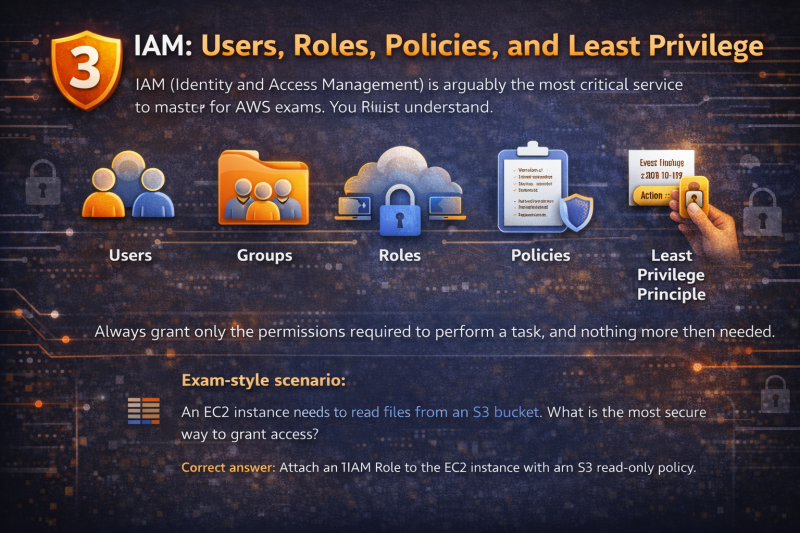
Security Groups vs Network ACLs (Classic Trick Question)
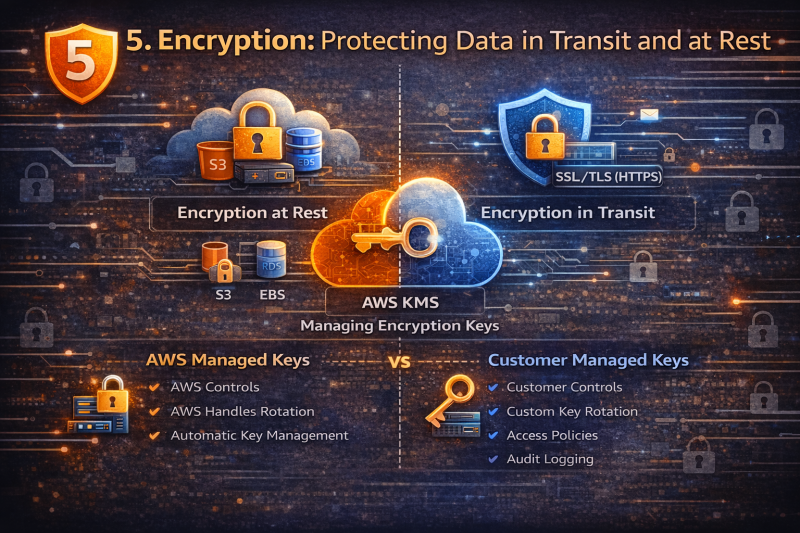
Encryption: Protecting Data in Transit and at Rest
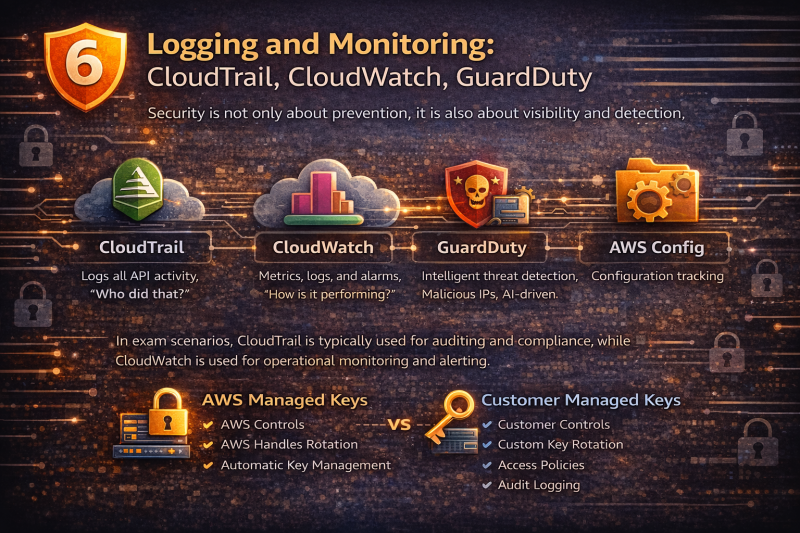
Logging and Monitoring: CloudTrail, CloudWatch, GuardDuty
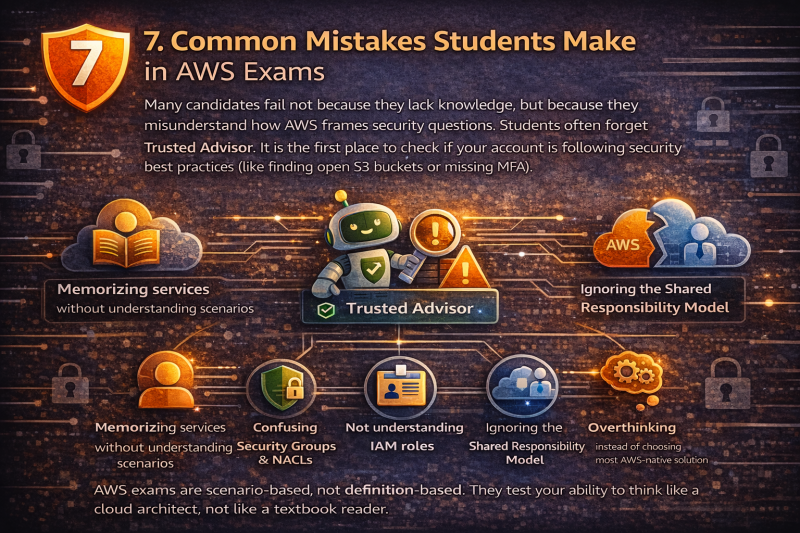
Common Mistakes Students Make in AWS Exams
Common mistakes include:
Final Advice for Exam Success
References
🌸 25% OFF All Reviewers on our International Women’s Month Sale! Save 10% OFF All Subscriptions Plans & 5% OFF Store Credits/Gift Cards!

Learn AWS with our PlayCloud Hands-On Labs

$2.99 AWS and Azure Exam Study Guide eBooks

New AWS Generative AI Developer Professional Course AIP-C01

Learn GCP By Doing! Try Our GCP PlayCloud
Learn Azure with our Azure PlayCloud
FREE AI and AWS Digital Courses

FREE AWS, Azure, GCP Practice Test Samplers

Subscribe to our YouTube Channel

Follow Us On Linkedin


Written by: Wadie Camaligan