
Last updated on June 10, 2026
Human AI workflows are rapidly transforming modern software development. From generating boilerplate code to debugging cloud infrastructure configurations, AI coding assistants are becoming part of the everyday toolkit of developers around the world.
For junior developers, this shift is significantly changing how programming is learned.
A few years ago, beginner developers spent countless hours searching through Stack Overflow threads, reading documentation line by line, and manually debugging syntax errors. Today, many of those learning barriers are reduced through AI-assisted coding experiences. A developer can now ask an AI assistant to explain Kubernetes networking, generate a Docker Compose configuration, or debug a failing API request within seconds.
This evolution is reshaping junior developer learning habits across web development, cloud computing, DevOps, and software engineering education.
However, while AI coding assistants improve productivity and accelerate learning, they also introduce new concerns regarding dependency, debugging skills, problem-solving ability, and foundational programming knowledge.
In this article, we will explore how AI-powered coding assistants are influencing the next generation of software engineers and why developers must balance AI productivity with strong technical fundamentals.
Why Human AI Tools Are Becoming Popular Among Junior Developers
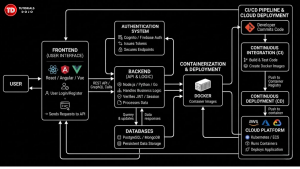
The rise of AI coding assistants is closely connected to the increasing complexity of modern software development. Today’s junior developers are expected to understand multiple technologies simultaneously. A single beginner project may involve frontend frameworks, backend APIs, databases, authentication systems, containerization, cloud deployment, and CI/CD pipelines.
For many learners, this ecosystem becomes overwhelming.
AI coding assistants help reduce this complexity by acting as real-time interactive mentors. Instead of spending an hour searching documentation, developers can ask direct questions and receive contextual answers immediately.
For example, a junior cloud engineer learning Docker might ask ChatGPT:
Explain why my Docker container exits immediately after startup
An AI assistant can then explain common causes such as:
- Missing foreground processes
- Incorrect CMD instructions
- Application crashes
- Port binding problems
- Environment variable issues
This instant troubleshooting workflow improves the learning experience because developers receive immediate feedback while actively building projects.
Similarly, developers learning Kubernetes can ask AI assistants to generate deployment manifests:
apiVersion: apps/v1
kind: Deployment
metadata:
name: sample-nginx

spec:
replicas: 2
selector:
matchLabels:
app: nginx
Instead of memorizing YAML syntax from scratch, learners can focus on understanding how Kubernetes deployments actually work.
This is one of the main reasons why AI coding assistants are rapidly becoming essential tools for beginner developers.
Human AI Workflows and the New Learning Process
Modern developer education is no longer purely documentation-driven. AI is introducing a conversational learning workflow where developers learn interactively while coding in real time.
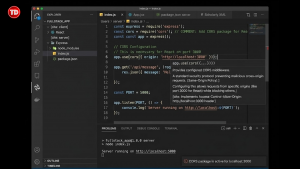
For example, a junior developer building a Node.js REST API may encounter a CORS issue during frontend integration. Previously, the learner would search through multiple documentation pages and forum discussions. Today, the workflow often looks different.
The developer may ask:
Why is my Express.js API blocked by CORS when connecting to React frontend?
The AI assistant may then generate both an explanation and implementation example:
const cors = require("cors");
app.use(cors({
origin: "http://localhost:3000"
}));
More importantly, AI tools often explain why the issue happens instead of simply giving the answer. This creates a faster feedback loop for developers learning backend development concepts.
This interactive approach is changing how junior developers consume technical knowledge. Instead of passively reading tutorials, many learners now actively converse with AI systems while coding.
As a result, learning becomes more iterative and project-oriented.
How Human AI Workflows Are Accelerating DevOps Education
One of the biggest impacts of AI coding assistants can be seen in cloud computing and DevOps education.
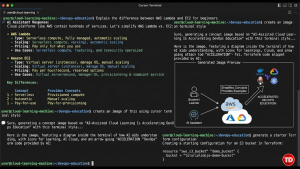
Cloud platforms such as AWS, Azure, and Google Cloud contain hundreds of services. For beginners, navigating this ecosystem can feel intimidating. AI assistants help simplify these concepts through contextual explanations and practical examples.
A learner studying AWS Lambda may ask:
Explain the difference between AWS Lambda and EC2 for beginners
The AI assistant can immediately explain serverless architecture, pricing models, scalability behavior, and deployment workflows in simplified terms.
Similarly, developers learning Infrastructure as Code can generate starter Terraform configurations:
resource "aws_s3_bucket" "demo_bucket" {
bucket = "tutorialsdojo-demo-bucket"
}
This allows learners to experiment faster without becoming blocked by syntax complexity.
Because of this, AI coding assistants are increasingly becoming educational companions for developers studying cloud engineering certifications, DevOps workflows, and container orchestration technologies.
The Hidden Risk of Poor Human AI Decision-Making
Although AI coding assistants improve productivity, overdependence creates serious learning risks for junior developers.
One of the most concerning issues is superficial understanding.
Some beginner developers can now build applications quickly without fully understanding authentication systems, networking behavior, database optimization, or security best practices. They know how to generate solutions using prompts, but they struggle to explain how the implementation actually works internally.
For example, a junior developer may use AI to generate a JWT authentication middleware:
jwt.verify(token, process.env.JWT_SECRET);
However, the learner may not fully understand:
- Token expiration
- Signature verification
- Refresh token security
- Session management
- Secret key protection
This becomes dangerous in production systems where security vulnerabilities can lead to data exposure.
AI-generated code also occasionally contains outdated implementations, inefficient logic, or insecure configurations. Junior developers who blindly trust AI responses may accidentally deploy vulnerable applications to production environments.
This is why experienced developers still emphasize learning computer science fundamentals, debugging skills, and software engineering principles even in the AI era.
Why Human AI Collaboration Still Requires Strong Debugging Skills
One of the biggest concerns among senior engineers is that some junior developers are losing debugging confidence due to excessive AI reliance.
Debugging is one of the most valuable long-term skills in software engineering because real-world systems rarely fail in predictable ways.
Production environments contain:
- Network failures
- Memory leaks
- Race conditions
- Misconfigured permissions
- Cloud infrastructure errors
- Database bottlenecks

AI can assist during troubleshooting, but developers still need analytical thinking to identify root causes.
For example, a Kubernetes pod entering CrashLoopBackOff state may involve multiple underlying issues:
kubectl describe pod nginx-pod
The logs may reveal:
Error: failed to connect to database
An AI assistant may suggest possible fixes, but engineers still need to investigate networking, secrets management, database availability, and deployment configurations manually.
This is why strong debugging habits remain critical for junior developers despite the rise of AI coding assistants.
The Future of Software Engineering Education
AI coding assistants are not replacing software engineering education. Instead, they are transforming how technical knowledge is accessed and practiced.
The future of developer education will likely focus less on memorization and more on applied problem-solving.
Companies increasingly value developers who can:
- Analyze complex systems
- Validate AI-generated output
- Design scalable architectures
- Secure cloud infrastructure
- Collaborate effectively
- Communicate technical decisions
In many ways, AI is becoming similar to calculators in mathematics education. Calculators did not eliminate the need for mathematical reasoning. Likewise, AI coding assistants do not eliminate the need for software engineering fundamentals.
Developers who combine AI productivity with deep technical understanding will likely become the most effective engineers in the modern industry.
Final Thoughts
AI coding assistants are fundamentally changing junior developer learning habits across programming, cloud computing, DevOps, and software engineering education. These tools accelerate learning, reduce frustration, and make modern technologies more accessible to global learners.
However, AI should enhance technical growth rather than replace foundational learning.
Junior developers must continue building real-world projects, practicing debugging skills, reading official documentation, and understanding system behavior beyond generated code snippets.
The most successful developers in the AI era will not simply be the fastest prompt engineers.
They will be the engineers who understand how and why technology works while using AI responsibly to improve productivity and innovation.
References
- GitHub Copilot Documentation
- OpenAI Platform Documentation
- Amazon Q Developer Documentation
- Claude Anthropic
- Cursor Documentation
⚡10% OFF Practice Exam and eBook Bundles

Turn Your Team Into Cloud-Ready Professionals Today
Learn AWS with our PlayCloud Hands-On Labs

$2.99 AWS and Azure Exam Study Guide eBooks

Learn GCP By Doing! Try Our GCP PlayCloud
Learn Azure with our Azure PlayCloud
FREE AI and AWS Digital Courses

FREE AWS, Azure, GCP Practice Test Samplers


Subscribe to our YouTube Channel

Follow Us On Linkedin


Written by: Precious Grace Deborah Manucom