Agentic

Home » Agentic

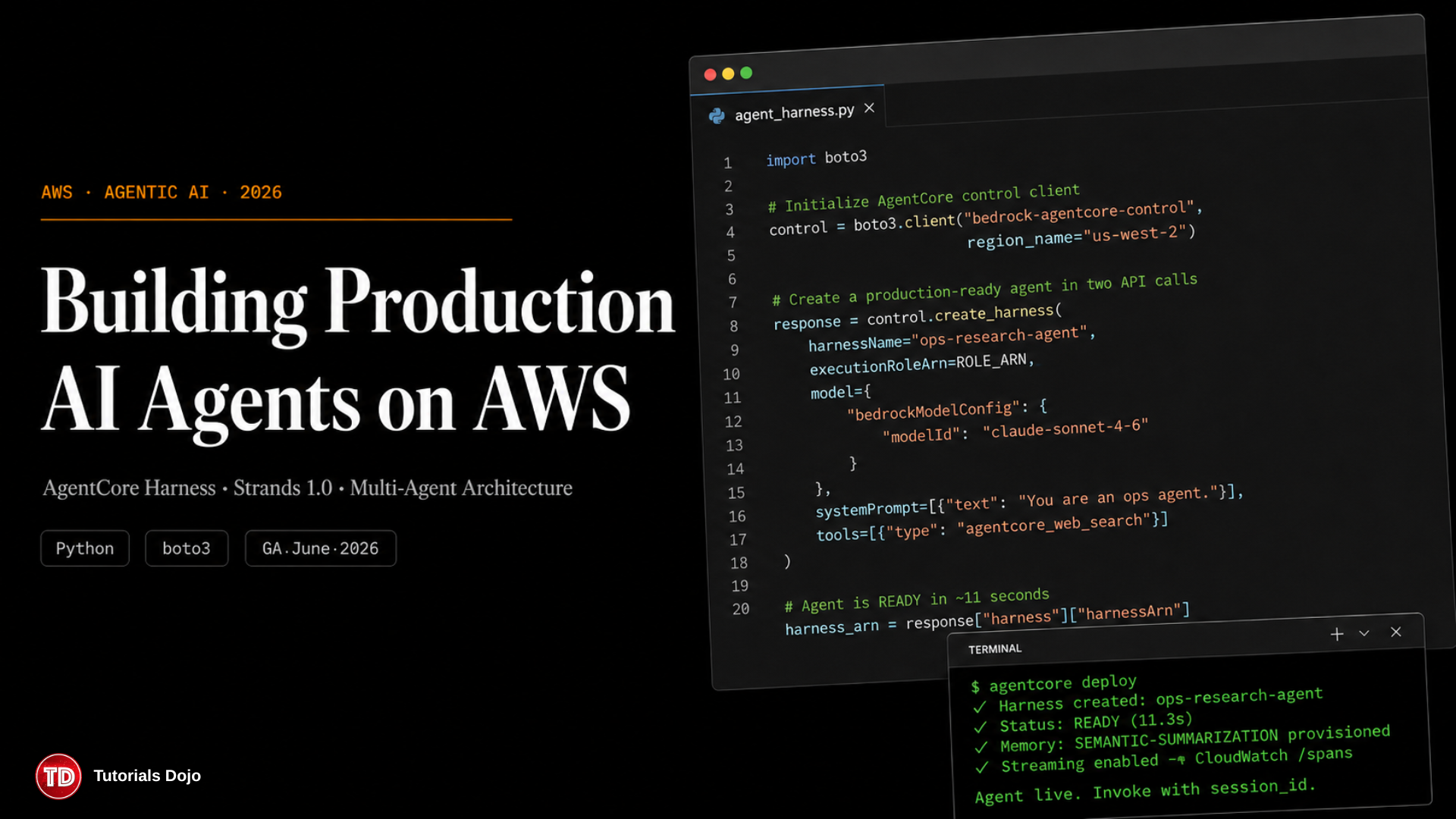
Building Production AI Agents on AWS: AgentCore Harness, Strands 1.0, and the Multi-Agent Architecture that Actually Ships

2026-08-06T16:10:24+00:00

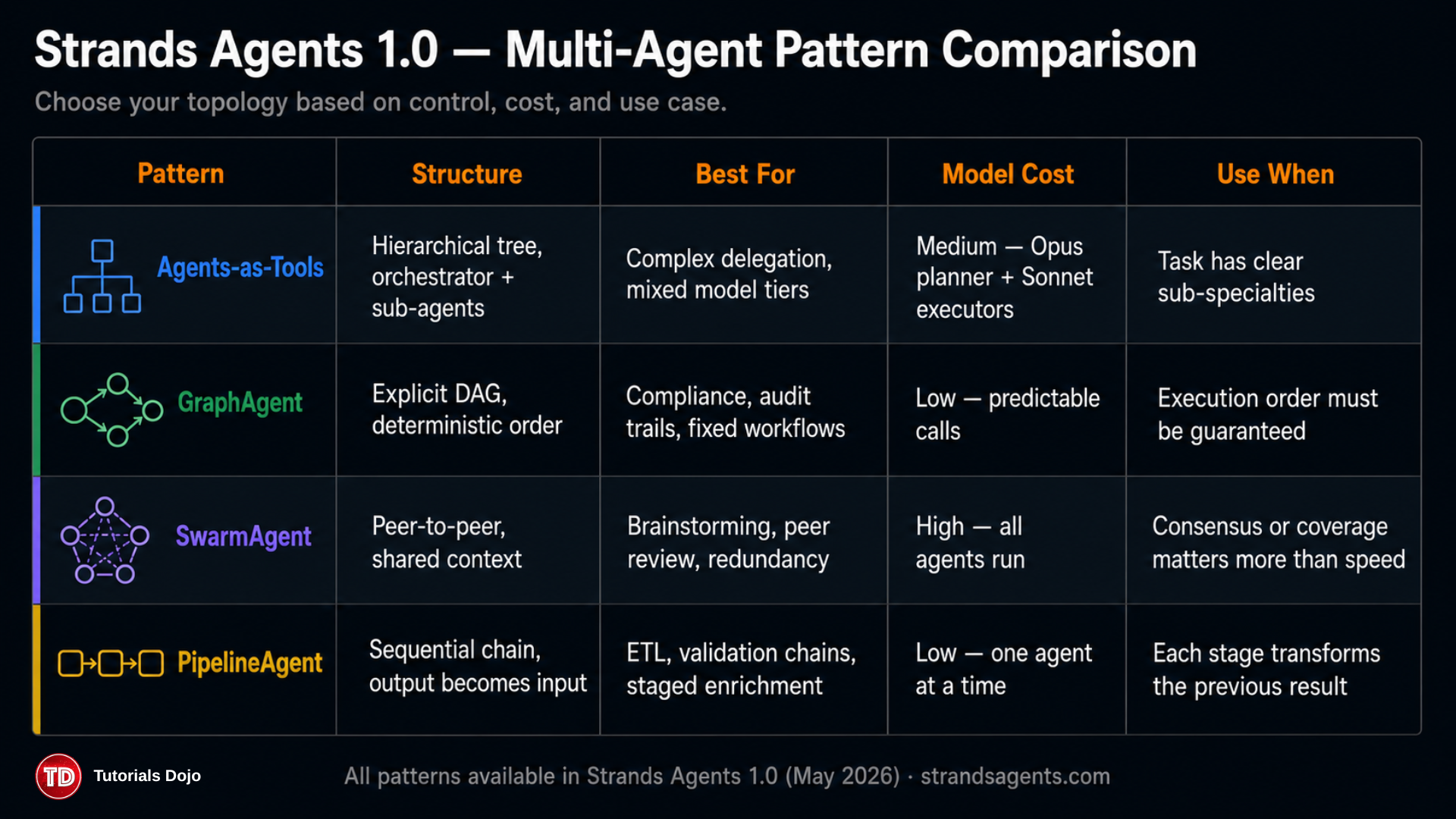
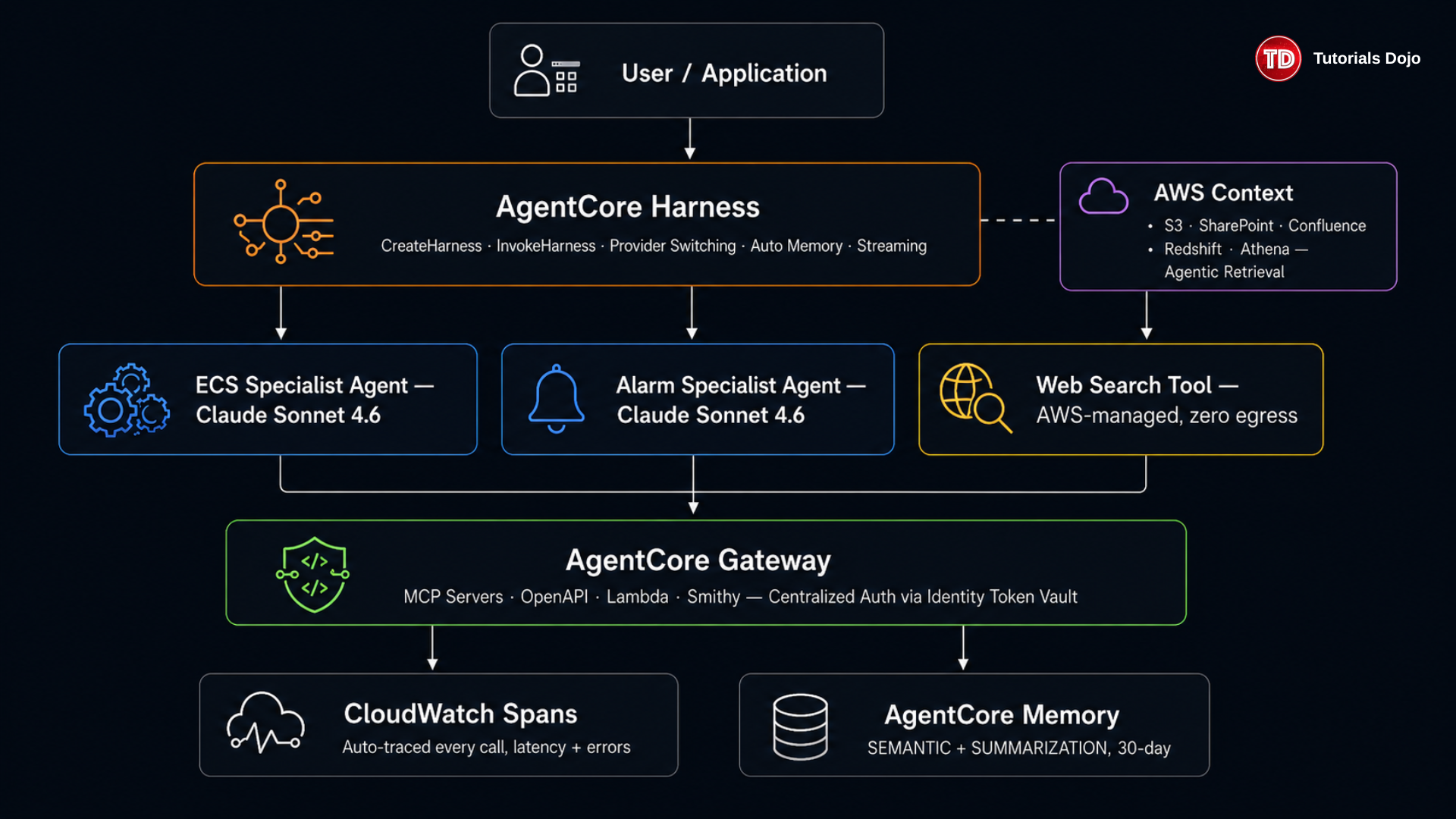
Six months ago, "AI agents on AWS" meant duct-taping together Amazon Bedrock, a Lambda function to handle tool routing, DynamoDB for session state, CloudWatch for tracing, and a LangGraph loop you prayed would recover from a network hiccup mid-reasoning. Every team was reinventing the same infrastructure. Every demo worked; most productions did not. That changed on June 17, 2026, at AWS Summit New York, where Dr. Swami Sivasubramanian (VP of Agentic AI) announced what AWS is calling the agentic infrastructure layer: Amazon Bedrock AgentCore Harness reaching general availability, the Strands Agents 1.0 SDK going production-grade with native multi-agent primitives, and [...]

Building Production AI Agents on AWS: AgentCore Harness, Strands 1.0, and the Multi-Agent Architecture that Actually Ships2026-08-06T16:10:24+00:00

Automating Publications with Claude, Canva, and n8n

2026-07-29T12:50:19+00:00

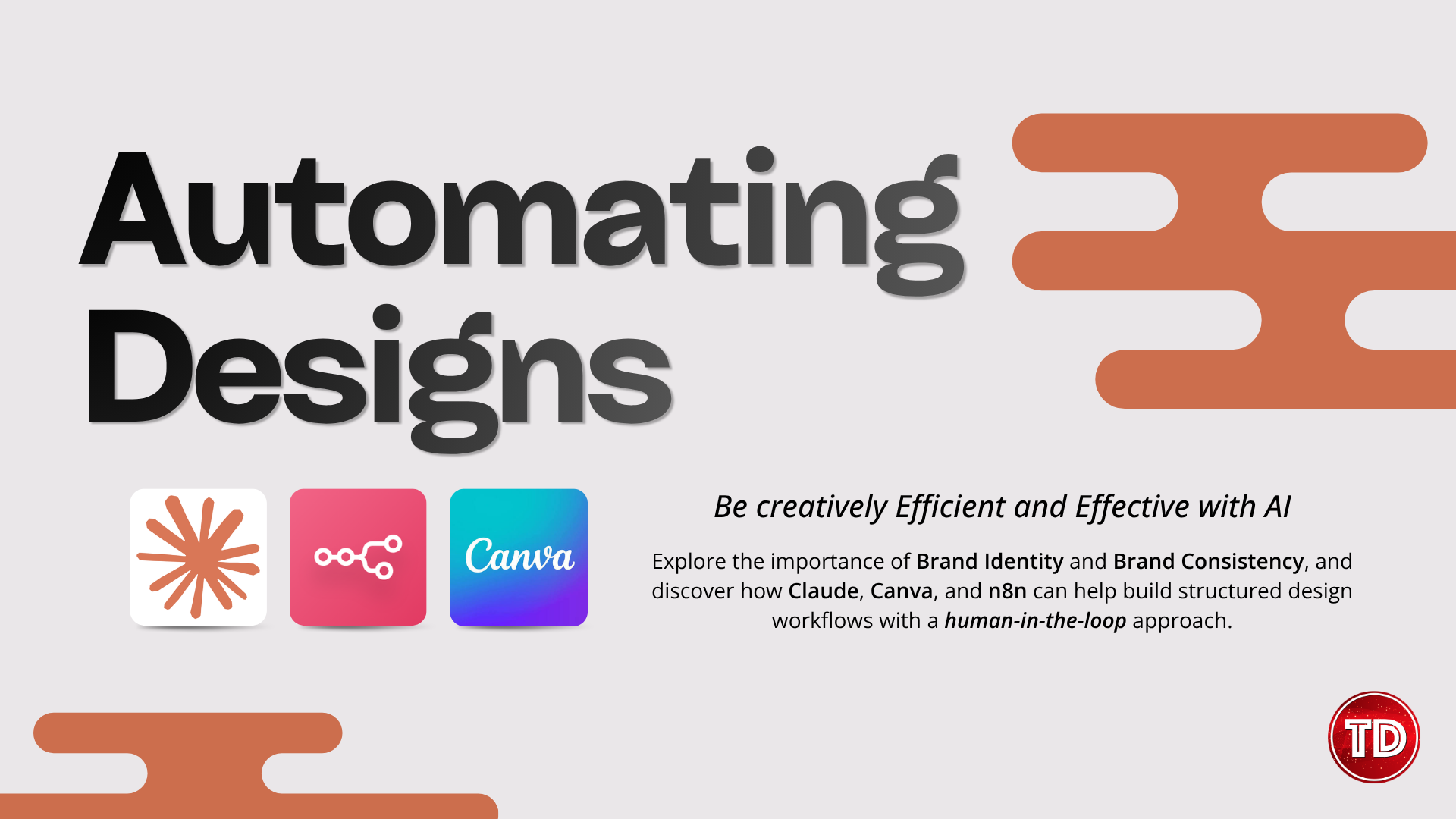
Every business that runs a social media page knows the same repetitive cycle. Pick a topic. Write a caption. Design a graphic. Post it on schedule. Repeat tomorrow. Multiply that by every campaign, every seasonal push, every recurring content series, and it becomes a real operational cost, not just a marketing task. That repetitive cycle is exactly what a project called Automating Publications was built to solve. It is a working, experimental content pipeline built with Claude, Canva, Slack, Google Drive, and n8n, and it is a useful reference for any business or enterprise team thinking about applying AI to [...]

Automating Publications with Claude, Canva, and n8n2026-07-29T12:50:19+00:00

Everything You Need to Know About Harness Engineering

2026-07-13T20:21:29+00:00

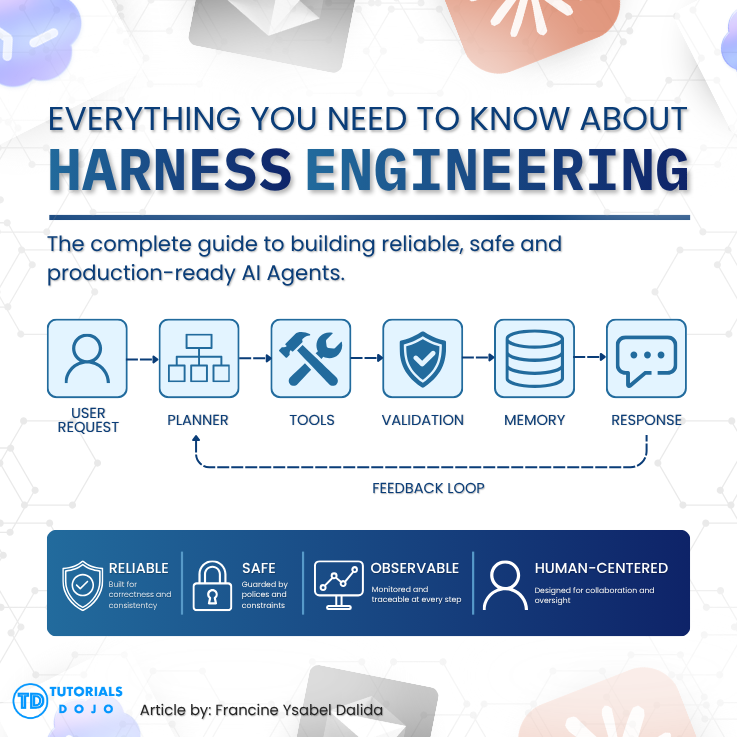
AI agents can now write code, browse the web, and run for hours without a human watching. Ask one to build a feature, and it might open ten files and call five tools. It can make a hundred small decisions before it ever shows you a result. That is a different animal from a chatbot answering one question. In my experience following this shift, it also breaks the old playbook for controlling AI behavior. For a while, prompt engineering was the go-to answer. Write a clearer instruction, add a few examples, and the model behaves. That still works for single-turn [...]

Everything You Need to Know About Harness Engineering2026-07-13T20:21:29+00:00

Amazon Quick & Agentic AI: Understanding the Tools Behind Your AI-Powered Workflow

2026-06-28T11:18:25+00:00

AI is no longer just a tool that answers questions. It is becoming something that takes action, runs workflows, and works alongside teams the way a capable colleague would. Amazon Quick is AWS's take on what that looks like in practice, and this article breaks down what it is, how it works, and why the infrastructure behind it matters. What is Amazon Quick? Imagine asking one platform to pull your sales data, automate a workflow, build you a web app, and research your competitors. That's Amazon Quick. It's AWS's agentic AI platform, and it does a lot. Six things, specifically: [...]

Amazon Quick & Agentic AI: Understanding the Tools Behind Your AI-Powered Workflow2026-06-28T11:18:25+00:00

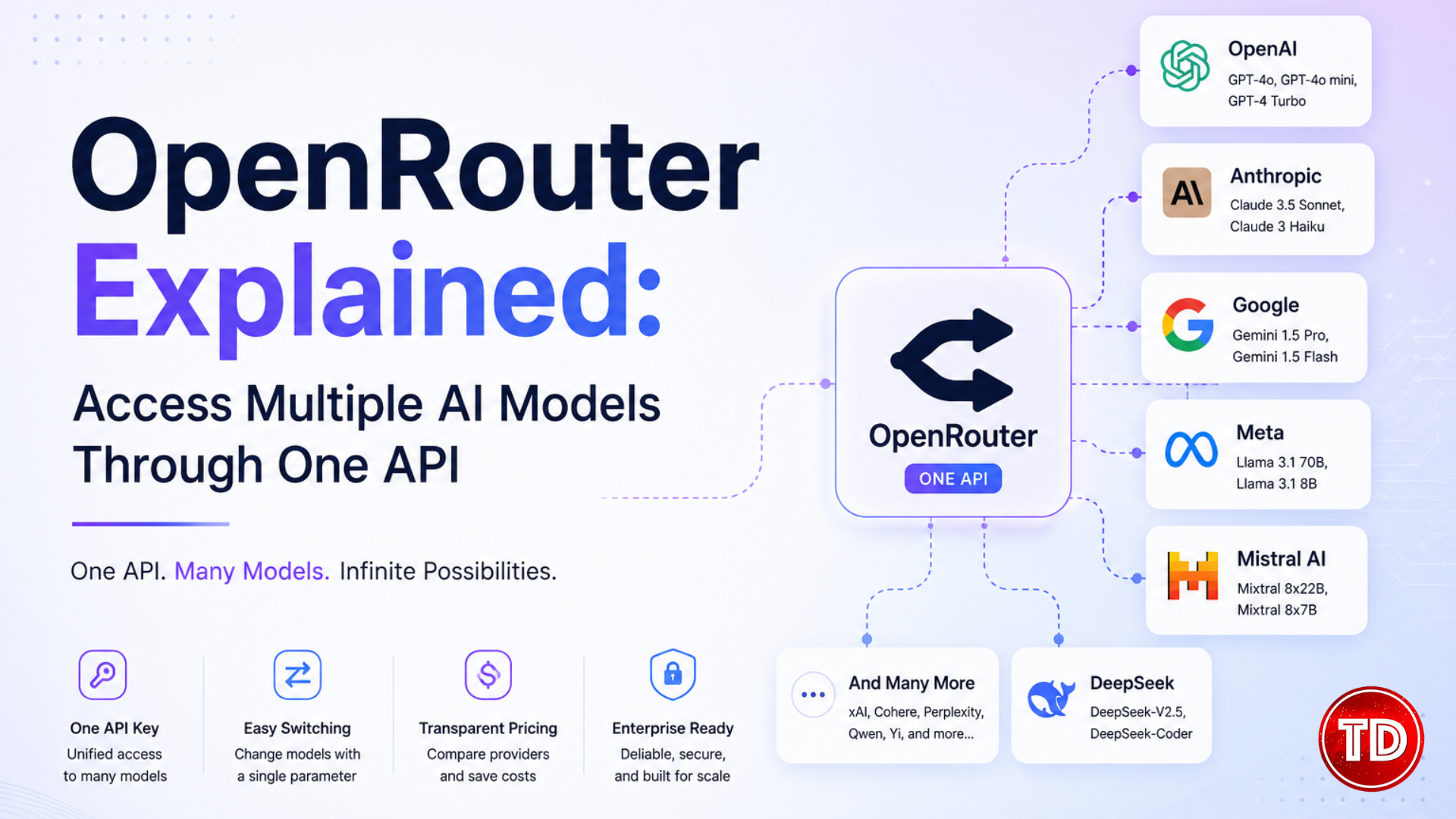
OpenRouter Explained: Access Multiple AI Models Through One API

2026-06-26T15:29:28+00:00

The rapid advancement of generative AI has given developers access to an ever-growing collection of large language models from providers such as OpenAI, Anthropic, Google, Meta, Mistral AI, and xAI. Each model offers different strengths, whether in reasoning, code generation, content creation, multilingual support, or cost efficiency. While having multiple options is beneficial, integrating several AI providers into a single application often introduces additional complexity. Developers must manage different API endpoints, authentication methods, SDKs, pricing models, and rate limits, making it difficult to build flexible AI-powered applications. To address this challenge, platforms such as OpenRouter provide a unified API that [...]

OpenRouter Explained: Access Multiple AI Models Through One API2026-06-26T15:29:28+00:00

The New Software Stack: AI + GitHub + Cloud

2026-06-10T13:15:23+00:00

Software development looks very different today than it did five years ago. Developers are no longer working with isolated tools and manual deployment pipelines. Instead, the modern software stack has grown into a connected ecosystem where artificial intelligence, cloud infrastructure, automated DevOps workflows, and collaborative development platforms all work together. This matters whether you are an IT professional keeping pace with industry changes or a career-changer figuring out where to focus your learning. The tools shaping software engineering right now, from AI coding assistants to cloud-native deployment platforms, are the same ones that employers are increasingly expecting engineers to know. [...]

The New Software Stack: AI + GitHub + Cloud2026-06-10T13:15:23+00:00

AI Coding Assistants Are Changing Junior Developer Learning Habits

2026-06-10T07:35:20+00:00

Human AI workflows are rapidly transforming modern software development. From generating boilerplate code to debugging cloud infrastructure configurations, AI coding assistants are becoming part of the everyday toolkit of developers around the world. For junior developers, this shift is significantly changing how programming is learned. A few years ago, beginner developers spent countless hours searching through Stack Overflow threads, reading documentation line by line, and manually debugging syntax errors. Today, many of those learning barriers are reduced through AI-assisted coding experiences. A developer can now ask an AI assistant to explain Kubernetes networking, generate a Docker Compose configuration, or debug [...]

AI Coding Assistants Are Changing Junior Developer Learning Habits2026-06-10T07:35:20+00:00

The Rise of Human + AI Workflows

2026-06-04T12:23:10+00:00

I've grown with AI during it's formative years to see how the public's perception constantly shift. AI was once framed as a threat: You vs. AI. Then it became a divide: AI-assisted users vs. non-AI-assisted users. Now, we are entering the real future of work: You + AI. The question is no longer whether AI will replace you. The question is whether you know how to work with it.   What Is a Human + AI Workflow? A Human + AI workflow is a process where AI helps with specific parts of a task, while the human remains responsible for [...]

The Rise of Human + AI Workflows2026-06-04T12:23:10+00:00

OpenAI Codex Cheat Sheet

2026-05-23T18:45:10+00:00

What Is OpenAI Codex? OpenAI Codex is an AI-powered coding agent built on top of OpenAI's frontier models. Originally launched as a code-completion API in 2021, Codex has evolved significantly, it is no longer a simple autocomplete tool. As of 2025–2026, Codex is a full software development agent that can read your codebase, plan changes, write and edit files, run commands, review pull requests, and now even operate your computer alongside you. Codex is used by over 3 million developers weekly and is available as: A CLI (Command Line Interface) — terminal-based coding agent A Desktop App — for macOS [...]

OpenAI Codex Cheat Sheet2026-05-23T18:45:10+00:00

AI Workflows vs AI Prompts: What’s the Real Difference

2026-04-21T05:49:01+00:00

At first, using AI feels simple. You type a prompt, get a response, and move on. That’s how most people start, and for basic tasks, it works. But as you try to do more complex or repeatable work, you begin to notice something: prompts alone aren’t enough. This is where the difference between AI workflows vs AI prompts starts to matter, because the way you structure your interaction with AI directly affects the quality and consistency of your results. Over time, many users realize that the real power of AI doesn’t come from writing better one-off prompts, but from designing systems [...]

AI Workflows vs AI Prompts: What’s the Real Difference2026-04-21T05:49:01+00:00

AWS, Azure, and GCP Certifications are consistently among the top-paying IT certifications in the world, considering that most companies have now shifted to the cloud. Upskill and earn over $150,000 per year with an AWS, Azure, or GCP certification!

Follow us on LinkedIn, Facebook, or join our Slack study group. More importantly, answer as many practice exams as you can to help increase your chances of passing your certification exams on your first try!