
For the longest time, the standard advice for entering the technology industry was simple: learn to code. But as AI in software development becomes more common, knowing how to write code is no longer the whole story.
At first it’s like this: learn Python, JavaScript, Java, or another programming language. Practice writing programs. Build projects. Learn how to debug your mistakes. Eventually, those skills could become the foundation of a career in software development.
Yet, technology has expanded far beyond the act of writing code. Developers today work in an environment shaped by cloud computing, automation, and other countless technologies. At the same time, AI tools are becoming capable of generating code, explaining errors, writing tests, and assisting with increasingly complex development tasks.
For someone like me, who is learning technology today, this can be very overwhelming. At first, I thought I just needed to learn the fundamentals, learn one programming language, and eventually build products. But the fundamentals do not always tell you what comes next.
Learning the fundamentals itself can feel straightforward. The difficult part is encountering another tool, another framework, another technology, and another concept that I have never heard of. At some point, it started to feel like everything I had learned was not even the tip of the iceberg of what I still needed to learn.
Maybe, just like me, you have felt that you were learning the wrong things or progressing slower than your peers. But if learning how to code is only the beginning, then what is the right way to learn now?
Is it about learning more programming languages? Learning every new tool? Or is it about understanding what you are building and knowing how to learn the things you need along the way?
The question is no longer simply “Do you know how to code?”
It is becoming:
“Do you understand what you are building, how its different parts work together, and how to use the tools available to build it effectively?”
In this article, let’s look at some of the technologies, tools, and services that are changing how software is built today, and what they mean for developers learning to navigate this industry.
Why Coding Still Matters in AI-Powered Software Development
It is easy to look at the rise of AI coding tools and conclude that learning programming is In this article, let’s look at some of the technologies, tools, and services that are changing how software is built today, and what they mean for developers learning to navigate this industry.
becoming unnecessary. If an AI model can generate a function in seconds, why should someone spend months learning syntax and debugging code?
But you see, programming has always been about more than syntax.
Learning to program teaches developers how to break problems into smaller parts, think logically, understand system behavior, and turn requirements into executable logic. Those fundamentals remain essential even when AI becomes part of the workflow.
A developer might ask an AI assistant to generate a component, explain an error, create a test case, or suggest an implementation. That can significantly reduce the amount of time spent on routine tasks. Yet, we, the developers, must still evaluate the generated solution:
- Does it actually solve the underlying problem?
- Does it integrate properly with the rest of the application?
- Is it secure and maintainable?
- Does it introduce unnecessary complexity?
AI can produce an answer quickly, but speed does not guarantee correctness. AI helps produce code, but developers still need to understand what that code is doing.
This is something I have experienced while working on projects. When I get stuck on code, troubleshooting can sometimes take hours. With AI, that process can be much shorter because I can ask what might be wrong and, more importantly, ask it to explain why. It is a tool that helps me learn things that I might have spent much longer trying to figure out on my own.

This also explains why programming fundamentals are still important. The role of the developer may change, but understanding logic, data, algorithms, and software behavior gives developers the ability to evaluate the tools they use instead of simply relying on whatever they produce.
At the same time, I have realized that knowing the fundamentals does not mean I need to know everything before I start building. In fact, I often learn more when I start building first and encounter problems that I need to solve along the way.
How AI Is Changing Software Development
Generative AI is already changing everyday programming routines. Instead of searching through documentation for every minor issue, developers can ask an AI assistant to explain an error or suggest possible solutions. Instead of building repetitive components from scratch, they can generate an initial implementation and then review, test, and adapt it. For a closer look at the modern software stack and where AI fits into it, see Modern Software Stack with AI, GitHub, and Cloud Platforms.
AI can also support activities beyond code generation. It can assist with testing, debugging, documentation, and refactoring. As these repetitive tasks become easier to automate, developers can spend more time understanding requirements, designing solutions, reviewing results, and solving problems that require context and judgment.
However, using AI as an assistant is very different from letting it make technical decisions on its own. AI-generated code can still have mistakes. It can misunderstand what you are trying to build, introduce security problems, use dependencies that are not appropriate, or create something that works in one situation but fails in another.
Our responsibility as developers does not disappear when AI becomes part of the development process. It shifts.
This becomes even more noticeable with agentic AI. While generative AI usually responds to a specific prompt, agentic AI can work through multiple steps to reach a certain goal. Depending on the system, an AI agent can use tools, inspect files or environments, perform actions, check the results, and make changes based on what it finds.
This changes how we can think about software development. Instead of asking AI to simply create a login component, for example, we could give it a bigger task: implement a login flow, connect it to an existing API, run tests, find errors, and fix them.
But the important part is not just that AI can do more. It is that our role as developers also changes. We still need to know what we want to build, give the AI enough context, check what it produces, and decide whether the result is actually good enough.
This does not mean we can simply tell an AI agent to build an entire application and leave it alone. We still need to supervise it, especially when we are dealing with sensitive data, security, or applications that will be used by real people.
Instead, AI may allow developers to spend less time doing every small task manually and more time directing, reviewing, and making decisions about the work.
As AI becomes better at writing, testing, debugging, and modifying code, I don’t think technical understanding becomes less important. It becomes more important. If AI is going to do more of the actual work, someone still needs to understand what it is doing, why it is doing it, and whether it is actually the right solution.
Maybe the developer of the future will not be the person who writes every single line of code. Instead, they may be the person who understands the problem and the system well enough to know what needs to be built, how it should work, and whether the code being produced actually makes sense.
The Cloud Does Not Make Infrastructure Disappear
Cloud computing has fundamentally changed how software is built, deployed, and operated.
In the past, running an application generally required an organization to purchase and maintain physical servers, storage, and networking equipment. Cloud computing changed this model by providing access to computing resources and services over the internet.
Platforms such as AWS, Microsoft Azure, and Google Cloud now provide services for computing, storage, databases, and many other parts of an application’s infrastructure.
And now, for developers like us, cloud literacy is no longer simply about memorizing the names of cloud services. It is about understanding how different services work together.
This forces developers to look beyond individual pieces of code.
- Where does the application run?
- How do services communicate?
- Where is user data stored?
- How are users authenticated?
- What happens when traffic suddenly increases?
- What happens when one service becomes unavailable?
We don’t need to become a cloud architect, but understanding the environment in which software operates is becoming increasingly important. Why? There is one common misconception about cloud computing is that it eliminates infrastructure entirely, but it does not. It changes how infrastructure is accessed and managed.
Instead of physically configuring hardware, we can now provision resources through cloud consoles, and command-line interfaces. Managed services can remove some of the burden of maintaining physical infrastructure, but they also introduce new responsibilities.
In other words, the cloud does not remove infrastructure knowledge. It changes the kind of infrastructure knowledge we need to know.
A developer does not necessarily need to understand every service offered by a cloud provider. They do, however, benefit from understanding fundamental concepts such as compute, storage, networking, databases, security, and monitoring.
The important skill is not memorizing a cloud provider’s entire catalog. It is knowing which type of resource a problem requires, how it fits into the rest of the system, and why it is the appropriate choice.
The environment may have changed. The need to understand it has not.
Automation Is Connecting the Pieces
If AI is changing how code is produced and cloud computing is changing where applications operate, then automation is changing how software moves through its lifecycle.
Automation involves using technology to perform tasks or processes with minimal human intervention. In software and IT environments, this can include infrastructure configuration, application deployment, cloud management, testing, monitoring, and other repetitive operations.
This creates a development lifecycle that can look something like:
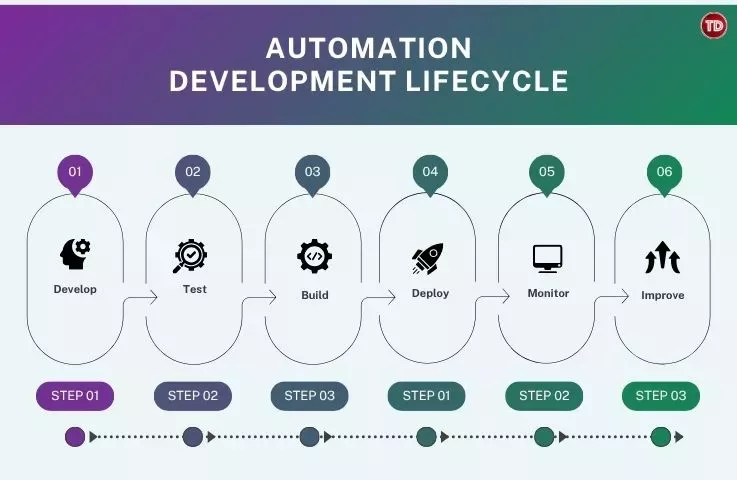
Code can be automatically tested and linted. Applications can be automatically built and packaged. Deployments can be triggered through CI/CD pipelines. Infrastructure can be provisioned through automated configurations. Monitoring systems can detect problems after an application reaches production.
The benefit is not simply that developers save time but it can also improve consistency by allowing repetitive processes to be performed in predictable ways.
But automation comes with an important warning:
Automating a flawed process simply allows the flaws to happen faster.
If a deployment process is poorly designed, automating it does not make it reliable. If a test suite does not cover important behavior, running it automatically does not make the application safe. Therefore, developers need to understand not only how to automate, but also what should be automated and why.
This connects to the larger lesson I have been learning. There are so many tools available that it can be tempting to think I need to learn all of them. If you want to see an example of automation being applied to a real workflow, Automating Publications with Claude, Canva, and n8n explores one approach. But knowing that a tool exists is not the same as understanding the problem it solves.
I do not think we need to master every automation platform, cloud service, or development tool before I can call myself a developer. What really matters more is understanding the concepts behind them and learning the specific tool when I actually need it.
More Technology Means More Security Concerns
As applications become more interconnected, security becomes increasingly important.
Modern applications can depend on cloud services, APIs, databases, authentication providers, third-party libraries, and AI tools. Each additional component can introduce new risks and new dependencies.
AI adds another consideration. If AI can generate large amounts of code quickly, developers also need to be able to review that code for security problems. An AI-generated implementation could accidentally expose sensitive information, use vulnerable dependencies, mishandle authentication, or make assumptions that are inappropriate for the application’s environment.
This is why security cannot simply be something added at the end of development. Security needs to be considered when systems are designed, when services are connected, when permissions are configured, and when code is reviewed.
The same principle applies to quality. Automated tools can test an application, but developers still need to determine whether the tests cover the behavior that actually matters.
Technology can help us check whether something works but human judgment is still needed to decide whether it should work that way.
What Should a Modern Developer Learn?
For people entering technology, one of the strangest parts of the industry today is that there is almost too much to learn.

There are countless tutorials, courses, frameworks, cloud services, AI tools, and programming languages available. There is always another technology that seems important, another tool that everyone is talking about, or another skill that appears to be a requirement.
This can create the feeling that you are already behind before you have even started.
I know that feeling because I have experienced it myself. Oftentimes, I felt like my peers were learning faster than me. I kept seeing technologies and terms that I did not know, and it made me question whether I was learning the wrong things or whether I was simply not learning fast enough.
But you see, technology has always evolved. New frameworks will emerge, cloud services will evolve, AI capabilities will expand, and entirely new categories of tools may become part of everyday development.
So what matters is not knowing every tool. It is developing enough understanding to learn new tools without having to start from zero every time.
This is where technical literacy becomes important.
Literacy is not about mastering every technology. It is about understanding what a technology is for, what problems it solves, what its limitations are, and when it makes sense to use it.
For example:
- Cloud literacy means understanding how applications are hosted, how resources are provisioned, how services communicate, and how systems scale. The goal is not to memorize every AWS or Azure service, but to understand the infrastructure concepts behind them.
- AI literacy means understanding where AI can assist development, where its output needs to be reviewed, and where it may not be the appropriate solution. You do not need to build an AI model to make informed decisions about using tools such as ChatGPT or GitHub Copilot.
- Automation literacy means understanding how repetitive processes such as testing, deployment, and data workflows can be automated. n8n, GitHub Actions, and Jenkins are different tools, but they all address the broader idea of reducing repetitive manual work.
- Security awareness means recognizing common risks and considering security throughout development. The specific security tools may change, but concepts such as authentication, authorization, encryption, and secure data handling remain relevant.
- Systems thinking means looking beyond an individual feature and understanding how decisions affect the rest of the application. A database choice can affect performance. An authentication decision can affect security. A cloud architecture decision can affect reliability and cost.
Notice that none of these require you to memorize a particular technology? Because the focus is on the ideas behind the technology.
This distinction matters because tools are often replaced, combined, or repurposed, while the problems they address tend to remain. So for someone learning technology today, this changes the way learning should be approached.
Instead of trying to collect as many technologies as possible, it can be more useful to build a strong foundation, understand the concepts connecting different areas, and then learn specific tools as the situation requires.
Adaptability should be our strong point because what will remain is the ability to understand problems, evaluate possible solutions, and learn whatever is necessary to solve them.
So perhaps the modern developer does not need to be someone who knows everything.
They need to be someone who knows how to learn, how to connect ideas, and how to make informed decisions as the technology around them changes.
What Comes Next?
While it is hard to predict the exact future of software development, the direction is clear. AI will get smarter, cloud services will improve, and automation will handle more complex tasks. As new tools appear, many of the ways we work today will naturally change.
What we do know is that the developer’s role will change along with these tools. The developer of tomorrow will likely spend less time writing basic code and more time on the big picture: defining problems, designing systems, and making sure everything is secure and works well at scale. This doesn’t mean programming is going away; it just means it is becoming one part of a much larger set of skills.
For anyone starting out today, this can feel like a lot to take in. The industry moves fast, and there is always a new tool to learn. But this constant change is also what makes technology exciting. So instead of trying to memorize every new framework, our goal should be to understand the concepts behind them. This allows us to look at any new technology and ask a few simple questions:
What problem does this solve? How does it fit into the rest of the system? What are its limits? And is it the right choice for this job?
That may be what it means to be a modern developer.
Not simply someone who can write code, but someone who can understand a problem, navigate an increasingly complex technology landscape, connect different systems, work alongside intelligent tools, and ultimately build something that is useful to real people.
The code still matters. But the modern developer has to see beyond it.
References
🔥 $4.99 Claude Certified Architect Foundations CCAR-F Practice Exams

Turn Your Team Into Cloud-Ready Professionals Today

Learn AWS with our PlayCloud Hands-On Labs

$2.99 AWS and Azure Exam Study Guide eBooks

Learn GCP By Doing! Try Our GCP PlayCloud

Learn Azure with our Azure PlayCloud
FREE AI and AWS Digital Courses

FREE AWS, Azure, GCP Practice Test Samplers


Subscribe to our YouTube Channel

Follow Us On Linkedin


Written by: Bryce Anrie Bombales