
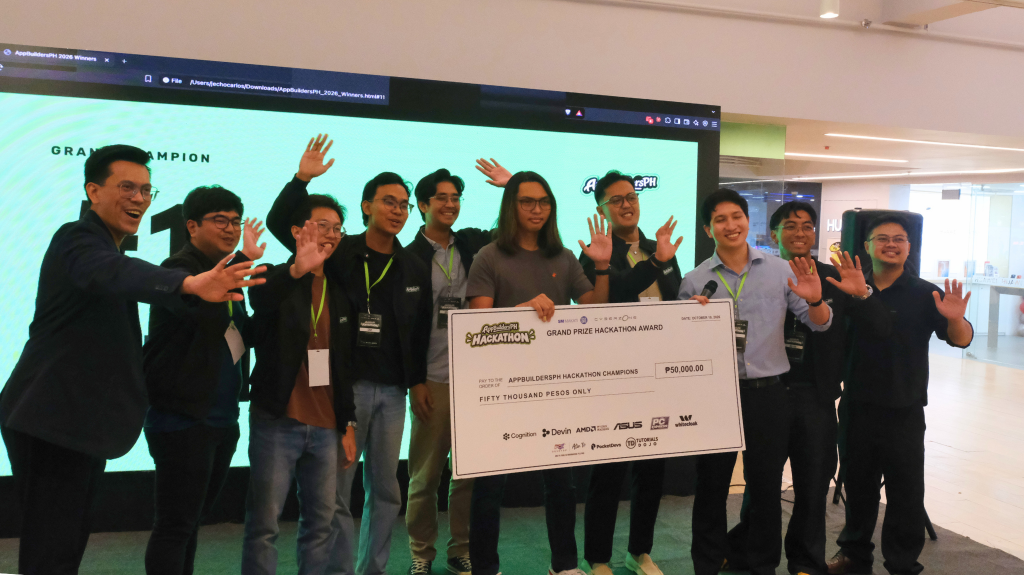
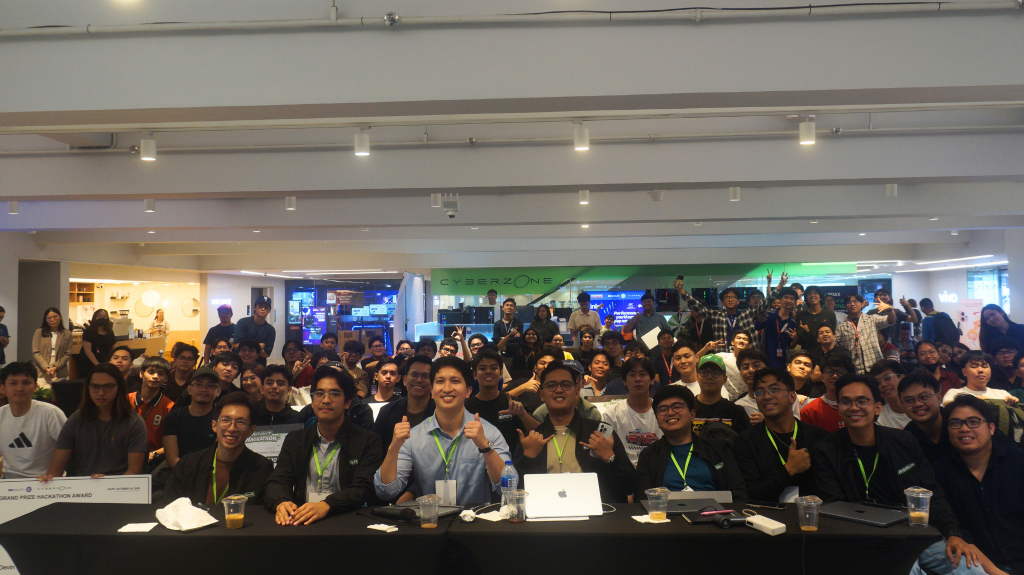
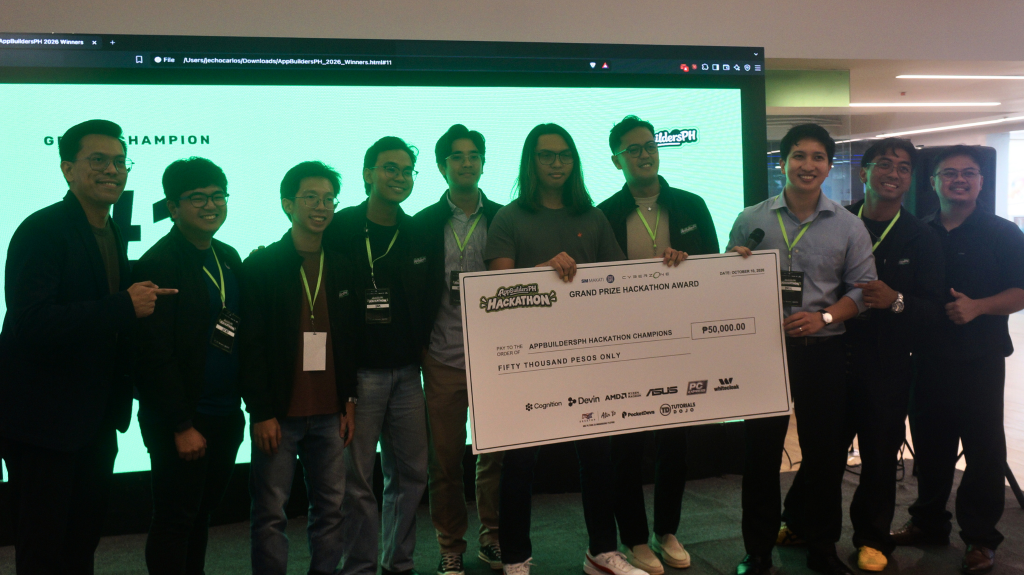
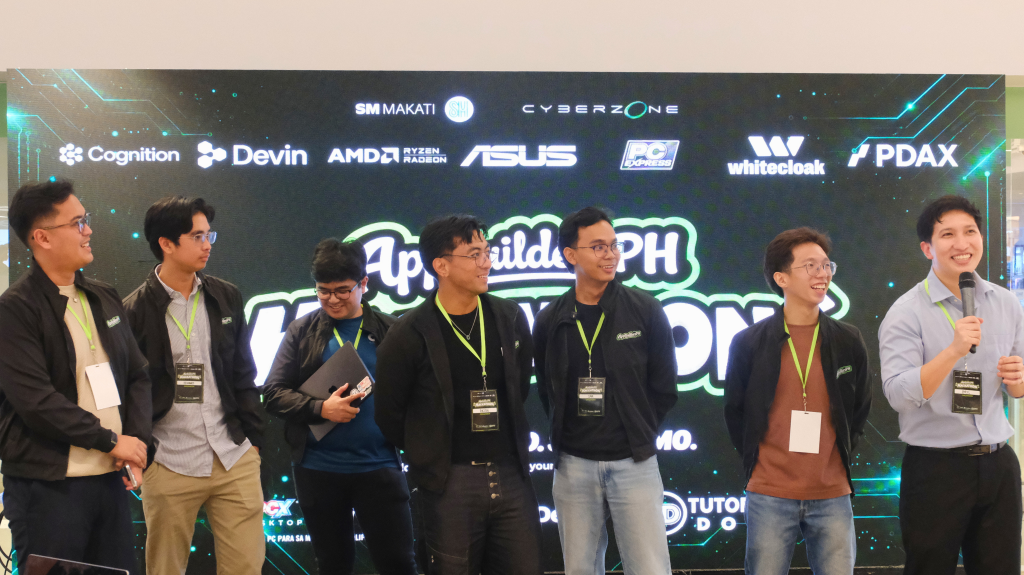
Some drawings find their place on refrigerators. Others are tucked away in folders, kept as reminders of a childhood imagination that knows no bounds. But for one Filipino father, a child’s drawing became something far greater, an inspiration behind a grand championship. Among 1,270 builders and 281 projects submitted to the first AppBuildersPH 2026 Hackathon, a creation inspired by a seven-year-old boy captured the top prize. Behind it was Arnel Forbes, a full-time software engineer, a father, and a first-time hackathon participant who competed entirely on his own. His creation, Guhit, transforms children’s drawings into interactive characters capable of moving, listening, and telling stories. For children, a drawing is rarely just a drawing. A few uneven lines can become a superhero, an imaginary friend, or an entire world waiting to be explored. Forbes saw an opportunity to give those imagined worlds another dimension. Having an imaginative son helped him conceptualize Guhit, which he described as an attempt to help children express their creativity through technology. More than just the inspiration, Forbes also made him part of the development process. His seven-year-old son and six-year-old nephew became Guhit’s earliest testers. The response was immediate. Forbes recalled how his son woke up the following morning looking for his mother’s laptop, eager to use the application again. It was a small moment, but one that gave the project a sense of purpose beyond the competition. “Actually even before the event, feeling ko nanalo na ko kasi yung anak happy siya dun sa app (Actually, even before the event, I already felt like I had won because my child was happy with the app.),” Forbes shared. Before the judges evaluated his work, Guhit had already succeeded in the eyes of the person who inspired it. An experiment inspired by fatherhood eventually found its way into one of the country’s newest gatherings for Filipino technology builders. Held on October 9 and 10, AppBuildersPH Hackathon 2026 marked the community’s first hackathon, bringing together aspiring tech innovators under the challenge to build, ship, and demonstrate a working product within 24 hours. The response exceeded expectations. Within two days of its announcement, more than 1,000 participants had registered, reaching 1,270; with 731 builders shipping a total of 281 projects. The challenge centered on Local AI, encouraging participants to develop applications that could perform meaningful AI functions directly on users’ devices, even without relying on cloud connectivity. Build Day began remotely on October 9, with participants racing against the clock to develop their ideas. The following day, builders gathered at Cyberzone, SM Makati, to present their creations before a panel of 10 judges. For Forbes, however, joining the competition was not initially about claiming the championship. He discovered the event through a Facebook, from AppBuildersPH organizer Bryl Lim. Forbes found himself curious about whether he could still keep up with the next generation. It was a challenge he decided to accept. Interestingly, his journey into programming had also begun unexpectedly. Forbes initially took a computer programming course to earn units for a military application, but he discovered an interest that would eventually shape his career. Working with Visual Basic 6, he found himself drawn to programming almost immediately, an experience he described as love at first sight. Years later, that unexpected beginning brought him to his first hackathon, competing against builders from different backgrounds and levels of experience. If building an application within 24 hours is difficult, doing so without teammates adds another layer of pressure. Forbes had to handle everything himself, from brainstorming and development to testing, deployment, and preparing for the final presentation. Once the challenge was revealed, he began evaluating ideas based on what could realistically be built overnight and what might capture attention. Every feature had to be weighed against the remaining hours, the need for testing, and even the time required to travel to the venue. Using Claude Code to assist with development, Next.js for the interface, and smaller AI models to satisfy the Local AI challenge, Forbes brought Guhit to life. But being a solo participant meant there was no teammate to delegate tasks to or ask for a second opinion. “Ang mahirap as a solo competitor is wala man lang katulong magtest (The hardest part about competing solo is not having anyone to help me test the app.),” he recalled. Fortunately, he had two willing young testers waiting to see what their drawings could become. But Forbes still had to ensure that the project was ready for deployment and submission, leaving little room to rehearse his pitch. By the time he stepped before the judges, much of his planned presentation had gone out the window. He decided to improvise. The pressure was real, but so was the excitement of presenting something he had built from the ground up. Rather than becoming technical, he allowed the application to demonstrate what it could do. Five minutes to pitch. Three minutes to answer questions. And one opportunity to show how a child’s imagination could become an interactive experience. When the results were announced, Guhit emerged as the Grand Champion of AppBuildersPH Hackathon 2026, earning Forbes the top cash prize of ₱50,000. The victory came as a surprise, even to its creator. Although Forbes believed his project was competitive, his initial goal was simply to reach the finals and give his best during the presentation. He admitted that he had not expected such an enthusiastic response from the judges and fellow participants. For someone joining a hackathon for the first time, the championship offered recognition of both the technical work and the idea behind it. Yet what distinguishes Guhit’s story is that its creator did not measure success solely by the judges’ decision. Its first meaningful test had already taken place at home, where two children were delighted to see their drawings brought to life. In a competition built around artificial intelligence, Forbes’ winning project was rooted in something distinctly human: the desire to encourage a child’s creativity. And perhaps that is what made Guhit stand out. Rather simply demonstrating what AI could accomplish, Forbes developed something with a clear audience and a personal reason for existing. The grand championship recognized the finished product. His son’s excitement had already affirmed the idea behind it. And beyond the 281 projects submitted at AppBuildersPH 2026, several participants were already developing solutions of their own. These builders brought ideas that extended well beyond the competition. WikaPH: Learn Filipino Languages! For Kien Serapio, co-founder and CEO of WikaPH, created WikaPH to preserve and teach Philippine languages. Available on App Store and Google Play, the platform has reached thousands of downloads, bringing local language learning to a wider audience. Bluefolio: All your work. One link. Alexi Cañamo, a third-year Computer Science student, created Bluefolio to help Ateneo students showcase projects, essays, and experiences with one portfolio. At AppBuildersPH, Alexi joined qtr.zip, which earned second place – AMD Award for Gabay, an on-screen navigation assistant. Lara: Making Studying Smarter For Miguel Kalaw, a Computer Science graduate from Pamantasan ng Lungsod ng Maynila, studying could use an upgrade. His application, Lara, turns notes, PDFs, and presentations into AI-generated flashcards, with features like diagram masking to help students practice visual recall. Miguel competed with Neosolve, whose project Earshot received the Tutorials Dojo Award. Cuekoo: Right Cue at the Right Time Ivy Fedilo, founder of Cuekoo, created an AI meeting copilot that provides relevant information and context during conversations. Previously featured at the AWSUGPH x Tutorials Dojo September Meetup, Cuekoo is now launched. At AppBuildersPH, team Cuekoo also developed GetcKo, an on-screen software guide that won the Cognition Award. Whether preserving cultural heritage, improving education, or simplifying everyday tasks, their work reflects what happens when meaningful problems meet the determination to build solutions. While Guhit claimed the spotlight, the AppBuildersPH Hackathon also showcased how differently Filipino builders approached the same challenge. Some focused on accessibility, while others explored privacy, security, and emergency response. Snapsort by Generation of Miracles received the WhiteCloak Award for enabling users to search photos and videos through descriptions without uploading their files. Meanwhile, Suri by team Indomie won the PocketDevs People’s Choice Award for its iPhone application designed to identify suspicious messages using local AI. Different problems, different approaches, but a common principle: technology does not need to be complicated in purpose to be meaningful in impact. With ₱140,000 in total cash prizes and 281 submitted projects, AppBuildersPH 2026 provided more than recognition for its winners. Forbes entered his first hackathon wondering whether he could still keep up. He left as its Grand Champion. The experience also renewed his interest in joining future competitions. Guhit remained a project he hoped to make publicly available. For the hundreds of participants in AppBuildersPH 2026, the event marked an opportunity to transform everyday observations into functional solutions. For Forbes, it became proof that years of programming experience, curiosity, and a personal connection to a problem could still lead somewhere unexpected. After all, the most meaningful innovations do not always begin by asking what technology can do. Sometimes, they begin by asking who it can make smile. And in a competition where hundreds of builders set out to create something extraordinary, it was a child’s imagination that helped draw the winning line.
Crayons to Code
First-Timer Among Thousands

One Builder, Twenty-Four Hours
A Win Before Victory
Builds Beyond the Hackathon

Beyond the Winning Build
Where Great Ideas Begin
🔖 BLACK FRIDAY SALE 25% OFF Starts Today! Get an Extra 5% OFF on AWS Foundational, KCNA and GCP Practice Exams & eBooks for as LOW as $2.99 only!

Turn Your Team Into Cloud-Ready Professionals Today
Learn AWS with our PlayCloud Hands-On Labs

$2.99 AWS and Azure Exam Study Guide eBooks

Learn GCP By Doing! Try Our GCP PlayCloud
Learn Azure with our Azure PlayCloud

FREE AI and AWS Digital Courses

FREE AWS, Azure, GCP Practice Test Samplers


Subscribe to our YouTube Channel

Follow Us On Linkedin


Written by: Coleen Legaspi