
Last updated on February 10, 2026
For the past few years, the multimedia industry has been obsessed with “Generative AI.” We spent 2023 and 2024 learning how to write the perfect prompt to get a static image or a flickering 10-second video. But as we move through 2026, the industry has undergone a fundamental shift. We are moving past the era of the chatbot and into the era of Agentic Marketing. Instead of sitting in front of a prompt box asking for a single blog post, modern marketers are now deploying AI Agents—autonomous digital teammates that can research, plan, create, and optimize entire campaigns with minimal supervision. The difference between a standard AI tool and an Agent is the difference between a tool and a teammate. A standard AI tool waits for your command; an AI Agent is given a goal. 2024 (Chatbots): “Write me a 500-word blog post about sneakers.” 2026 (Agents): “Research this week’s sneaker trends on TikTok, identify a content gap, and draft a 30-day multimedia calendar to exploit it.” The Agent doesn’t just write; it reasons. It browses the live web, analyzes competitor data, and executes a complex sequence of tasks to reach the finish line. It is the transition from “linear prompting” to “iterative execution.” Perhaps the most disruptive trend in 2026 is Vibe Coding. Coined to describe a new way of building software, vibe coding allows non-technical marketers to create functional apps and tools simply by describing the “vibe” and the objective. You no longer need to know Python, JavaScript, or CSS to build custom brand experiences. By utilizing agents like Replit Agent or Cursor, you can speak your software into existence. The “Human-as-Director”: You aren’t the builder; you are the Director. The AI handles the “plumbing”—databases, hosting, and backend logic—while you focus on the user experience and brand aesthetic. Rapid Prototyping: What used to take a dev team three months now takes a marketing manager a single afternoon. You can tell an agent: “Build me a landing page that feels like high-end luxury and has a custom quiz that recommends products based on a user’s skin type,” and watch the code write itself in real-time. If you’re ready to move from “doing” to “supervising,” follow this 4-step framework to build your first agentic loop: Before touching a tool, write down the steps of your process. Example: Research Trend → Draft Script → Generate Image → Post to Slack for Approval. Pro-Tip: Use “System Instructions” to define your agent’s persona. Tell it: “You are a Senior Content Strategist who prioritizes emotional storytelling over SEO keyword stuffing.” 2. Choose Your Orchestrator (The “Body”) You need a platform where your agent can “live” and communicate with your existing software stack. n8n / Zapier Central: Ideal for connecting AI to email, Shopify, or Slack. HubSpot Breeze: Best for agents built directly into your CRM. SuperAGI: For technical teams building custom, autonomous bots from scratch. Agents are only as good as the data they can access. Connect your agent to your Brand Bible, past performance reports, and customer personas. This ensures the agent doesn’t just produce generic content, but content that sounds like you. Never let an agent post directly to your main channels without a “Pause” node. Use a tool like Slack or Microsoft Teams as your “Approval Desk,” where the agent sends its work for your final thumbs-up before going live. The winners in 2026 aren’t those who can write the most clever prompts; they are the ones who can build the best Agentic Ecosystems. By delegating the “grunt work” of data collection and initial drafting to autonomous agents, you free up your most valuable asset: your human taste. In a world of infinite AI-generated content, the unique human “vibe” and creative direction are the only things that cannot be automated.
What is an “Agentic Workflow”?
The Shift in Shorthand
The “Vibe Coding” Revolution: Development for the Rest of Us

The End of Syntax
How to Set Up Your First Agentic Workflow
1. Map the Logic (The “Brain”)
3. Provide “Context Inputs” (The “Memory”)
4. Build a “Human-in-the-Loop” Checkpoint
The 2026 Agentic Tech Stack
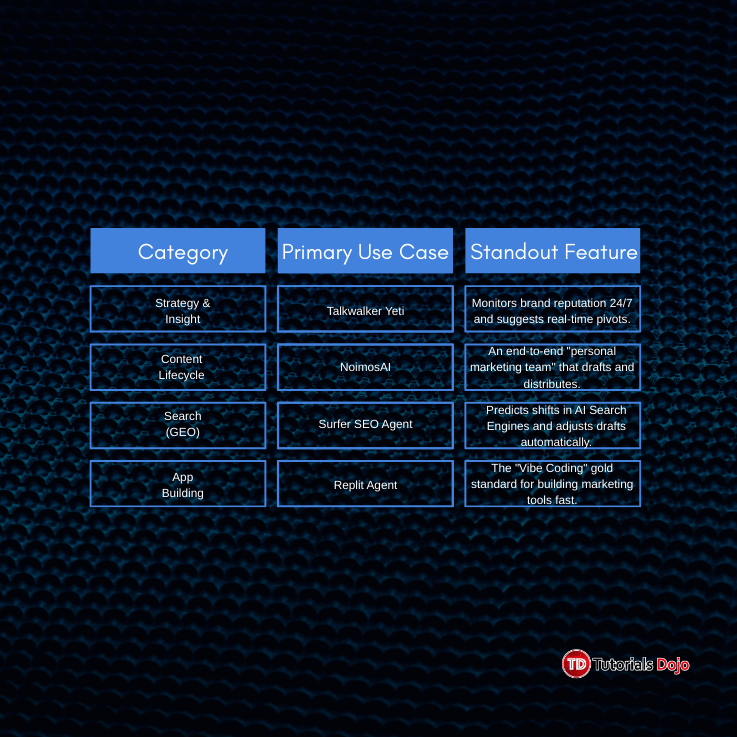
Conclusion: From Content Creator to “Command Marketer”
References
🌸 25% OFF All Reviewers on our International Women’s Month Sale! Save 10% OFF All Subscriptions Plans & 5% OFF Store Credits/Gift Cards!

Learn AWS with our PlayCloud Hands-On Labs
$2.99 AWS and Azure Exam Study Guide eBooks

New AWS Generative AI Developer Professional Course AIP-C01

Learn GCP By Doing! Try Our GCP PlayCloud
Learn Azure with our Azure PlayCloud
FREE AI and AWS Digital Courses

FREE AWS, Azure, GCP Practice Test Samplers

Subscribe to our YouTube Channel

Follow Us On Linkedin
Written by: Daniel Gerodias