Ends in
00
days
00
hrs
00
mins
00
secs
ENROLL NOW

📣 Save 20% OFF on AI & ML Mock Exams, Video Courses and eBooks – AWS, Azure, Google Clouds, and GitHub Reviewers!

AI

Home » AI » Page 8

What is Federated Learning?

2025-08-26T16:51:20+00:00

A machine learning technique where multiple devices or servers collaboratively train a shared model without sharing raw data. Instead of sending data to a central server, only the model updates (gradients/parameters) are sent, keeping sensitive information local. Key Concepts Decentralized Training: Data stays on local devices (e.g., smartphones, IoT, edge devices). Model Aggregation: A central server collects and averages model updates to improve the global model. Privacy-Preserving: Minimizes risk of exposing personal or sensitive data. Communication Efficiency: Reduces the need for large-scale raw data transfer. Edge AI Integration: Often paired with edge computing for real-time AI. How Federated Learning Works [...]

What is Federated Learning?2025-08-26T16:51:20+00:00

What are Clustering Algorithms in Machine Learning?

2025-08-25T06:43:36+00:00

Clustering is an unsupervised learning technique that groups similar data points without predefined labels. It helps discover hidden patterns, segment data, and reduce dimensionality in datasets. Key Concepts Clustering: Grouping data points based on similarity or distance metrics. Unsupervised Learning: No labeled data; the model identifies structure independently. Distance Metrics: Commonly used metrics include Euclidean, Manhattan, and Cosine similarity. Popular Clustering Algorithms 1. K-Means Clustering Divides data into K clusters by minimizing the variance within each cluster. Fast, easy to implement, and works well with large datasets. It requires predefining K and is sensitive to outliers. Customer segmentation, image compression. [...]

What are Clustering Algorithms in Machine Learning?2025-08-25T06:43:36+00:00

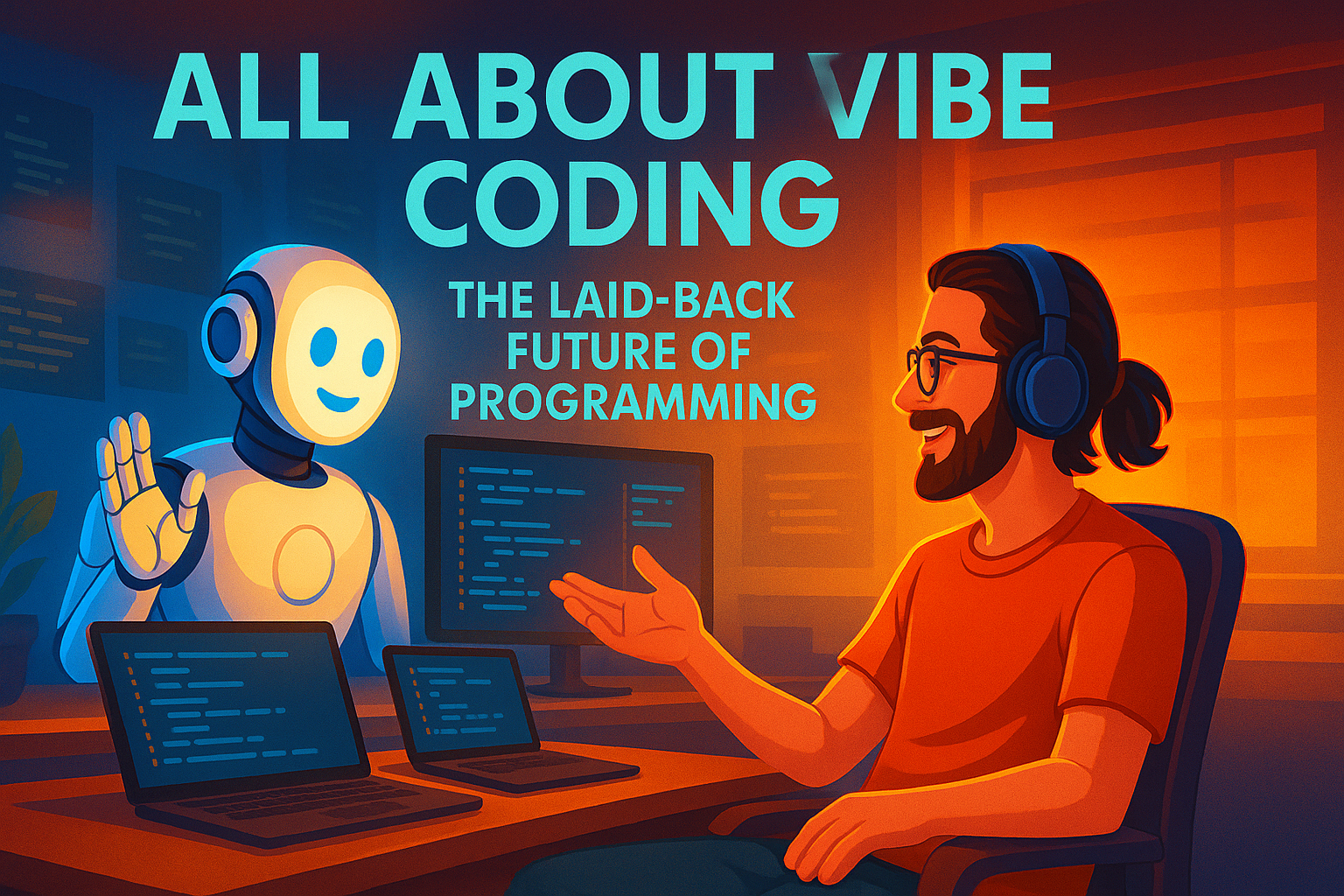
All About Vibe Coding: The Laid-Back Future of Programming

2025-09-03T14:22:18+00:00

Coding no longer has to mean endless lines of text, late-night bug hunts, and constant fixes. A growing number of developers are turning to vibe coding,  a style that feels more like a creative conversation than a technical grind. Instead of wrestling with syntax, developers describe what they want and let AI handle the heavy lifting. As a result, coding shifts from typing code to shaping ideas. This article covers what vibe coding is, where it came from, why it matters, and how it’s influencing the future of software development. Origin of the Term The term vibe coding was popularized [...]

All About Vibe Coding: The Laid-Back Future of Programming2025-09-03T14:22:18+00:00

Azure AI Foundry

2025-08-01T12:49:53+00:00

Azure AI Foundry Cheat Sheet  Azure AI Foundry is a unified platform that enables enterprises to design, customize, and manage AI applications and agents at scale. It integrates tools, models, and workflows to streamline the development and deployment of AI solutions. Key Components AI Foundry: A development environment for building, testing, and deploying AI models and applications. Model Catalog: A repository of prebuilt models from Microsoft, OpenAI, and other partners, facilitating model selection and deployment. Prompt Flow: A tool for designing and orchestrating language model workflows, enabling systematic experimentation and refinement. Agent Service: A platform for securely designing, deploying, and [...]

Azure AI Foundry2025-08-01T12:49:53+00:00

GitHub Spark: The Future of Instant App Development?

2025-07-31T10:05:47+00:00

Imagine this: You're knee-deep in code, battling a gnarly bug, when suddenly, poof, an AI assistant appears, whispers the perfect fix in your ear, and vanishes before you can even say "merge conflict." GitHub Spark is revolutionizing development with AI-powered code suggestions, automated reviews, and intelligent issue resolution. Learn how to use it and boost your productivity today! What Is GitHub Spark? GitHub Spark leverages AI-powered natural language processing to generate functional code from simple text descriptions. Instead of manually writing every line of code, developers can describe what they want their app to do, and Spark's AI (likely powered [...]

GitHub Spark: The Future of Instant App Development?2025-07-31T10:05:47+00:00

Code at the Speed of Thought: The Agentic IDE Revolution

2025-07-26T09:04:27+00:00

We have all experienced the struggle of debugging code that just won't work. It's already 2 AM in the morning and you're pulling out all the stops, searching Stack Overflow for answers, copying and pasting code and hoping for that miracle that it will work. (It feels too real that it hurts to read)  Now imagine instead, you simply tell your computer "Hi, this function isn't working the way I want it to. Can you figure it out and fix it?" After a few seconds, ting! It actually does it, edits the codebase that you have and furthermore explains what [...]

Code at the Speed of Thought: The Agentic IDE Revolution2025-07-26T09:04:27+00:00

What Is the Difference Between AI, ML, DL, and Generative AI?

2025-07-22T17:40:30+00:00

Imagine a world where machines compose music, diagnose diseases, write code, drive cars, and even generate original artwork. That world isn't the future, it's now. Artificial Intelligence (AI) is no longer a buzzword; it's a driving force behind the most significant innovations of our time. But here's the catch: while AI is everywhere, many still confuse its core components:  Understanding the differences between these technologies isn't just helpful, it's essential. Whether you're a student, a tech professional, a business leader, or AI-curious, this guide will give you a crystal-clear breakdown of these foundational terms in 2025 and beyond. What is [...]

What Is the Difference Between AI, ML, DL, and Generative AI?2025-07-22T17:40:30+00:00

AI/UX: The AI Urgency for User Experience (UX)

2025-08-02T16:30:28+00:00

Go back in time. Find a designer in 1999. They are masters of their craft. Kings of QuarkXPress, wizards of print, fluent in a language of picas and Pantone chips. They are safe. They are secure. And they are utterly oblivious to the meteor called "the internet" that is about to turn them into a fossil. We are standing in that exact same spot today. We are polishing our component libraries and debating shades of grey, convinced of our own relevance, while a meteor a thousand times bigger and a million times faster hurtles towards us. AI isn’t coming for [...]

AI/UX: The AI Urgency for User Experience (UX)2025-08-02T16:30:28+00:00

Large Reasoning Models (LRMs): The AI That Actually Shows Its Work

2025-07-08T12:38:54+00:00

Imagine you are in a Math Class, and the teacher just gave a complex problem for everyone to solve. Then, after a few minutes, a classmate just shouted an answer. You’re all shocked because how did he come up with it? Was it the correct answer or they just made a guess? When the teacher asked them to elaborate they refused and said that they already did their work.  This scenario displays the frustrations with traditional AI systems: fast answers with zero transparency.  Now imagine that same classmate going up to the board, writing all of the formulas and calculations, [...]

Large Reasoning Models (LRMs): The AI That Actually Shows Its Work2025-07-08T12:38:54+00:00

How Content Chunking Works in Amazon Bedrock Knowledge Bases: How AI Really Reads Your Documents

2026-02-02T20:15:27+00:00

Modern generative AI systems often appear to “read” entire documents instantly, returning precide answers form long PDFs or dense technical manuals. In reality, large language models do not consume documents holistically. Instead, they rely on carefully prepared context that is retrieved and supplied at query time. One  of the most critical and often misunderstood mechanisms behind this process is content chunking. At its core, content chunking determines how raw documents such as PDFs, webpages, or text files are transformed into smaller, meaningful units that can be indexed, embedded, and retrieved efficiently. Understanding how chunking works and how to configure it [...]

How Content Chunking Works in Amazon Bedrock Knowledge Bases: How AI Really Reads Your Documents2026-02-02T20:15:27+00:00

AWS, Azure, and GCP Certifications are consistently among the top-paying IT certifications in the world, considering that most companies have now shifted to the cloud. Upskill and earn over $150,000 per year with an AWS, Azure, or GCP certification!

Follow us on LinkedIn, Facebook, or join our Slack study group. More importantly, answer as many practice exams as you can to help increase your chances of passing your certification exams on your first try!