Ends in
00
days
00
hrs
00
mins
00
secs
ENROLL NOW

🚀 Extended! 25% OFF All Practice Exams & Video Courses, $2.99 eBooks, Savings on PlayCloud and CodeQuest!

RAG

Home » RAG

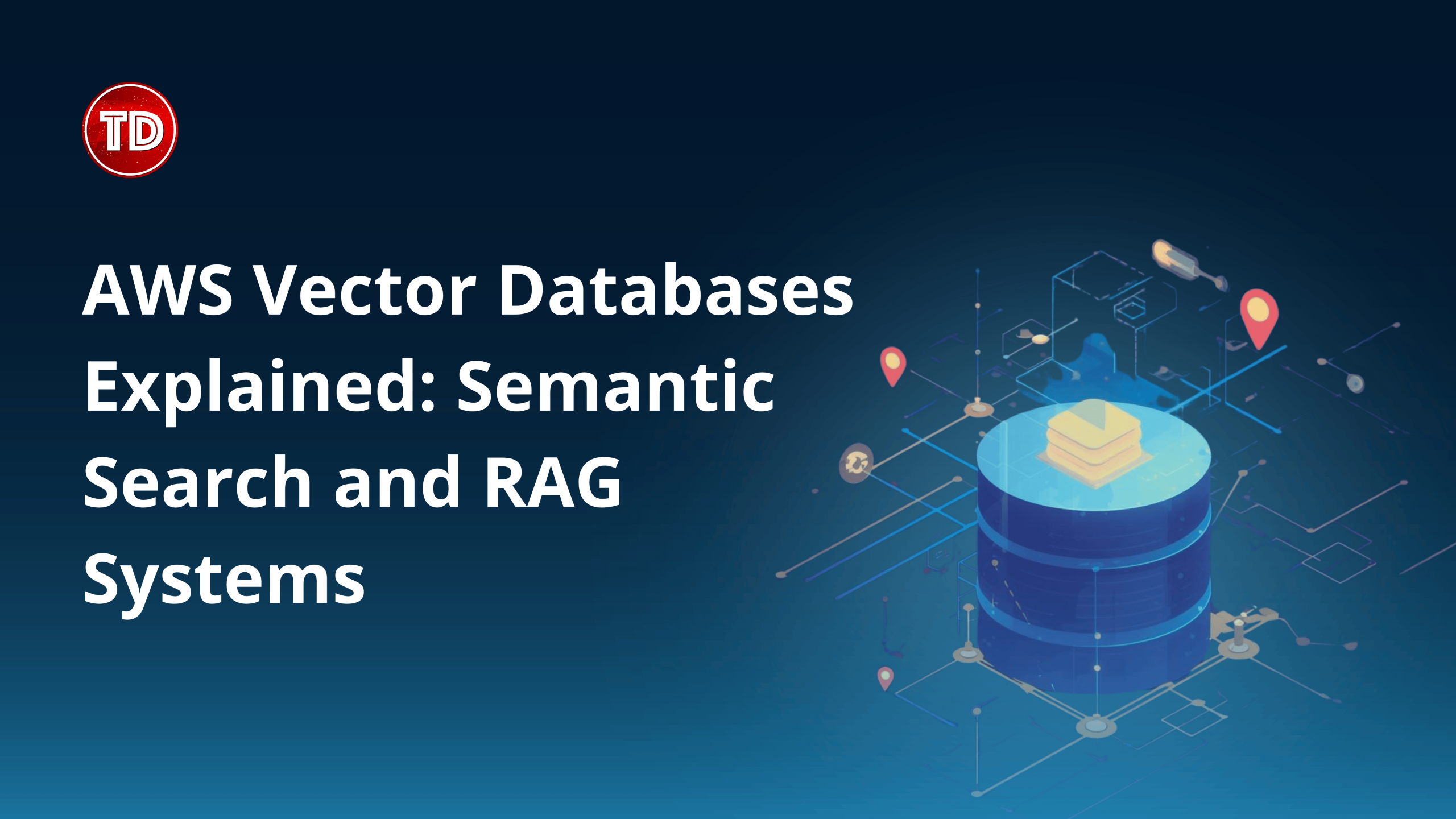
AWS Vector Databases Explained: Semantic Search and RAG Systems

2025-12-04T07:08:08+00:00

The generative AI (GenAI) revolution has transformed how organizations extract value from their data. While large language models (LLMs) demonstrate remarkable capabilities in understanding and generating human-like text, their true enterprise potential is unlocked only when they can access proprietary, domain-specific information. This necessity has propelled vector databases from a specialized niche into an essential pillar of modern AI infrastructure. But First, What Are Vector Databases? A vector database, as its name suggests, is a type of database designed to store, index, and efficiently search vector embeddings. These vectors are high-dimensional points that represent meaning.  At its core, a vector [...]

AWS Vector Databases Explained: Semantic Search and RAG Systems2025-12-04T07:08:08+00:00

Zero-Infrastructure Vector Search with Amazon S3 Vectors

2025-08-22T14:27:33+00:00

  The world of generative AI is evolving at a rapid pace and one of the most powerful and practical applications is Retrieval-Augmented Generation (RAG). RAG enhances Large Language Models (LLMs) by giving them access to external, up-to-date knowledge bases. This allows them to generate more accurate and context-aware responses. Traditionally, building a RAG system required setting up and managing a separate vector database that adds complexity, cost, and a new layer of infrastructure to maintain however with the introduction of Amazon S3 Vector Buckets a new paradigm has emerged: zero-infrastructure vector search. What is Zero-Infrastructure Vector Search? Amazon S3 [...]

Zero-Infrastructure Vector Search with Amazon S3 Vectors2025-08-22T14:27:33+00:00

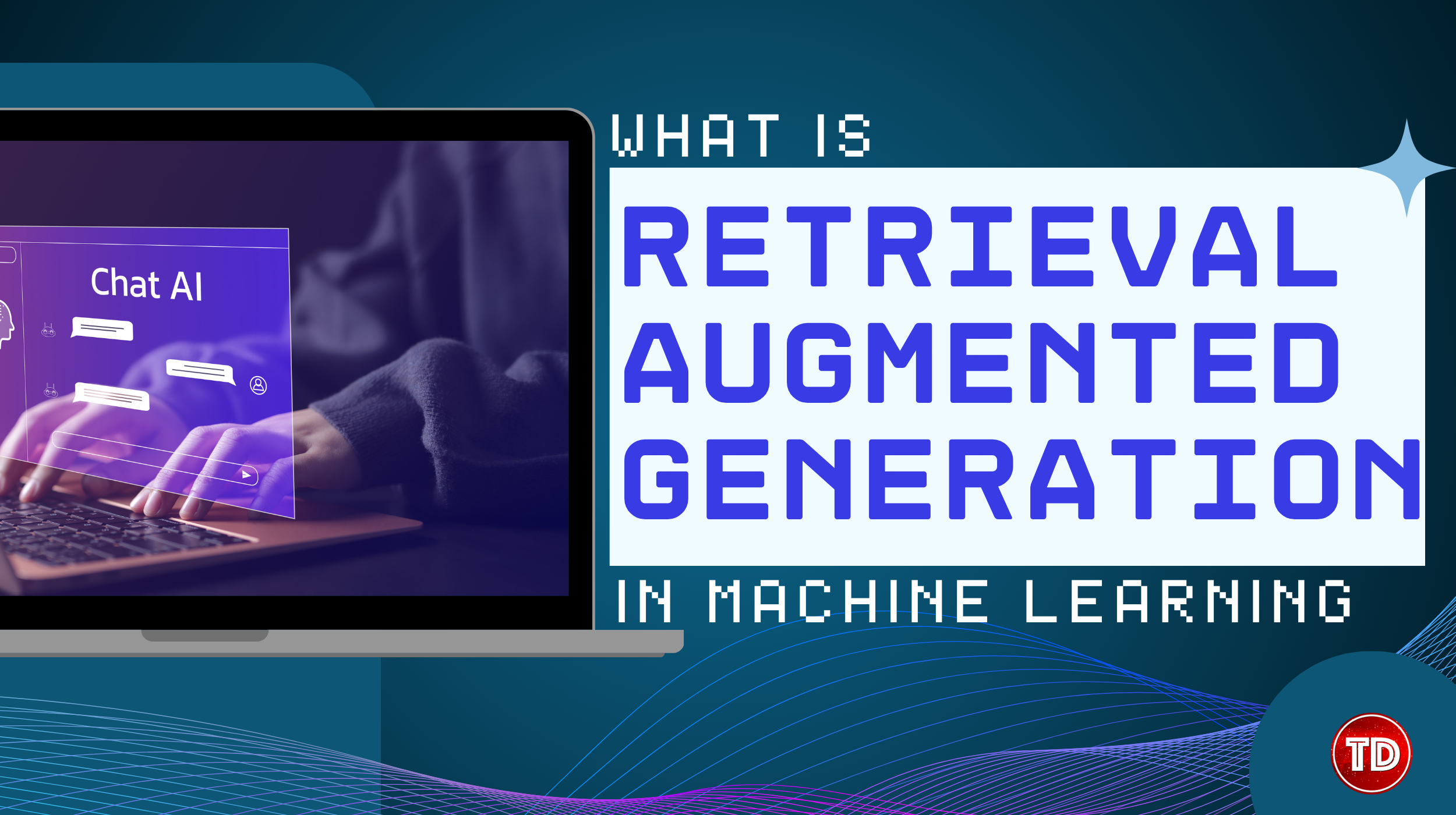
What is Retrieval Augmented Generation (RAG) in Machine Learning?

2025-06-30T03:46:57+00:00

Retrieval-Augmented Generation (RAG) Cheat Sheet Retrieval-Augmented Generation (RAG) is a method that enhances large language models (LLMs) outputs by incorporating information from external, authoritative knowledge sources. Instead of relying solely on pre-trained data, RAG retrieves relevant content at inference time to ground its responses. LLMs (Large Language Models) are trained on massive datasets and use billions of parameters to perform tasks like: Question answering Language translation Text completion RAG extends LLM capabilities to domain-specific or private organizational knowledge without requiring model retraining. It provides a cost-efficient way to improve the relevance, accuracy, and utility of LLM outputs in dynamic or [...]

What is Retrieval Augmented Generation (RAG) in Machine Learning?2025-06-30T03:46:57+00:00

Retrieval-Augmented Generation (RAG) for Foundation Model Customization

2024-12-02T06:01:45+00:00

Artificial Intelligence (AI) has rapidly advanced, pushing the limits of what machines can accomplish. However, one significant challenge remains: ensuring that AI responses are both accurate and contextually relevant while being up-to-date. This is where Retrieval-Augmented Generation (RAG) comes in—a cutting-edge approach that integrates the capabilities of data retrieval with advanced AI generation techniques. In this blog, we will explore the details of RAG, discussing its benefits, applications, and how to implement it using AWS. Understanding Retrieval-Augmented Generation (RAG) RAG (Retrieval-Augmented Generation) incorporates real-time data retrieval into the generative process. Unlike traditional models that depend solely on pre-trained data, RAG [...]

Retrieval-Augmented Generation (RAG) for Foundation Model Customization2024-12-02T06:01:45+00:00

AWS, Azure, and GCP Certifications are consistently among the top-paying IT certifications in the world, considering that most companies have now shifted to the cloud. Upskill and earn over $150,000 per year with an AWS, Azure, or GCP certification!

Follow us on LinkedIn, Facebook, or join our Slack study group. More importantly, answer as many practice exams as you can to help increase your chances of passing your certification exams on your first try!